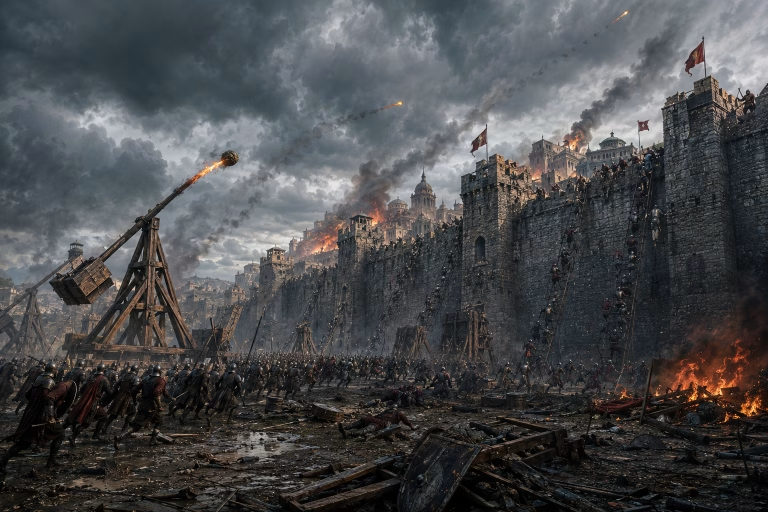
Every 79 years, like clockwork, America faces a major crisis that reshapes its entire social and political landscape. From the Revolutionary War to the Civil War to World War II, this pattern has held for over two centuries. The Hidden Patterns Behind History aren’t just academic curiosities—they’re predictable cycles that reveal how human societies actually work beneath the surface chaos of daily events.
While most people see history as a random series of disconnected events, historians and social scientists have identified recurring patterns that repeat across cultures, centuries, and civilizations. These patterns emerge from the unchanging aspects of human nature: our drives for power, security, and meaning that play out on the grand stage of nations and empires.
Understanding these historical patterns provides more than just intellectual satisfaction. It offers a lens for interpreting current events, anticipating future challenges, and making better decisions in an uncertain world. The Hidden Patterns Behind History become a roadmap for navigating the complexities of modern life.
Key Takeaways
• Historical events follow predictable cycles driven by consistent human behaviors and societal pressures
• Empires, economies, and social systems all exhibit similar patterns of rise, peak, decline, and renewal
• Technology serves as the primary disruptor of historical patterns, accelerating change and creating new cycles
• Human nature remains constant across cultures and centuries, causing similar mistakes and reactions to repeat
• Recognizing these patterns helps predict potential future developments and avoid common pitfalls
Why History Feels Random (But Isn’t)
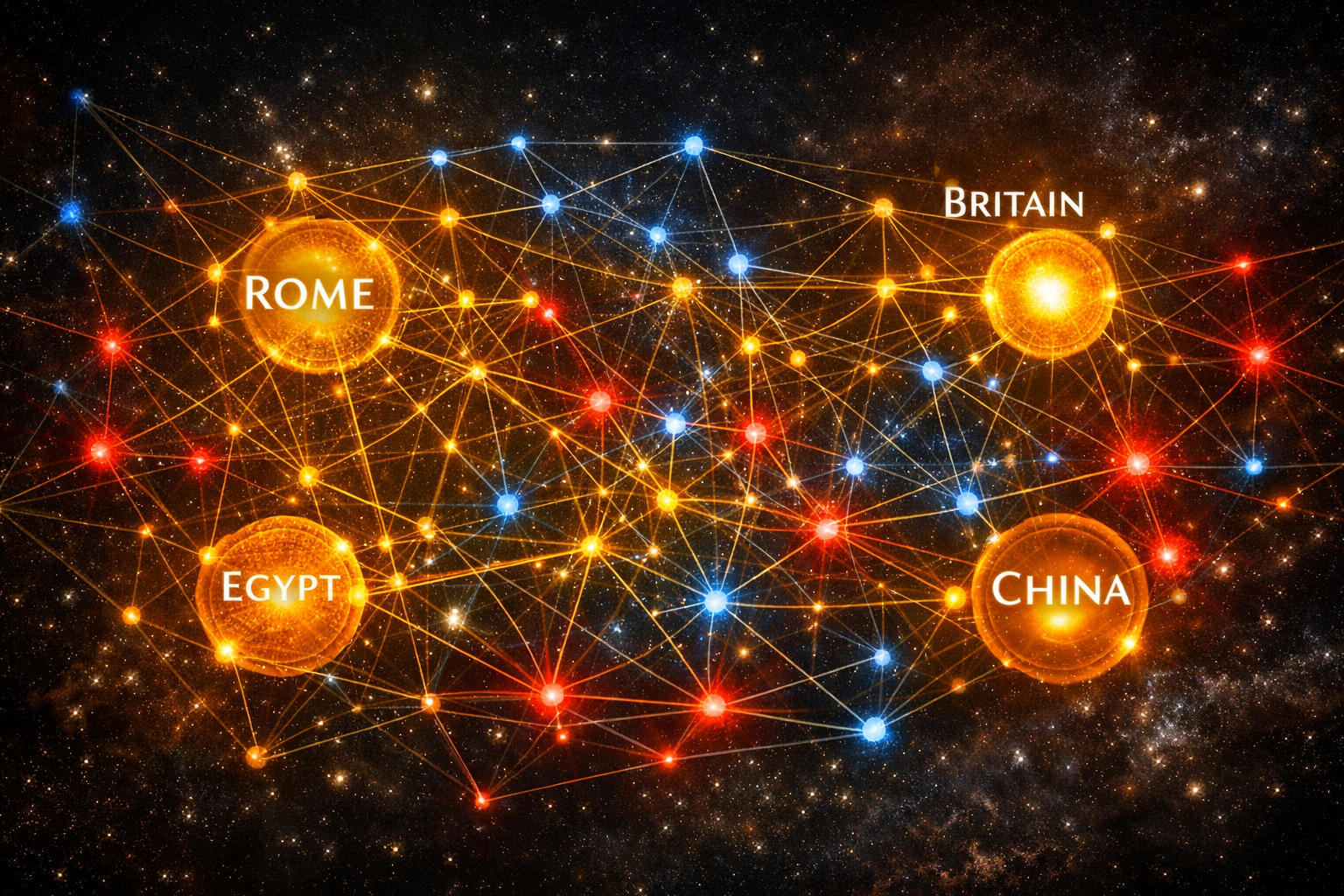
At first glance, history appears to be an endless series of random events—wars breaking out unexpectedly, empires collapsing overnight, economic booms turning to busts without warning. This perception stems from three key factors that obscure the underlying order.
Complexity hides structure. Historical events involve millions of individual decisions, cultural forces, economic pressures, and environmental factors all interacting simultaneously. Like watching a murmuration of starlings, the individual movements seem chaotic until you step back and see the larger pattern.
Bias shapes our perspective. We naturally focus on dramatic, unexpected events rather than the slow-building pressures that made them inevitable. The assassination of Archduke Franz Ferdinand appears to have “caused” World War I, but the underlying tensions—nationalism, imperialism, and military alliances—had been building for decades.
Storytelling obscures patterns. History is often taught as a series of stories about great individuals and dramatic moments. While compelling, this narrative approach can mask the deeper structural forces at work. The rise and fall of powerful military commanders throughout history follows predictable patterns regardless of their individual personalities.
The key insight is that history isn’t random—it’s layered and interconnected. What appears chaotic at the surface level reveals clear patterns when examined across longer time periods and broader geographical scales.
The Pattern of Rise and Fall
Perhaps the most fundamental pattern in The Hidden Patterns Behind History is the rise and fall of civilizations. This cycle has repeated so consistently that historians have identified specific stages that nearly every empire experiences.
The Growth Phase begins when a society develops military, technological, or organizational advantages over its neighbors. Strong leadership, social cohesion, and economic expansion fuel rapid territorial growth. The Roman Republic’s citizen-soldiers and road networks, or Britain’s naval supremacy and industrial revolution, exemplify this phase.
The Peak Period arrives when expansion reaches its practical limits. The empire enjoys maximum wealth, cultural influence, and military power. However, success breeds complacency. The very advantages that enabled growth—military strength, economic prosperity, cultural confidence—begin to create internal weaknesses.
The Decline Phase emerges from overextension and internal decay. Military costs become unsustainable, bureaucracy grows inefficient, and social unity fractures. The Roman Empire’s barbarian invasions succeeded largely because Rome could no longer afford to defend its vast borders effectively.
The Collapse often happens surprisingly quickly once decline reaches a tipping point. External pressures that the empire previously handled easily become overwhelming when combined with internal dysfunction.
This pattern appears so consistently because power always carries the seeds of its own decline. Success creates the conditions—overconfidence, overextension, internal competition—that eventually undermine the foundations of that success.
Modern examples include the Soviet Union’s collapse after overextending militarily and economically, or Britain’s gradual loss of empire following two world wars that drained its resources and revealed its limitations.
The Cycle of Conflict
War and peace follow predictable cycles that have repeated throughout recorded history. Understanding this pattern helps explain why periods of stability inevitably give way to conflict, and why peace treaties often contain the seeds of future wars.
Rising Tensions typically begin during periods of apparent stability. Demographic changes, economic growth, technological advances, or ideological shifts create new power imbalances. Rising powers challenge established ones, while declining powers struggle to maintain their position.
The Crisis Point arrives when these tensions become impossible to manage through diplomacy or gradual adjustment. Often a seemingly minor incident—the assassination in Sarajevo, the attack on Pearl Harbor—triggers a conflict that was already inevitable.
Active Conflict resolves the immediate power imbalance but rarely addresses underlying causes. Military victory often creates new grievances and power vacuums that set the stage for future conflicts.
Temporary Peace follows, but it’s usually more of an armistice than a true resolution. The impact of wars on US history demonstrates how conflicts reshape societies in ways that create new sources of tension.
World War I perfectly illustrates this cycle. The harsh Treaty of Versailles created the economic and political conditions that enabled Hitler’s rise, making World War II almost inevitable. Similarly, the unresolved tensions from World War II led directly to the Cold War.
The pattern reveals that peace often contains the conditions for future conflict. True lasting peace requires addressing root causes, not just stopping the fighting—something that happens rarely in history.
Economic Boom and Bust Cycles
Economic history reveals remarkably consistent patterns of boom and bust that repeat regardless of the specific economic system or time period. These cycles emerge from fundamental aspects of human psychology that remain constant across cultures and centuries.
The Growth Phase typically begins with genuine economic improvements—new technologies, expanded trade, increased productivity. Early investors and entrepreneurs make substantial profits, attracting more participants to the market.
The Speculation Phase develops as success stories spread and people begin investing based on expectations rather than current reality. Asset prices rise faster than underlying economic value. Credit expands as lenders compete to finance increasingly risky ventures.
The Bubble Phase occurs when prices become completely disconnected from economic fundamentals. New investors enter the market not because they understand the investments, but because prices keep rising. “This time is different” becomes a common refrain.
The Collapse happens suddenly when reality reasserts itself. A trigger event—often minor—causes panic selling. Overleveraged investors face bankruptcy, credit contracts, and economic activity plummets.
The 1929 stock market crash followed this exact pattern, as did the 2008 financial crisis. Even earlier examples like the Dutch Tulip Mania of 1637 or the South Sea Bubble of 1720 show identical psychological dynamics.
Human behavior—greed and fear—repeats consistently across different economic systems and time periods. Understanding this pattern helps explain why financial crises continue to surprise people who lived through previous crashes.
The Pattern of Social Upheaval
Social revolutions follow predictable patterns that emerge when inequality and social pressure reach unsustainable levels. The Hidden Patterns Behind History show that societies change dramatically when certain conditions align, regardless of the specific culture or time period.
Growing Inequality typically precedes major social upheavals. Economic growth benefits elites while ordinary people’s conditions stagnate or worsen. Social mobility decreases, creating a sense of permanent class divisions.
Loss of Legitimacy occurs when ruling classes lose moral authority. Corruption, incompetence, or obvious hypocrisy undermines the belief that current leaders deserve their positions. The French aristocracy’s extravagance during widespread poverty exemplifies this phase.
Catalyst Events trigger broader uprising when they symbolize deeper grievances. The Boston Tea Party, the storming of the Bastille, or the assassination of Archduke Franz Ferdinand became rallying points for movements that were already building.
Revolutionary Period brings rapid, often violent change as old institutions collapse and new ones emerge. However, revolutions rarely achieve their initial goals and often create new forms of oppression.
The French Revolution, Russian Revolution, and American Revolution all followed similar trajectories despite occurring in different centuries and cultures. Even the most powerful revolutions in history share common characteristics in their development and outcomes.
Societies change when pressure reaches a breaking point. The specific trigger matters less than the underlying conditions that make revolution possible.
The Role of Leadership in Historical Patterns
Individual leaders can accelerate, redirect, or temporarily halt historical patterns, but they rarely create entirely new patterns or permanently stop existing ones. Understanding the relationship between leadership and historical forces reveals both the power and limitations of individual agency in shaping events.
Strong Leaders Accelerate Change by recognizing emerging trends and positioning themselves to ride historical waves rather than fighting them. Napoleon succeeded because he understood that the French Revolution had permanently changed European politics. Winston Churchill’s warnings about Nazi Germany proved prescient because he recognized the pattern of rising authoritarianism.
Weak Leadership Invites Instability by failing to address building pressures before they reach crisis points. The Russian Tsar’s inability to manage World War I’s economic and social pressures created the conditions for revolution. Similarly, ineffective leadership during economic downturns often transforms manageable problems into major crises.
Timing Determines Impact more than personal qualities. The same leadership style that succeeds during wartime may fail during peacetime, and vice versa. Abraham Lincoln’s wartime leadership was transformational, but similar approaches during peaceful periods might have seemed dictatorial.
However, even the most brilliant military strategists history has forgotten operated within the constraints of their time period’s technology, economics, and social structures.
The key insight is that individuals can shape—but not fully control—history. Great leaders work with historical forces rather than against them, understanding that timing and context matter as much as personal ability.
Technology as a Pattern Breaker
While most historical patterns repeat with remarkable consistency, technology serves as the primary disruptor that can accelerate, alter, or completely break established cycles. Major technological advances create new possibilities that reshape how societies organize themselves and interact with each other.
Communication Technologies have repeatedly transformed political and social patterns. The printing press enabled the Protestant Reformation by allowing rapid spread of ideas that previously would have remained localized. Similarly, radio and television changed how political leaders connect with populations, while the internet has created entirely new forms of social organization and conflict.
Military Technologies alter the balance of power between nations and social classes. Gunpowder weapons undermined the military dominance of armored knights, contributing to the decline of feudalism. Nuclear weapons changed the nature of great power conflict, making direct war between major powers potentially suicidal.
Economic Technologies create new forms of wealth and power while making others obsolete. The steam engine and factory system transformed agricultural societies into industrial ones within a few generations. Digital technologies are currently reshaping economic relationships in ways that may prove equally dramatic.
Transportation Technologies change how quickly ideas, goods, and people move, accelerating historical processes. Railways enabled rapid military mobilization and economic integration. Air travel and container shipping created the modern global economy.
The key insight is that technology reshapes history faster than anything else. While human nature remains constant, technological capabilities change the context in which that nature operates, creating new possibilities and constraints that can break centuries-old patterns.
The Pattern of Overreaction
One of the most consistent patterns in The Hidden Patterns Behind History is the tendency for societies to overreact to crises, creating new problems that often prove worse than the original issues they were trying to solve.
Fear Drives Extreme Responses when societies face genuine threats. However, the emotional intensity of crisis situations often leads to policies that go far beyond what’s necessary to address the actual problem. The fear becomes more dangerous than the original threat.
Short-term Solutions Create Long-term Problems because overreactions typically focus on immediate relief rather than sustainable solutions. The harsh Treaty of Versailles after World War I sought to permanently weaken Germany but instead created the economic and political conditions that enabled Hitler’s rise.
Institutional Momentum makes it difficult to reverse extreme measures once they’re implemented. Bureaucracies created during emergencies develop interests in perpetuating themselves. Powers granted to governments during crises rarely get fully returned when the crisis passes.
Historical examples include the shameful decade of the 1930s when democratic societies overreacted to economic crisis by embracing authoritarian solutions. More recently, security measures implemented after terrorist attacks often expanded far beyond their original scope.
Overreaction often worsens the original problem by creating new grievances, destroying trust, and establishing precedents for future extreme responses. Understanding this pattern helps explain why moderate, measured responses—though politically difficult—often prove more effective in the long run.
Why Humans Repeat the Same Mistakes
Despite having access to thousands of years of recorded history, humans continue making remarkably similar mistakes across different cultures and time periods. This repetition occurs because the fundamental drivers of human behavior haven’t changed, even as our technology and social structures have evolved dramatically.
Emotion Overrides Logic in crisis situations. Fear, greed, anger, and pride influence decision-making more than rational analysis of historical precedents. People know intellectually that economic bubbles always burst, but greed and social pressure lead them to participate anyway.
Short-term Thinking Dominates because immediate pressures feel more real than historical lessons. Political leaders focus on the next election rather than long-term consequences. Investors chase quick profits rather than sustainable returns. The pain of current problems seems more urgent than avoiding future ones.
Overconfidence in Uniqueness leads each generation to believe their situation is fundamentally different from previous ones. “This time is different” becomes a rationalization for ignoring historical warnings. New technologies or social changes seem to make old patterns irrelevant.
Failure to Learn from Others occurs because people tend to learn more from personal experience than from studying history. Each generation must learn certain lessons firsthand rather than accepting them from books or teachers.
The insight that history repeats because human nature doesn’t change explains why studying historical patterns remains relevant despite technological and social progress. The specific details change, but the underlying psychological and social dynamics remain remarkably consistent.
Can We Predict the Future Using Historical Patterns?
Historical patterns provide valuable insights into likely future developments, but they offer probabilities rather than certainties. Understanding the limitations and possibilities of historical prediction helps avoid both naive overconfidence and paralyzing uncertainty.
Patterns Provide Clues, Not Certainty about future events. Knowing that economic bubbles always burst doesn’t tell you exactly when the next crash will occur or what will trigger it. However, recognizing bubble conditions helps you prepare for inevitable corrections.
Structural Trends vs. Unpredictable Events represent different types of historical forces. Demographic changes, technological adoption, and economic cycles follow relatively predictable patterns. However, individual decisions, natural disasters, and breakthrough innovations can dramatically alter these trajectories.
Multiple Possible Outcomes exist within any historical pattern. The rise and fall cycle of empires is consistent, but the specific timing, triggers, and consequences vary significantly. Rome fell to barbarian invasions, while the Soviet Union collapsed from internal contradictions.
Early Warning Systems become possible when you understand historical patterns. Rising inequality, political polarization, and economic imbalances often precede social upheavals. Recognizing these conditions doesn’t predict exactly what will happen, but it suggests increased probability of significant change.
The balanced view is that we can anticipate cycles but not exact outcomes. Historical patterns help you prepare for likely developments while remaining flexible enough to adapt when unexpected events occur.
How to Use These Patterns Today
Understanding The Hidden Patterns Behind History becomes practically valuable when you apply these insights to current situations. Rather than just academic knowledge, historical patterns can guide personal and professional decision-making in an uncertain world.
Recognize Warning Signs by comparing current conditions to historical precedents. Economic bubbles show similar characteristics across different time periods and asset classes. Political polarization follows predictable escalation patterns. Social tensions build in recognizable ways before reaching crisis points.
Think Long-term by considering how current trends might develop over decades rather than years. Military strategies that shaped US history often succeeded because leaders thought beyond immediate tactical concerns to long-term strategic implications.
Avoid Emotional Decision-making during crisis periods when fear and greed are strongest. Historical patterns show that the best opportunities often emerge when others are panicking, while the greatest risks develop when everyone feels confident.
Prepare for Cycles rather than assuming current conditions will continue indefinitely. Economic growth doesn’t last forever, but neither do recessions. Political dominance shifts over time. Social movements rise and fall in predictable ways.
Learn from Multiple Examples rather than focusing on single historical events. The specific details of each crisis differ, but the underlying patterns remain consistent. Studying various economic crashes, political upheavals, and social changes reveals common elements that might not be obvious from individual cases.
History becomes a tool, not just a story when you actively apply these patterns to understand current events and anticipate future developments.
Conclusion
The Hidden Patterns Behind History reveal that human societies operate according to discoverable principles rather than random chance. From the rise and fall of empires to economic boom and bust cycles, from social revolutions to the overreaction patterns that often make problems worse, history demonstrates remarkable consistency in how human nature expresses itself across different cultures and time periods.
These patterns persist because the fundamental drivers of human behavior—our needs for security, status, meaning, and control—remain constant even as our technologies and social structures evolve. Understanding these deeper currents helps explain why seemingly different historical events often follow similar trajectories and why studying the past remains relevant for navigating the present.
The practical value of recognizing historical patterns lies not in predicting specific future events, but in developing better judgment about likely trends and preparing for probable challenges. Whether you’re making investment decisions, career choices, or trying to understand political developments, historical patterns provide a framework for thinking beyond immediate circumstances to longer-term implications.
Take Action:
- Study multiple examples of historical patterns rather than isolated events
- Apply pattern recognition to current economic, political, and social trends
- Develop long-term thinking habits that consider cyclical rather than linear change
- Build flexibility into your plans to adapt when unexpected events disrupt established patterns
- Share these insights with others to improve collective decision-making
The more you understand the patterns behind history, the less likely you are to be surprised by what comes next.