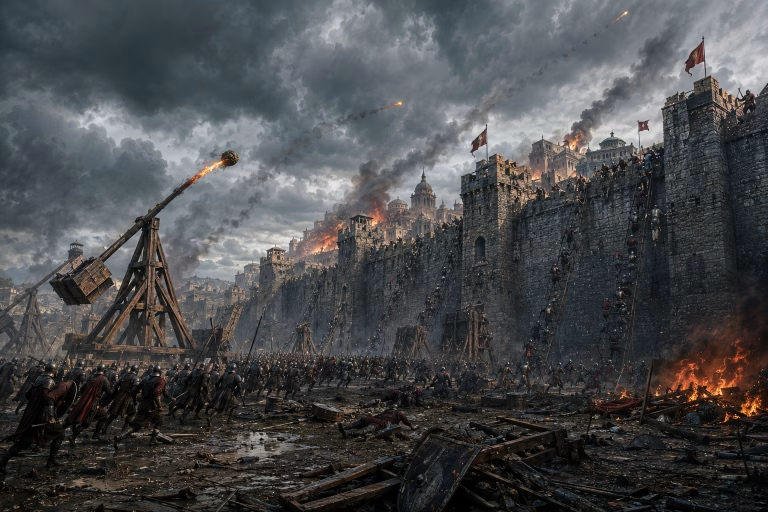
What about the Rise and Fall of Ancient Civilizations? Ancient civilizations have always fascinated people. These complex societies rose from small tribes to powerful empires, showcasing remarkable achievements in culture, technology, and governance. The study of their rise and fall reveals valuable lessons about human societies and the cycles of prosperity and decline.
Many factors contributed to the growth of ancient civilizations, such as advancements in agriculture, trade, and the development of written language. As these societies flourished, they established intricate social structures and cultural practices. Yet, even the mightiest civilizations faced challenges that led to their eventual decline.
Understanding the reasons behind the rise and fall of these civilizations can provide insight into contemporary human societies. By examining historical patterns, it becomes clear how environmental changes, conflict, and social issues can impact the stability and longevity of a civilization.
Foundations of Ancient Civilizations

Ancient civilizations laid the groundwork for human society. Key aspects include social structure, agriculture, and trade, reflecting how early people organized their lives and developed complex societies.
Defining Civilizations
Civilizations are complex societies characterized by several features. These include a stable food supply, social structure, centralized government, and a system of communication. A division of labor allows people to specialize in different tasks, leading to greater efficiency. This social complexity marks the transition from simple communities to advanced cultures.
Mesopotamia: The Cradle of Civilization
Mesopotamia, located between the Tigris and Euphrates Rivers, is often called the cradle of civilization. Around 3500 BCE, it saw the rise of city-states like Ur and Babylon. These cities had advanced irrigation systems that improved agriculture.
The Sumerians developed one of the first writing systems, cuneiform, for record-keeping. This led to increased trade and cultural exchange. Legal codes, like Hammurabi’s, established justice and governance, influencing future societies.
Indus Valley Civilization and its Mysterious End
The Indus Valley Civilization thrived from about 2500 BCE to 1900 BCE. Located in present-day Pakistan and northwest India, its cities like Mohenjo-Daro and Harappa were well-planned with advanced drainage systems.
They practiced agriculture, growing wheat and barley, and engaged in trade with Mesopotamia. The civilization had a unique script that remains undeciphered. Despite its success, the reasons for its decline around 1900 BCE remain a mystery, with theories ranging from climate change to invasion.
The Glory of Ancient Egypt
Ancient Egypt flourished along the Nile River, which provided fertile land and irrigation. Its civilization began around 3100 BCE and is known for its monumental architecture, such as the pyramids and temples.
Pharaohs ruled as both political and religious leaders, centralizing power. The society was highly stratified, with a clear division of labor. The Egyptians developed a system of writing called hieroglyphics. They excelled in mathematics and medicine, contributing to their longevity as a civilization.
Socio-Political Structures

Ancient civilizations developed complex socio-political structures that defined their societies. The organization of people into roles and classes was crucial for managing resources and governance. Key elements included hierarchy, diverse forms of governance, and the significant role of religion.
Hierarchy and Division of Labor
Hierarchies in ancient civilizations often included several social classes. At the top were leaders and nobles, followed by priests, merchants, artisans, and farmers. This pyramid structure helped organize society and manage resources effectively.
The division of labor was vital. Each group had specific roles that contributed to the overall functioning of society. For example, farmers provided food, while artisans crafted tools and goods. This specialization led to increased efficiency and allowed for the growth of trade.
Forms of Governance
Governance varied among ancient societies, reflecting their unique cultures and needs. Some civilizations operated under monarchies, where a king or queen held power. Others used democratic systems, like in ancient Athens, where citizens could participate in decision-making.
Additionally, empires formed through conquest often centralized power. This created a bureaucratic system to manage vast territories. Such systems included officials to oversee regions and collect taxes, furthering social organization.
Influence of Religion and Mythology
Religion and mythology played a significant role in shaping socio-political structures. Many ancient societies relied on religious beliefs to justify the power of leaders. Kings often claimed divine right, linking their authority to the gods.
Religious institutions also influenced laws and social norms. Priests held significant sway in decision-making and governance. Festivals and rituals served to unite communities and reinforce hierarchical structures. Through these aspects, religion intertwined with politics, shaping daily life and governance in ancient civilizations.
Rise of Empires

Empires grew powerful through conquest, trade, and innovation. Key examples include the Roman Empire, the Maya civilization, and the Khmer Empire. Each had unique strategies and achievements that led to their influence across regions.
The Expansion of the Roman Empire
The Roman Empire started as a small city-state in Italy. Over time, it expanded by conquering territories across Europe, North Africa, and parts of the Middle East. By around 117 AD, it reached its maximum size under Emperor Trajan.
Romans built roads, cities, and military forts, making it easier to manage vast lands. They also established trade routes that linked cultures, helped economic growth, and spread ideas.
The legal and political systems developed during this time influenced many future governments. However, as the empire grew, it faced challenges like corruption, economic troubles, and invasions.
Mayan Ascendancy in Mesoamerica
The Maya civilization thrived in what is now Mexico and Central America. Around 250 AD, they developed advanced city-states with impressive architecture, including temples and pyramids. The Maya are known for their achievements in math, astronomy, and writing.
Trade was essential for their growth. The Maya exchanged goods like cacao, jade, and textiles across their cities. This network helped them gain wealth and power, allowing them to establish complex social and political structures.
The society was made up of kings, priests, and commoners. Religious beliefs played a significant role in governance and daily life. Over time, factors such as warfare and drought led to their decline.
The Flourishing of the Khmer Empire
The Khmer Empire rose in Southeast Asia around the 9th century. It is best known for its capital, Angkor, which featured stunning temples, including Angkor Wat. This empire prospered due to rich agricultural lands that supported a large population.
The Khmer developed an extensive water management system, allowing for effective rice cultivation. Trade links with China and India brought in new ideas and goods, which helped their economy flourish.
Kings played a crucial role in promoting art and architecture. They built monumental structures that demonstrated their power. Eventually, external pressures and internal strife led to the empire’s decline, but its cultural legacy remains influential today.
Economic and Trade Systems
Economic systems and trade were vital for the growth and decline of ancient civilizations. They enabled societies to expand, specialize, and manage resources, leading to complex economies.
Trade Routes and Economic Expansion
Trade routes connected various civilizations, allowing for the exchange of goods and ideas. The Silk Road, for instance, linked China to the Mediterranean, facilitating the movement of silk, spices, and other valuable items.
These routes boosted economies by creating new markets and opportunities. Cities along trade routes flourished as hubs of commerce. They often developed a division of labor, where different groups focused on specific crafts or goods. This specialization improved efficiency and increased production.
Trade also fostered relationships between cultures. The spread of ideas, technologies, and even religions occurred along these routes.
Role of Agriculture and Resource Management
Agriculture was the backbone of ancient economies. Civilizations relied on farming for food, which supported population growth. Fertile areas, such as the Nile Valley, allowed for abundant harvests.
Resource management was crucial in maintaining agricultural systems. Societies developed techniques like irrigation to enhance crop yields. They also practiced crop rotation to prevent soil depletion.
The division of labor extended to agriculture as well. Some people tended to crops while others specialized in animal husbandry or tool making. This organization led to more effective farming practices and helped sustain larger populations.
In summary, effective trade and agricultural management were key factors in the rise and fall of ancient civilizations. These systems shaped their economic structures and influenced their interactions with one another.
Causes of Civilizational Decline
Many factors contribute to the decline of ancient civilizations. Key elements include internal conflicts, external pressures, and natural disasters. Each has played a crucial role in societal collapse throughout history.
Internal Conflicts and Social Unrest
Internal conflicts can weaken a civilization’s strength. These conflicts often arise between different social classes, political leaders, or ethnic groups. When groups within a society struggle for power or resources, it creates division.
Social unrest can lead to protests, riots, or even war. A lack of unity makes it hard for a civilization to function. Historical examples include the fall of the Roman Empire, which faced civil wars and factional strife.
As disagreements escalate, resources become scarce. This scarcity leads to further conflict and can result in a civilizational collapse.
External Pressures and Invasions
Civilizations often face threats from outside forces. These external pressures can come in the form of invasions or competition for land and resources. Invading groups may seek to conquer territories and seize assets.
For instance, the Mongol invasions significantly impacted many societies, leading to destruction and disintegration. Such external threats challenge a civilization’s defenses and can stretch resources thin.
Trade routes may also be disrupted by invasions. This disruption can harm the economy and reduce the ability to gather necessary resources. Over time, this external pressure can lead to a rapid decline.
Natural Disasters and Climate Change
Natural disasters significantly affect civilizations. Earthquakes, floods, and droughts can damage infrastructure and cause food shortages. These disasters can result in the loss of life and destabilize communities.
Climate change can also alter the environment. Shifts in climate can lead to reduced agricultural yields. Societies that rely heavily on farming may struggle to survive as their food sources diminish.
The Classic Maya civilization faced such challenges. Droughts led to crop failures, contributing to their societal collapse. Adapting to environmental changes is essential for the survival of any civilization.
Cultural and Scientific Contributions
Ancient civilizations made significant cultural and scientific contributions that shaped human history. Their achievements in art, architecture, literature, and science reflect their innovative spirit and understanding of the world.
Art, Architecture, and Literature
Ancient cultures produced remarkable works of art and architecture. The Egyptians built the pyramids, showcasing their skills in engineering and design. Greek temples, like the Parthenon, exemplified beauty and symmetry.
In literature, texts like the “Epic of Gilgamesh” and Homer’s “Iliad” reveal insights into their societies’ values and beliefs. These works provide a glimpse into daily life, religious practices, and moral lessons.
Archaeological discoveries continue to uncover these treasures, helping historians piece together the past.
Scientific Innovations and Inventions
Scientific advancements were crucial in shaping early civilizations. The Babylonians developed early mathematics and astronomy. They created calendars and understood celestial movements, which aided in agriculture and navigation.
The Greeks made strides in medicine, with figures like Hippocrates establishing ethics for healing practices. They explored geometry and physics, laying the groundwork for future scientific inquiry.
Chinese civilizations invented paper, the compass, and gunpowder, impacting various aspects of life. These inventions reflect the innovative nature of ancient societies and their quest for knowledge.
Archaeology and Understanding the Past
Archaeology plays an essential role in revealing the history of ancient civilizations. Through excavations and modern technology, archaeologists uncover artifacts and evidence. This information helps them piece together how past societies lived and interacted. Institutions like the National Academy of Sciences support this vital work.
Excavations and Discoveries
Excavations are critical to archaeology. During these digs, archaeologists search for artifacts, structures, and remains buried over time. Each item can tell a story about the people who once occupied that space. Discoveries such as pottery, tools, and bones give insights into daily life, trade, and cultural practices.
For example, in the ancient city of Pompeii, archaeologists uncovered preserved buildings and artwork. These finds reveal details about Roman life and society. Each discovery can shift understanding about a civilization’s history.
Technology in Archaeology
Technology has transformed archaeology in recent years. Techniques like Ground Penetrating Radar (GPR) and drones allow archaeologists to survey large areas quickly. GPR can see beneath the surface without digging, identifying structures or features that inform historic layouts.
Additionally, 3D scanning and imaging help in documenting sites accurately. This technology allows for virtual reconstructions of ancient environments. Such advancements bring new ways to study and share findings with the wider public.
Role of the National Academy of Sciences
The National Academy of Sciences plays a vital role in supporting archaeological research. They provide funding for projects and promote collaboration among scientists. This institution helps improve methods and techniques used in the field.
By encouraging interdisciplinary work, they bring together archaeologists and anthropologists. This cooperation enhances understanding of human history and development. Their support ensures that archaeological discoveries are scientifically validated and publicly accessible.
Legacy and Lessons Learned
Ancient civilizations have left a significant mark on the world. Their successes and failures offer valuable insights for modern societies.
Influence on Modern Civilizations
The legacies of ancient civilizations, especially in the eastern Mediterranean, shape today’s cultures. Ideas in politics, law, and philosophy trace back to these societies, like Greece and Rome. For example, democratic principles from Athens influence many governments.
Architectural styles, such as columns from Greek structures, are still popular in modern buildings.
Trade routes created by these civilizations paved the way for globalization. Complex systems of agriculture were developed, providing lessons in sustainability. Understanding past innovations can help societies address current issues, including resource management and urban planning.
Studying Collapse to Prevent Future Failures
Examining the rise and fall of ancient civilizations reveals patterns of success and failure. Societies like the Roman Empire faced challenges such as economic troubles and environmental changes.
Learning from these collapses can guide modern decision-making. Issues like climate change, social inequality, and political instability echo past problems.
By analyzing how ancient cultures adapted or failed, societies can identify warning signs.
Examples include the downfall of the Maya due to resource depletion. Future generations should apply these lessons to avoid repeating mistakes. This proactive approach can foster resilience in today’s complex systems.