Imagine walking hundreds of miles through dangerous terrain, carrying only a staff and wearing simple robes, all for the chance to touch a sacred relic or pray at a holy shrine. This was the reality for millions of medieval Christians who embarked on pilgrimage in the Middle Ages, one of the most powerful expressions of faith in human history. These sacred journeys shaped not only individual lives but entire civilizations, creating networks of trade, culture, and devotion that stretched across continents.
From peasants to kings, people from every level of medieval society left their homes to seek spiritual transformation through pilgrimage. These journeys were far more than simple travel—they represented a complete surrender to faith, a willingness to endure hardship for the promise of divine grace and forgiveness.
Key Takeaways
• Pilgrimage in the Middle Ages was a central religious practice that attracted people from all social classes seeking spiritual benefits, healing, and forgiveness of sins
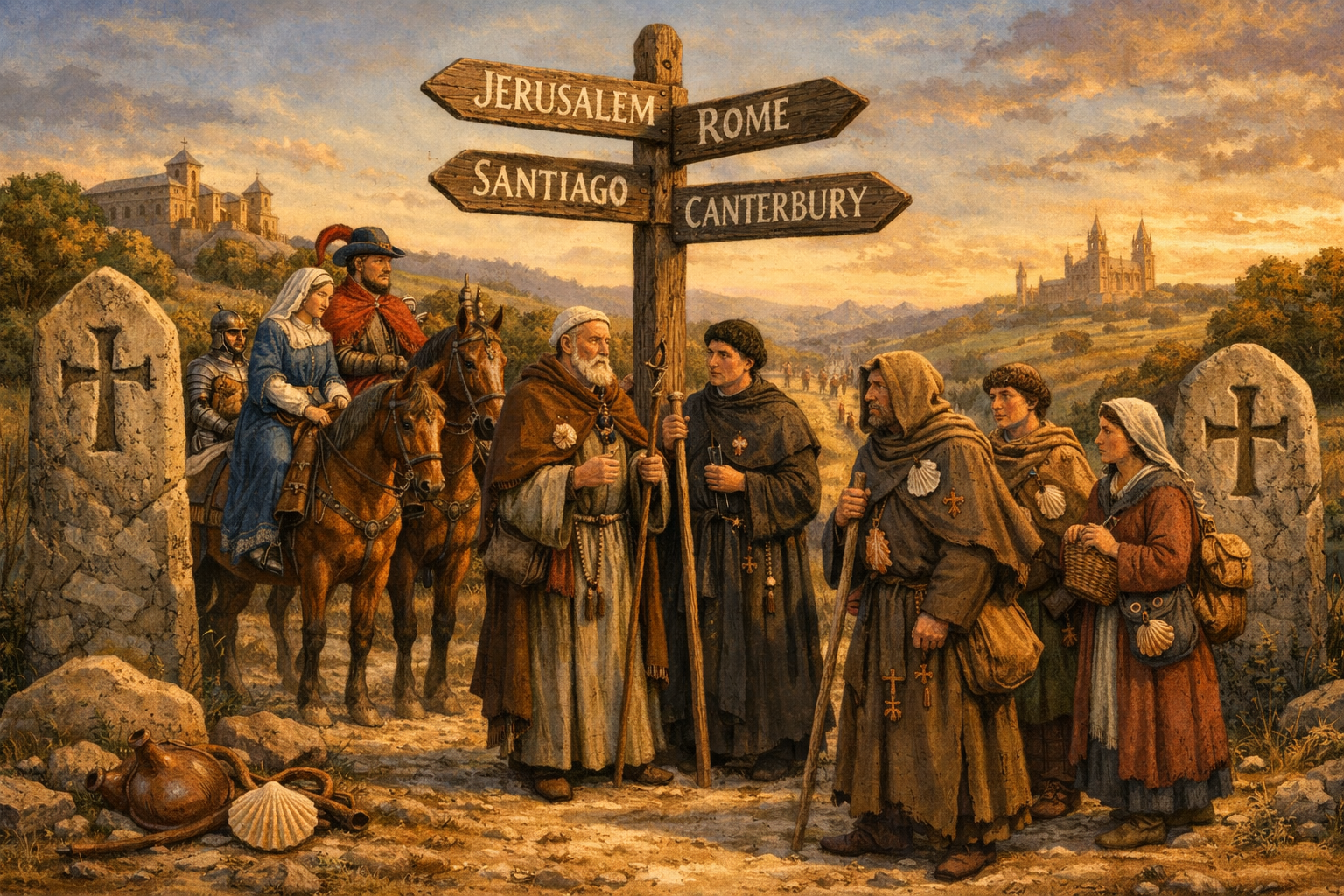
• Major destinations included Jerusalem, Rome, Santiago de Compostela, and Canterbury, each offering unique sacred experiences and relics
• Medieval pilgrimages were dangerous undertakings involving long journeys on foot, risks from bandits and disease, and significant financial costs
• These sacred journeys had profound economic and cultural impacts, spurring trade, town development, and artistic expression along pilgrimage routes
• Pilgrims wore distinctive clothing and collected badges as symbols of their spiritual achievements and devotion
What Was a Pilgrimage in the Middle Ages?
A pilgrimage in the Middle Ages was a religious journey undertaken to visit a sacred place, shrine, or relic associated with Christ, the Virgin Mary, or Christian saints. Unlike modern tourism, these journeys were acts of profound spiritual devotion, often involving considerable sacrifice and hardship.
Medieval Christians believed that visiting holy sites could bring them closer to God and provide tangible spiritual benefits. The act of pilgrimage itself—the physical journey, the suffering endured, and the prayers offered—was considered a form of penance that could earn divine favor.
The Spiritual Foundation
The concept of pilgrimage had deep biblical roots. Christians looked to examples like Abraham’s journey to the Promised Land and Jesus’s travels throughout Palestine. The crisis of the late Middle Ages actually increased pilgrimage activity, as people sought spiritual solutions to earthly troubles.
Three main types of pilgrimage emerged:
- Penitential pilgrimages – undertaken to atone for sins
- Devotional pilgrimages – expressions of personal faith
- Votive pilgrimages – fulfilling promises made to God or saints
Why People Went on Pilgrimages
The motivations for pilgrimage in the Middle Ages were as diverse as the pilgrims themselves. Understanding these reasons reveals the deep spiritual and social needs that these journeys fulfilled.
Seeking Forgiveness for Sins
Medieval Christianity emphasized the reality of sin and the need for penance. Pilgrimage offered a powerful way to demonstrate genuine repentance. The Church taught that the physical hardships of the journey, combined with prayers at sacred sites, could reduce time in purgatory or even provide complete forgiveness for certain sins.
Expressing Devotion and Faith
Many pilgrims traveled simply to deepen their relationship with God. Visiting places where Christ walked or where saints performed miracles allowed believers to feel connected to the divine in ways impossible at home. This spiritual tourism reflected the medieval understanding that physical places could hold sacred power.
Asking for Healing or Miracles
Medieval people lived with constant threats of disease, injury, and death. Pilgrimage sites were renowned for miraculous healings, and thousands traveled seeking cures for ailments ranging from blindness to infertility. The faith required for such journeys was itself seen as worthy of divine intervention.
Fulfilling Religious Vows
Knights departing for crusades, merchants seeking protection for dangerous ventures, or parents praying for sick children often promised to undertake pilgrimages if their prayers were answered. These votive pilgrimages represented sacred contracts with the divine that could not be broken without spiritual consequences.
Famous Pilgrimage Destinations in Medieval Times
The landscape of pilgrimage in the Middle Ages was dominated by several major destinations, each offering unique spiritual experiences and attracting pilgrims from across Europe and beyond.
Jerusalem: The Ultimate Sacred Journey
Jerusalem held unparalleled significance as the site of Christ’s crucifixion and resurrection. Despite the dangers and enormous expense of traveling to the Holy Land, thousands of medieval Christians made this ultimate pilgrimage.
Key attractions included:
- The Church of the Holy Sepulchre
- The Via Dolorosa (Way of Sorrows)
- Mount Calvary and the site of crucifixion
- Various locations associated with Christ’s ministry
The journey to Jerusalem often took months or even years, requiring passage through hostile territories and across dangerous seas. Many pilgrims died en route, but this only added to the spiritual merit of the undertaking.
Rome: The Eternal City of Saints
Rome attracted pilgrims with its concentration of early Christian history and relics. The city housed the tombs of Saints Peter and Paul, numerous martyr sites, and countless sacred relics collected over centuries.
Major pilgrimage sites included:
- St. Peter’s Basilica
- San Giovanni in Laterano (the Pope’s cathedral)
- Santa Maria Maggiore
- San Paolo fuori le Mura
The concept of jubilee years, beginning in 1300, brought massive crowds to Rome seeking special indulgences available only during these holy years.
Santiago de Compostela: The Way of St. James
The shrine of St. James in northwestern Spain became one of Europe’s most popular pilgrimage destinations. The Camino de Santiago (Way of St. James) developed into a well-organized network of routes with established stopping points, making it more accessible than journeys to Jerusalem.
Legend claimed that St. James’s body was miraculously transported to Spain after his martyrdom in Jerusalem. The discovery of his tomb in the 9th century sparked pilgrimage activity that continues to this day.
Canterbury: England’s Premier Pilgrimage Site
The murder of Archbishop Thomas Becket in Canterbury Cathedral in 1170 created England’s most important pilgrimage destination. Becket’s martyrdom and subsequent canonization drew pilgrims from across Europe seeking healing at his tomb.
Geoffrey Chaucer immortalized Canterbury pilgrimage in The Canterbury Tales, providing modern readers with vivid insights into medieval pilgrimage culture. The diversity of Chaucer’s pilgrims—from knights to merchants to clergy—reflects the broad appeal of these sacred journeys.
Who Went on Pilgrimages
Pilgrimage in the Middle Ages was remarkably democratic, attracting participants from every level of medieval society. This social mixing was one of pilgrimage’s most distinctive features, temporarily breaking down the rigid hierarchies that otherwise defined medieval life.
Kings and Nobles
Royal pilgrims often traveled in great style, but their motivations were genuine. Kings like Louis VII of France and Richard the Lionheart combined pilgrimage with political objectives, while others sought divine favor for their reigns or forgiveness for their sins.
Noble pilgrims brought:
- Large entourages and supplies
- Significant donations to shrines
- Political connections that aided other pilgrims
- Enhanced prestige to pilgrimage routes
Clergy and Religious Orders
Monks, priests, and other religious figures formed a significant portion of medieval pilgrims. For them, pilgrimage represented professional development as well as personal devotion. Many revolutionary medieval scientists were also religious figures who combined scholarly pursuits with pilgrimage.
Ordinary People: Peasants and Merchants
The majority of medieval pilgrims came from common backgrounds—farmers, craftsmen, merchants, and laborers who saved for years to afford their sacred journeys. These pilgrims often traveled in groups for safety and companionship, sharing costs and experiences.
Women Pilgrims
Medieval women participated actively in pilgrimage, often traveling in mixed groups or female-only parties. Widows, in particular, found pilgrimage an acceptable way to travel and seek spiritual fulfillment outside traditional domestic roles.
The Journey of a Medieval Pilgrim
The actual experience of pilgrimage in the Middle Ages involved months of challenging travel under conditions that would seem impossible to modern travelers. Every aspect of the journey was infused with spiritual meaning and practical difficulty.
Transportation and Routes
Most pilgrims traveled on foot, covering 15-20 miles per day on established routes marked by shrines, crosses, and guidebooks. Wealthy pilgrims might use horses or join ship convoys, but walking was considered more spiritually meritorious.
Major pilgrimage routes included:
- The Via Francigena to Rome
- Multiple Camino routes to Santiago
- Alpine passes to reach southern destinations
- Sea routes to the Holy Land
Accommodation and Hospitality
A network of monasteries, hospitals (hospices), and inns developed along major pilgrimage routes. Monasteries were required by their rules to offer free hospitality to pilgrims, while commercial establishments charged fees but provided better amenities.
Typical accommodations offered:
- Simple meals (bread, ale, vegetables)
- Communal sleeping areas with straw bedding
- Basic medical care for sick pilgrims
- Spiritual guidance and confession opportunities
Daily Life on Pilgrimage
Pilgrims typically rose before dawn for prayers and Mass, then walked until evening with breaks for meals and rest. The rhythm of pilgrimage combined physical endurance with constant prayer and meditation, creating a unique form of moving monastery.
Clothing and Symbols of Medieval Pilgrims
The visual culture of pilgrimage in the Middle Ages was rich with symbolic meaning. Pilgrims adopted distinctive clothing and carried specific items that identified their sacred status and protected them during their journeys.
Traditional Pilgrim Attire
Medieval pilgrims wore practical clothing suited for long journeys while incorporating symbolic elements that marked their religious purpose.
Standard pilgrim outfit included:
- Tunic or robe – simple, durable clothing in brown or gray
- Cloak – protection from weather, often with attached hood
- Wide-brimmed hat – protection from sun and rain
- Strong shoes or boots – essential for long walking distances
Sacred Symbols and Badges
Pilgrims collected badges and symbols at each shrine they visited, wearing them proudly as proof of their spiritual achievements. These badges became medieval “souvenirs” with deep religious significance.
Common pilgrim symbols:
- 🐚 Scallop shell – symbol of Santiago de Compostela
- ✝️ Cross – general Christian pilgrimage symbol
- 🔑 Keys – symbol of St. Peter and Rome
- ⚔️ Sword – symbol of St. Paul
The Pilgrim’s Staff
The walking staff was both practical tool and spiritual symbol. Often blessed by clergy before departure, the staff represented the pilgrim’s journey through life toward salvation. Some staffs were carved with religious scenes or contained hidden compartments for relics.
Challenges and Dangers of Medieval Pilgrimages
Pilgrimage in the Middle Ages involved genuine risks that made these journeys acts of courage as well as faith. The dangers pilgrims faced were well-known, yet millions chose to undertake these perilous journeys.
Physical Hardships and Health Risks
Medieval travel was inherently dangerous, and pilgrimage routes posed particular challenges. Poor sanitation, contaminated water, and exposure to new diseases killed thousands of pilgrims annually.
Common health threats included:
- Dysentery and food poisoning
- Exhaustion and exposure
- Injuries from falls or accidents
- Plague and other epidemic diseases
Bandits and Criminal Threats
Pilgrims carrying money and valuables were attractive targets for criminals. Despite legal protections and the supposed sanctity of pilgrims, robberies and attacks were common, especially in remote areas.
Natural Disasters and Weather
Alpine passes, sea voyages, and desert crossings exposed pilgrims to extreme weather and natural disasters. Avalanches, storms, and flash floods could wipe out entire pilgrim groups without warning.
Financial Exploitation
Unscrupulous merchants, innkeepers, and even clergy sometimes exploited pilgrims’ vulnerability and religious devotion. Fake relics, overpriced accommodations, and fraudulent guides were persistent problems.
Cultural and Economic Impact of Pilgrimage Routes
The influence of pilgrimage in the Middle Ages extended far beyond individual spiritual experiences. These sacred journeys created economic networks, cultural exchanges, and artistic innovations that shaped medieval civilization.
Economic Development Along Routes
Pilgrimage routes became medieval highways of commerce, spurring the growth of towns, markets, and industries. Communities that served pilgrims prospered, while those bypassed by major routes often declined.
Economic benefits included:
- Growth of hospitality industries
- Increased trade in food, clothing, and supplies
- Development of banking and currency exchange
- Expansion of transportation services
Architectural and Artistic Innovations
The need to accommodate large numbers of pilgrims drove innovations in church architecture. Romanesque and Gothic styles developed partly to handle pilgrim crowds while showcasing sacred relics effectively.
Churches along pilgrimage routes featured:
- Large naves for crowd accommodation
- Ambulatories for relic viewing
- Multiple chapels for private prayer
- Elaborate facades to inspire pilgrims
Cultural Exchange and Knowledge Transfer
Pilgrimage facilitated unprecedented cultural mixing as people from different regions, languages, and traditions traveled together. This exchange accelerated the spread of ideas, technologies, and artistic styles across medieval Europe.
The interaction between different cultures during these journeys was particularly significant given what century was medieval times and the generally isolated nature of medieval communities.
Pilgrimage in Medieval Literature and Culture
The cultural impact of pilgrimage in the Middle Ages is perhaps most visible in the literature and artistic works these journeys inspired. Pilgrimage became a powerful metaphor for life itself—a journey toward spiritual salvation filled with challenges and rewards.
Literary Masterpieces
Geoffrey Chaucer’s Canterbury Tales remains the most famous literary work about medieval pilgrimage, but it was far from unique. Pilgrimage narratives, guidebooks, and spiritual allegories formed a major genre of medieval literature.
Notable pilgrimage literature:
- The Canterbury Tales by Geoffrey Chaucer
- Piers Plowman by William Langland
- Various pilgrimage guidebooks and itineraries
- Saints’ lives emphasizing pilgrimage themes
Religious Art and Iconography
Pilgrimage themes dominated medieval religious art, from church frescoes depicting pilgrims to illuminated manuscripts showing sacred sites. This artistic tradition helped spread knowledge of pilgrimage destinations and inspired new pilgrims.
Musical and Oral Traditions
Pilgrims developed songs, prayers, and stories that were shared along routes and carried back to home communities. These oral traditions preserved pilgrimage culture and motivated future travelers.
The influence of medieval pilgrimage culture was as significant as other major historical developments, including 5 alarming facts about church history that shaped religious practices.
Conclusion
Pilgrimage in the Middle Ages represents one of history’s most remarkable expressions of faith, courage, and human determination. These sacred journeys transformed not only individual pilgrims but entire civilizations, creating networks of trade, culture, and devotion that connected distant corners of the medieval world.
The millions of medieval Christians who undertook these dangerous journeys—from kings to peasants, from young to old—demonstrated a level of religious commitment that seems almost incomprehensible today. Their willingness to risk everything for spiritual rewards reveals the profound role that faith played in medieval life and the universal human desire for meaning and transcendence.
The legacy of medieval pilgrimage extends far beyond the Middle Ages. Modern tourism, international cultural exchange, and even contemporary spiritual seeking all trace their roots to these medieval sacred journeys. The pilgrimage routes established centuries ago continue to attract millions of travelers, proving that the human need for spiritual journey and transformation remains as powerful today as it was a thousand years ago.
Next Steps for Modern Readers
To deepen your understanding of medieval pilgrimage:
- Research specific pilgrimage routes like the Camino de Santiago
- Visit museums with medieval pilgrimage artifacts and art
- Read primary sources like medieval pilgrimage accounts
- Explore how modern pilgrimage continues ancient traditions
- Consider the role of spiritual journey in contemporary life
The story of pilgrimage in the Middle Ages reminds us that the search for meaning, healing, and spiritual transformation has driven human behavior across all cultures and centuries—a testament to the enduring power of faith and the human spirit.