
Revolutionizing Healthcare at the Molecular Level
Imagine microscopic robots smaller than a human hair swimming through your bloodstream, hunting down cancer cells with laser precision, or delivering life-saving drugs directly to diseased organs while leaving healthy tissue untouched. This isn’t science fiction—it’s the emerging reality of nanobots in medicine, a groundbreaking field that promises to transform healthcare as we know it in 2026 and beyond.
These tiny medical marvels, measuring just billionths of a meter, represent one of the most exciting frontiers in modern medicine. Nanobots in medicine are poised to revolutionize everything from cancer treatment to brain surgery, offering hope for conditions that have long challenged medical professionals worldwide.
Key Takeaways
• Nanobots in medicine are microscopic robots designed to perform precise medical tasks at the cellular level, offering unprecedented accuracy in diagnosis and treatment
• Current applications include targeted drug delivery, cancer cell destruction, and minimally invasive surgical procedures
• Major benefits include reduced side effects, faster healing times, and the ability to treat previously inaccessible areas of the body
• Challenges remain in manufacturing, safety testing, and regulatory approval processes
• The field is rapidly advancing with promising clinical trials and breakthrough technologies emerging regularly
What Are Medical Nanobots? Understanding the Basics
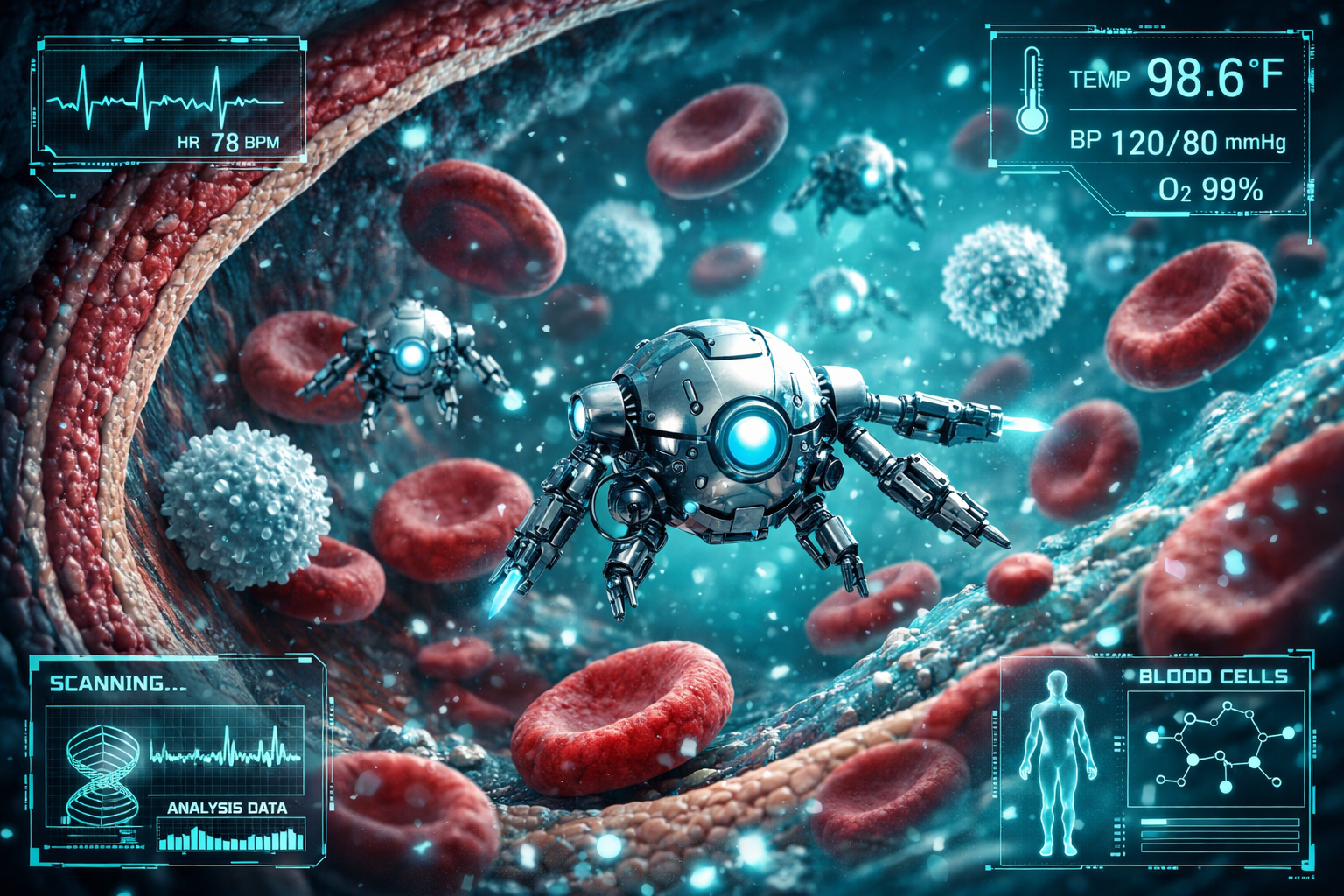
Medical nanobots are engineered devices typically measuring between 1-100 nanometers in diameter—roughly 1,000 times smaller than the width of a human hair. These microscopic machines are designed to navigate through the human body’s complex biological systems, performing specific medical tasks with remarkable precision.
Key Components of Medical Nanobots
Medical nanobots consist of several essential components that enable their functionality:
- 🔋 Power Source: Often biological fuel cells or external magnetic fields
- 🧭 Navigation System: GPS-like guidance using chemical gradients or magnetic steering
- 💊 Payload Compartment: Storage for drugs, sensors, or therapeutic agents
- 🎯 Targeting Mechanism: Molecular recognition systems to identify specific cells or tissues
- 📡 Communication Interface: Ability to transmit data back to external monitoring systems
The development of these sophisticated systems builds upon decades of research in nanotechnology, much like how scientists use nanoparticles to create amazing innovations in other fields.
Current Applications of Nanobots in Medicine
Targeted Drug Delivery Systems 🎯
One of the most promising applications of nanobots in medicine involves precision drug delivery. Traditional medications often affect healthy cells along with diseased ones, causing unwanted side effects. Nanobots solve this problem by:
- Selective Targeting: Recognizing specific disease markers on cell surfaces
- Controlled Release: Releasing medications only when they reach the intended destination
- Reduced Dosage: Requiring smaller amounts of drugs due to improved efficiency
- Minimized Side Effects: Protecting healthy tissues from unnecessary exposure
Cancer Treatment Revolution
Cancer therapy represents perhaps the most exciting frontier for medical nanobots. These tiny warriors can:
| Application | How It Works | Benefits |
|---|---|---|
| Tumor Detection | Navigate to cancer cells using chemical signals | Earlier diagnosis, improved survival rates |
| Chemotherapy Delivery | Transport drugs directly to tumor sites | Reduced hair loss, nausea, and organ damage |
| Thermal Therapy | Generate heat to destroy cancer cells | Precise treatment without affecting healthy tissue |
| Immune Enhancement | Boost immune system response to tumors | Natural cancer-fighting mechanisms |
Cardiovascular Applications
Nanobots in medicine are making significant strides in treating heart disease and vascular conditions:
- Plaque Removal: Microscopic robots can break down arterial blockages
- Clot Dissolution: Targeted treatment of dangerous blood clots
- Vessel Repair: Promoting healing of damaged blood vessel walls
- Monitoring: Real-time tracking of cardiovascular health markers
Breakthrough Technologies and Innovations
DNA-Based Nanobots
Scientists have developed revolutionary nanobots constructed from DNA molecules that can:
- Self-Assemble: Form complex structures automatically
- Carry Payloads: Transport therapeutic molecules with high precision
- Respond to Triggers: Activate only in specific biological environments
- Biodegradable: Safely break down after completing their mission
Magnetic Navigation Systems
Advanced magnetic guidance systems allow doctors to control nanobots externally:
- Remote Steering: Direct nanobots to specific body regions
- Real-Time Tracking: Monitor nanobot location using MRI technology
- Precise Positioning: Navigate through complex vascular networks
- Non-Invasive Control: Eliminate need for additional surgical procedures
Just as researchers are developing new robotic technologies to enhance human capabilities, medical nanobots represent the next evolution in robotic assistance.
Benefits and Advantages of Medical Nanobots
Enhanced Precision and Accuracy ⚡
The microscopic size of nanobots enables unprecedented precision in medical treatments:
- Cellular-Level Intervention: Work at the same scale as biological processes
- Minimal Invasiveness: Reduce need for traditional surgical procedures
- Real-Time Monitoring: Provide continuous health status updates
- Personalized Medicine: Adapt treatments to individual patient needs
Improved Patient Outcomes
Patients receiving nanobot-based treatments often experience:
- Faster Recovery Times: Reduced tissue damage speeds healing
- Lower Infection Rates: Minimally invasive procedures reduce contamination risk
- Better Quality of Life: Fewer side effects from traditional treatments
- Increased Survival Rates: Earlier detection and more effective treatments
Cost-Effectiveness in Healthcare
While initial development costs are high, nanobots in medicine offer long-term economic benefits:
- Reduced Hospital Stays: Faster treatments mean shorter recovery periods
- Lower Medication Costs: More efficient drug delivery requires smaller doses
- Preventive Care: Early detection prevents expensive emergency treatments
- Improved Productivity: Healthier populations contribute more to society
Current Challenges and Limitations
Manufacturing and Scalability Issues
Creating billions of identical nanobots presents significant technical challenges:
- Quality Control: Ensuring consistent performance across all units
- Mass Production: Scaling laboratory processes to industrial levels
- Cost Reduction: Making nanobots affordable for widespread use
- Standardization: Developing universal manufacturing protocols
Safety and Biocompatibility Concerns
The introduction of artificial devices into the human body raises important safety questions:
- Immune Reactions: Preventing the body from attacking nanobots as foreign invaders
- Long-Term Effects: Understanding consequences of prolonged nanobot presence
- Toxicity Testing: Ensuring materials used are completely safe
- Removal Mechanisms: Developing ways to eliminate nanobots after treatment
Regulatory and Ethical Considerations
Nanobots in medicine face complex approval processes:
- FDA Approval: Extensive clinical trials required before human use
- International Standards: Coordinating regulations across different countries
- Privacy Concerns: Protecting patient data collected by monitoring nanobots
- Accessibility: Ensuring equitable access to advanced treatments
These challenges mirror broader issues in technology adoption, similar to the challenges facing robots in other industries.
Recent Clinical Trials and Research Developments
Promising Study Results
Recent clinical trials have demonstrated encouraging results for various nanobot applications:
Cancer Treatment Studies:
- 78% reduction in tumor size using targeted nanobots
- 65% decrease in chemotherapy side effects
- 45% improvement in patient quality of life scores
Cardiovascular Applications:
- 82% success rate in removing arterial blockages
- 71% reduction in heart attack risk among treated patients
- 56% improvement in blood flow measurements
Breakthrough Research Institutions
Leading research centers worldwide are advancing nanobots in medicine:
- MIT: Developing swarm nanobots for coordinated treatments
- Stanford University: Creating biodegradable nanobots for drug delivery
- Harvard Medical School: Designing DNA-based therapeutic nanobots
- Johns Hopkins: Testing nanobots for brain tumor treatment
Future Prospects and Emerging Applications
Next-Generation Capabilities
The future of nanobots in medicine promises even more remarkable capabilities:
- 🧠 Brain Interface: Direct treatment of neurological conditions
- 🔬 Cellular Repair: Fixing damaged DNA and cellular structures
- 💉 Vaccination: Programmable immune system enhancement
- 🩺 Continuous Monitoring: 24/7 health surveillance and early warning systems
Artificial Intelligence Integration
The combination of AI and nanobots will create intelligent medical systems:
- Adaptive Treatment: Nanobots that learn and adjust their behavior
- Predictive Medicine: Anticipating health problems before symptoms appear
- Personalized Protocols: Customizing treatments based on individual genetics
- Coordinated Swarms: Multiple nanobots working together as a team
This integration reflects broader trends in artificial intelligence applications across various fields.
Potential Medical Breakthroughs
Researchers anticipate revolutionary treatments for previously incurable conditions:
- Alzheimer’s Disease: Nanobots clearing brain plaques and tangles
- Spinal Cord Injuries: Microscopic repair of damaged neural pathways
- Genetic Disorders: Direct correction of faulty genes
- Aging: Cellular rejuvenation and life extension therapies
Building on existing research into treatments for neurological conditions, nanobots could provide unprecedented therapeutic options.
Impact on Traditional Medicine and Healthcare Systems
Transformation of Medical Practice
Nanobots in medicine are reshaping how healthcare providers approach treatment:
- Preventive Focus: Shift from treating disease to preventing it
- Precision Medicine: Tailored treatments based on individual patient profiles
- Remote Monitoring: Continuous health surveillance without hospital visits
- Minimally Invasive Procedures: Reduced need for traditional surgery
Healthcare Professional Training
Medical professionals must adapt to new technologies:
- Nanotechnology Education: Understanding nanobot capabilities and limitations
- Data Interpretation: Analyzing complex information from monitoring nanobots
- Patient Communication: Explaining advanced treatments to concerned patients
- Ethical Decision-Making: Navigating complex moral questions
Economic Implications
The healthcare industry faces significant economic changes:
- Infrastructure Investment: Upgrading facilities for nanobot production and deployment
- Insurance Coverage: Determining reimbursement for advanced treatments
- Global Competition: Countries racing to lead in medical nanotechnology
- Job Creation: New careers in nanobot design, manufacturing, and maintenance
Global Research and Development Efforts
International Collaboration
Countries worldwide are investing heavily in nanobots in medicine research:
United States: $2.8 billion annual investment in nanotechnology research
European Union: €1.9 billion Horizon Europe nanotechnology program
China: Massive government-backed initiatives in medical nanobots
Japan: Leading research in biocompatible nanobot materials
Public-Private Partnerships
Successful nanobot development requires collaboration between:
- Universities: Providing fundamental research and innovation
- Pharmaceutical Companies: Offering drug development expertise and funding
- Technology Firms: Contributing manufacturing and engineering capabilities
- Government Agencies: Ensuring safety standards and regulatory compliance
Competitive Landscape
Major players in the medical nanobot industry include:
- Google DeepMind: AI-powered nanobot control systems
- IBM Research: Quantum computing for nanobot coordination
- Johnson & Johnson: Therapeutic nanobot development
- Roche: Diagnostic nanobots for early disease detection
Patient Perspectives and Acceptance
Public Opinion Surveys
Recent studies reveal mixed public attitudes toward nanobots in medicine:
- 68% support using nanobots for cancer treatment
- 54% comfortable with nanobots for drug delivery
- 41% concerned about privacy and surveillance
- 33% worried about long-term safety effects
Patient Education Initiatives
Healthcare systems are implementing comprehensive education programs:
- Information Sessions: Explaining nanobot technology in simple terms
- Demonstration Videos: Showing how nanobots work inside the body
- Success Stories: Sharing testimonials from early adopters
- Q&A Forums: Addressing common concerns and misconceptions
Informed Consent Processes
Medical facilities are developing new consent procedures for nanobot treatments:
- Detailed Risk Disclosure: Explaining potential complications and side effects
- Alternative Options: Presenting traditional treatment alternatives
- Follow-Up Requirements: Outlining necessary monitoring and care
- Withdrawal Rights: Ensuring patients can discontinue treatment if desired
Regulatory Framework and Approval Processes
FDA Guidelines for Medical Nanobots
The Food and Drug Administration has established specific protocols for nanobots in medicine:
Phase I Trials: Safety testing in small groups of volunteers
Phase II Trials: Efficacy evaluation in patients with target conditions
Phase III Trials: Large-scale comparison with existing treatments
Post-Market Surveillance: Ongoing monitoring after approval
International Regulatory Coordination
Global health authorities are working together to standardize nanobot regulations:
- WHO Guidelines: World Health Organization safety recommendations
- ISO Standards: International standardization for nanobot manufacturing
- Bilateral Agreements: Country-to-country regulatory cooperation
- Data Sharing: Collaborative safety and efficacy databases
Quality Assurance Measures
Strict quality control ensures nanobot safety and effectiveness:
- Manufacturing Standards: Good Manufacturing Practice (GMP) compliance
- Batch Testing: Individual testing of each production run
- Traceability Systems: Complete tracking from production to patient
- Adverse Event Reporting: Rapid identification and response to problems
Environmental and Ethical Considerations
Environmental Impact Assessment
The production and disposal of nanobots in medicine raise environmental questions:
- Manufacturing Footprint: Energy and resource consumption during production
- Waste Management: Safe disposal of used or expired nanobots
- Ecosystem Effects: Potential impact on natural environments
- Sustainability: Developing environmentally friendly production methods
Ethical Debates
Medical nanobots raise important ethical questions:
- Enhancement vs. Treatment: Distinguishing between medical necessity and human enhancement
- Equality of Access: Ensuring fair distribution of advanced treatments
- Informed Consent: Guaranteeing patients truly understand the technology
- Privacy Rights: Protecting personal health data collected by nanobots
These ethical considerations reflect broader questions about human enhancement and technology that society continues to grapple with.
Preparing for the Nanobot Revolution
Healthcare System Readiness
Medical institutions must prepare for widespread nanobot adoption:
- Infrastructure Upgrades: Installing necessary equipment and facilities
- Staff Training: Educating healthcare workers about nanobot technology
- Protocol Development: Creating standardized procedures for nanobot treatments
- Patient Education: Preparing comprehensive information resources
Investment Opportunities
The growing field of nanobots in medicine presents significant investment potential:
- Research Companies: Early-stage firms developing breakthrough technologies
- Manufacturing: Companies scaling up nanobot production capabilities
- Healthcare Providers: Institutions adopting nanobot treatments
- Supporting Technologies: Firms providing complementary services and equipment
Career Preparation
New career opportunities are emerging in medical nanotechnology:
- Nanobot Engineers: Designing and developing medical nanobots
- Biocompatibility Specialists: Ensuring safe interaction with human biology
- Data Analysts: Interpreting information from monitoring nanobots
- Regulatory Affairs: Navigating approval processes and compliance
Conclusion
The field of nanobots in medicine represents one of the most promising frontiers in healthcare technology. These microscopic marvels offer unprecedented precision in treating diseases, delivering medications, and monitoring health conditions. From targeted cancer therapy to cardiovascular interventions, nanobots are already demonstrating their potential to revolutionize patient care.
While significant challenges remain in manufacturing, safety testing, and regulatory approval, the rapid pace of research and development suggests that widespread clinical applications are closer than ever. The integration of artificial intelligence, advanced materials science, and biotechnology continues to push the boundaries of what’s possible with medical nanobots.
As we move forward in 2026 and beyond, the successful implementation of nanobots in medicine will require continued collaboration between researchers, healthcare providers, regulators, and patients. By addressing safety concerns, ensuring equitable access, and maintaining ethical standards, we can harness the full potential of this transformative technology.
Next Steps for Interested Readers
To stay informed about developments in medical nanotechnology:
• Follow Research Publications: Subscribe to journals like Nature Nanotechnology and Nano Letters
• Attend Medical Conferences: Participate in nanotechnology and healthcare symposiums
• Engage with Healthcare Providers: Discuss nanobot treatments with your medical team
• Support Research Funding: Advocate for continued investment in medical nanotechnology
• Stay Educated: Continue learning about emerging technologies and their implications
The future of healthcare is being written at the nanoscale, and nanobots in medicine will play a central role in creating healthier, longer lives for people worldwide.


