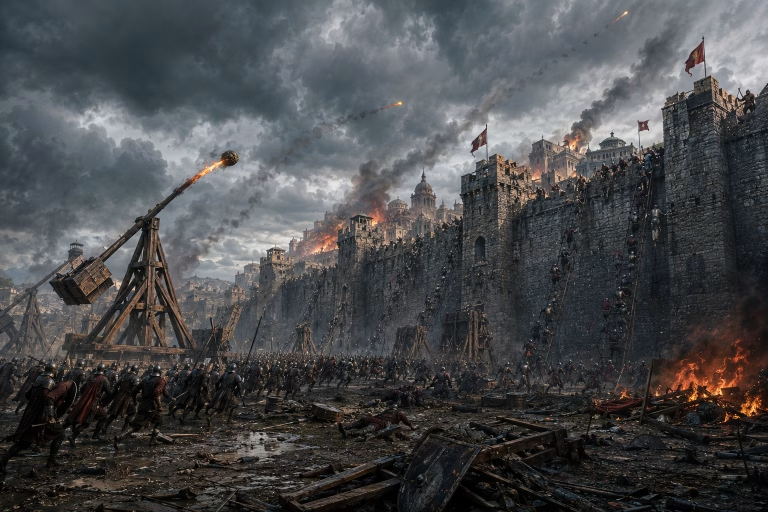
When Britain stood alone against one of the most powerful military forces in history, one leader refused to break—Winston Churchill. His unwavering determination during World War II didn’t just save a nation; it revealed timeless principles about what separates great leaders from ordinary ones. The lessons from Churchill’s leadership extend far beyond wartime strategy, offering profound insights into resilience, communication, and decision-making under extreme pressure that remain relevant.
Churchill’s leadership style emerged during humanity’s darkest hour, when conventional wisdom suggested surrender might be the rational choice. Yet his refusal to accept defeat, combined with his ability to inspire millions through words and actions, demonstrates how true leadership can transform impossible situations into historic victories. These leadership principles transcend their historical context, providing a blueprint for anyone facing seemingly insurmountable challenges.
Key Takeaways
• Resolve under pressure: Great leaders maintain unwavering determination when others waver or seek easy solutions
• Communication as a weapon: Words can inspire entire nations and transform fear into courage during crisis moments
• Balanced realism: Effective leaders acknowledge harsh realities while simultaneously inspiring hope and confidence
• Decisive action: Quick decision-making during uncertainty often proves more valuable than perfect information
• Personal accountability: True leaders accept responsibility for both failures and successes without deflection
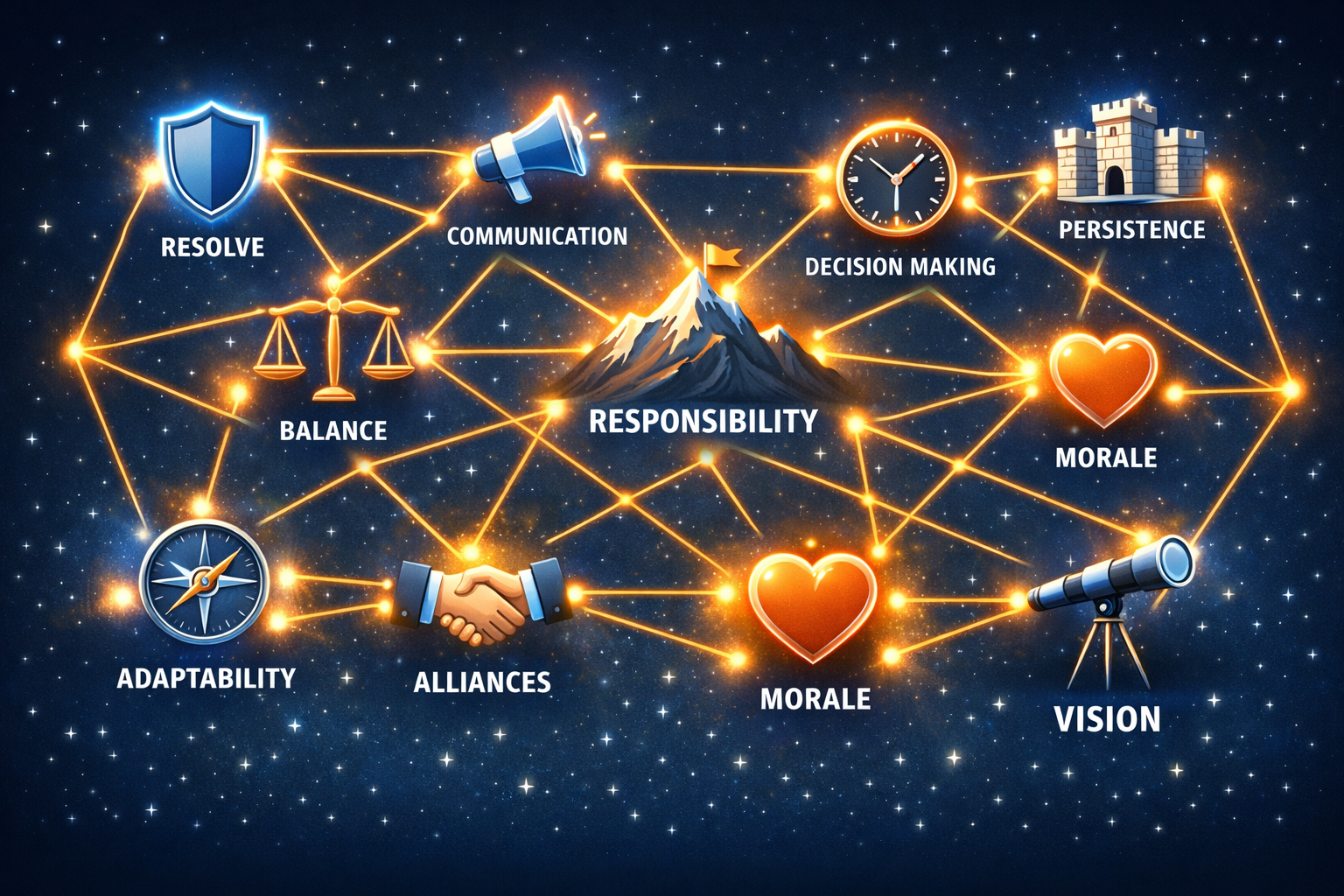
10 Leadership Lessons from Churchill
1. Lead with Unshakable Resolve 🛡️
In May 1940, as German forces swept across Europe and France teetered on collapse, Churchill faced immense pressure to negotiate peace with Hitler. Lord Halifax and other cabinet members argued that Britain should seek terms while still in a position to bargain. Churchill’s response was categorical: “Nations which went down fighting rose again, but those which surrendered tamely were finished.”
This moment exemplified Churchill’s core leadership principle—unwavering resolve in the face of overwhelming odds. He understood that leaders must sometimes stand alone against popular opinion, maintaining course when others lose faith. His refusal to consider surrender wasn’t mere stubbornness; it was strategic leadership that recognized how quickly defeatist thinking spreads through organizations and nations.
Modern Application: Today’s leaders face similar moments requiring absolute conviction. Whether navigating economic downturns, competitive threats, or internal crises, the principle remains constant—leaders must project confidence even when feeling uncertain internally.
2. Master the Power of Words 📢
Churchill’s speeches during Britain’s darkest hours demonstrate how communication can become a leader’s most powerful tool. His famous “We shall fight on the beaches” address didn’t just inform the public about military strategy; it transformed national psychology from despair to determination.
“We shall defend our island, whatever the cost may be. We shall fight on the beaches, we shall fight on the landing grounds, we shall fight in the fields and in the streets, we shall fight in the hills; we shall never surrender.”
These weren’t empty words—they were carefully crafted messages designed to steel British resolve while signaling to allies and enemies alike that Britain would not capitulate. Churchill understood that in crisis, people need both information and inspiration. His speeches provided both, using vivid imagery and rhythmic repetition to make complex strategic concepts emotionally resonant.
Modern Application: Effective leaders today must master multiple communication channels, from team meetings to social media, ensuring their message remains consistent while adapting to different audiences and platforms.
3. Face Reality—But Inspire Hope ⚖️
One of Churchill’s most sophisticated leadership skills was his ability to acknowledge dire circumstances while maintaining optimism about eventual outcomes. He never sugar-coated Britain’s precarious military position, but he consistently framed setbacks as temporary obstacles rather than permanent defeats.
During the Blitz, Churchill regularly walked through bombed London neighborhoods, witnessing destruction firsthand while encouraging civilians. He didn’t minimize their suffering or pretend the bombing wasn’t devastating. Instead, he acknowledged their pain while reinforcing the narrative that their sacrifice served a greater purpose—defeating fascism and preserving freedom.
This balanced approach built credibility that purely optimistic leaders often lack. People trusted Churchill’s hopeful messages because he demonstrated clear understanding of harsh realities. His honesty about challenges made his confidence about ultimate victory more believable.
Modern Application: Leaders who combine realistic assessment with inspirational vision create stronger organizational cultures than those who rely solely on positive thinking or harsh criticism.
4. Make Decisions Under Pressure ⏰
Churchill’s wartime decision-making process reveals crucial insights about leadership under extreme time constraints. When German U-boats threatened to starve Britain through naval blockade, Churchill had to balance competing priorities: protecting merchant ships, maintaining offensive operations, and allocating limited naval resources across multiple theaters.
Rather than seeking perfect information—which rarely exists during crises—Churchill gathered available intelligence, consulted key advisors, and made decisive choices quickly. He understood that delayed decisions often become irrelevant decisions, and that leaders must act on incomplete information while remaining flexible enough to adjust course as situations evolve.
His decision to support developing strong alliances with both the United States and Soviet Union, despite ideological differences, exemplified this principle. These weren’t comfortable partnerships, but Churchill recognized that defeating Nazi Germany required pragmatic coalition-building rather than ideological purity.
Modern Application: In fast-moving business environments, leaders who can make quality decisions quickly often outperform those who seek exhaustive analysis before acting.
5. Take Responsibility for Outcomes 🎯
Churchill’s willingness to accept accountability for both successes and failures distinguished him from leaders who deflect blame during difficult periods. The disastrous Gallipoli campaign during World War I, which Churchill championed as First Lord of the Admiralty, resulted in massive casualties and his temporary political exile.
Rather than blaming subordinates or circumstances, Churchill accepted responsibility for strategic miscalculations. This accountability actually strengthened his long-term credibility, demonstrating that he held himself to the same standards he expected from others. When he returned to power during World War II, people trusted him partly because he had proven capable of learning from previous mistakes.
During World War II, Churchill regularly briefed Parliament about military setbacks, taking personal responsibility for strategic decisions while explaining lessons learned and adjustments being made. This transparency built public confidence that leadership was actively addressing problems rather than hiding them.
Modern Application: Leaders who own their failures while clearly communicating corrective actions build stronger teams than those who shift blame or avoid difficult conversations.
6. Adapt to Changing Circumstances 🧭
Churchill’s strategic flexibility throughout World War II demonstrates how effective leaders must constantly adjust tactics while maintaining consistent core objectives. When the Battle of Britain shifted from daylight bombing to nighttime Blitz attacks, Churchill quickly reallocated resources from fighter squadrons to civil defense and anti-aircraft systems.
His ability to pivot from defensive survival (1940-1941) to offensive planning (1942-1943) to coalition management (1944-1945) showed remarkable strategic adaptability. Each phase required different skills, priorities, and resource allocations, but Churchill maintained focus on the ultimate goal—defeating Nazi Germany—while adjusting methods as circumstances changed.
This adaptability extended to alliance management, where Churchill navigated complex relationships with Stalin and Roosevelt despite fundamental disagreements about post-war Europe. He understood that rigid adherence to preferred approaches often prevents leaders from capitalizing on emerging opportunities.
Modern Application: In rapidly changing markets, leaders must balance consistency of vision with flexibility of execution, adjusting strategies based on new information while maintaining team confidence in overall direction.
7. Build Strong Alliances 🤝
Churchill’s coalition-building efforts reveal sophisticated understanding of how individual leaders can amplify their influence through strategic partnerships. His relationship with Franklin Roosevelt evolved from cautious cooperation to genuine partnership, fundamentally altering the war’s trajectory.
The famous Atlantic Charter, developed during Churchill and Roosevelt’s secret meeting in 1941, established shared principles for post-war reconstruction while cementing the Anglo-American alliance. Churchill understood that Britain’s survival depended on American involvement, and he invested enormous energy in cultivating this relationship through personal diplomacy, strategic communication, and mutual respect.
His more complex relationship with Stalin demonstrated how leaders sometimes must work with difficult partners to achieve essential objectives. Churchill never trusted Stalin personally, but he recognized that defeating Germany required Soviet participation. This pragmatic approach to how powerful societies manage complex relationships enabled the Allied victory.
Modern Application: Successful leaders today must build diverse coalitions, working effectively with partners who may have different values or competing interests while maintaining focus on shared objectives.
8. Maintain Morale in Crisis 💪
Churchill’s approach to maintaining morale during extended crisis periods offers valuable insights for leaders facing sustained challenges. Rather than relying solely on speeches or formal communications, he understood that visible leadership during difficult moments carries enormous symbolic weight.
During the Blitz, Churchill regularly visited bombed areas, toured military installations, and maintained public visibility even when personal safety was at risk. These appearances weren’t mere photo opportunities—they demonstrated shared sacrifice and personal commitment to the struggle. His presence in dangerous situations showed that leadership meant accepting the same risks faced by ordinary citizens and soldiers.
Churchill also understood the importance of celebrating small victories and recognizing individual contributions during extended campaigns. His practice of personally visiting military units, decorating heroes, and acknowledging civilian contributions helped maintain fighting spirit during periods when overall progress seemed limited.
Modern Application: Leaders facing long-term challenges must find ways to maintain team energy and commitment through visible engagement, recognition of contributions, and celebration of incremental progress toward larger goals.
9. Stay Focused on the Bigger Picture 🔭
Throughout World War II, Churchill demonstrated remarkable ability to maintain strategic focus despite constant tactical pressures and political distractions. While managing immediate crises—supply shortages, military setbacks, political criticism—he consistently prioritized decisions based on long-term strategic objectives rather than short-term comfort or popularity.
His insistence on maintaining offensive operations in North Africa, despite pressure to concentrate all resources on defending Britain, exemplified this long-term thinking. Churchill understood that purely defensive strategies rarely produce victory, and that leaders must sometimes accept short-term risks to create opportunities for eventual success.
This strategic perspective also influenced his approach to learning from historical examples, where he drew insights from past conflicts while adapting them to contemporary circumstances. His study of military history informed strategic decisions without constraining his thinking about new approaches.
Modern Application: Effective leaders must balance immediate operational demands with long-term strategic positioning, making decisions that may be unpopular in the short term but essential for sustainable success.
10. Refuse to Accept Defeat 🏰
Perhaps Churchill’s most defining characteristic was his absolute refusal to accept defeat, even when objective analysis suggested that continued resistance might be futile. This wasn’t mere optimism or denial—it was strategic understanding that surrendering guarantees failure while continued resistance maintains the possibility of eventual victory.
During Britain’s darkest period in 1940, when invasion seemed imminent and resources were nearly exhausted, Churchill’s determination to continue fighting created opportunities that wouldn’t have existed under different leadership. His refusal to negotiate with Hitler kept Britain in the war long enough for American entry and Soviet resistance to change the strategic balance.
This persistence extended beyond military matters to include political resilience during criticism and personal stamina during extended crisis periods. Churchill understood that leadership during existential challenges requires emotional and physical endurance that goes beyond normal expectations.
Modern Application: Leaders facing seemingly impossible challenges must maintain determination long enough for circumstances to change, understanding that persistence often creates opportunities that aren’t visible during the darkest moments.
Why Churchill’s Leadership Was Effective
Churchill’s leadership effectiveness stemmed from several key traits that worked synergistically during crisis periods. His confidence under pressure wasn’t mere bravado—it was based on deep strategic thinking and thorough preparation that enabled quick decision-making when circumstances demanded immediate action.
His emotional intelligence allowed him to read public mood, anticipate political reactions, and calibrate his communications for maximum impact. Churchill understood that leading during crisis requires managing both rational analysis and emotional responses, addressing people’s fears while channeling their energy toward productive action.
Perhaps most importantly, Churchill possessed strategic thinking abilities that enabled him to see connections between seemingly unrelated events and anticipate how current decisions would influence future options. This systems-thinking approach helped him navigate complex political and military challenges that overwhelmed leaders with more limited perspectives.
Criticism and Complexity
While Churchill’s wartime leadership offers valuable lessons, it’s important to acknowledge that not all his decisions were universally praised or successful. His strategic choices sometimes prioritized British interests over those of allies, and some of his tactical decisions resulted in significant casualties without proportional gains.
Churchill’s leadership style, while effective during existential crisis, might not translate directly to peacetime management or collaborative organizational cultures. His sometimes autocratic approach and willingness to override subordinates’ objections worked during wartime but could be counterproductive in different contexts.
Balanced Perspective: Leadership is rarely perfect, and even the most successful leaders make mistakes or face legitimate criticism. What matters most is the overall impact and the principles that can be extracted and adapted to different situations and challenges.
Applying Churchill’s Lessons Today
The lessons from Churchill’s leadership remain remarkably relevant for contemporary challenges across multiple domains. In business leadership, his principles of clear communication, decisive action, and strategic persistence apply directly to managing organizational change, competitive threats, and market disruptions.
For personal development, Churchill’s example demonstrates how individuals can build resilience, improve decision-making under pressure, and develop the communication skills necessary for influencing others during difficult periods. His approach to becoming a thought leader through consistent messaging and visible commitment to principles offers a template for building personal influence.
In crisis management, Churchill’s balanced approach to acknowledging problems while maintaining optimism provides a framework for leaders navigating organizational emergencies, public relations challenges, or operational disruptions. His emphasis on quick decision-making with incomplete information remains essential for managing fast-moving situations.
For decision-making under uncertainty, Churchill’s methods of gathering available intelligence, consulting key advisors, and acting decisively while remaining flexible enough to adjust course offer practical guidance for leaders facing complex choices with significant consequences.
Conclusion
The lessons from Churchill’s leadership transcend their historical context because they address fundamental challenges that leaders face across all domains and time periods. His ability to maintain resolve under extreme pressure, communicate effectively during crisis, and make difficult decisions with incomplete information represents timeless leadership principles rather than situational tactics.
Churchill’s example demonstrates that great leadership isn’t about having perfect judgment or avoiding mistakes—it’s about maintaining determination, learning from failures, and inspiring others to persist through seemingly impossible challenges. His willingness to accept responsibility, adapt strategies based on changing circumstances, and refuse to accept defeat provides a blueprint for effective leadership during any crisis.
These principles become even more relevant as leaders in 2026 face increasingly complex challenges requiring quick adaptation, clear communication, and unwavering commitment to core values. Whether navigating technological disruption, managing diverse teams, or building sustainable organizations, the fundamental lessons from Churchill’s leadership remain as applicable today as they were during World War II.
Take Action: Start applying these lessons by identifying one area where you can demonstrate greater resolve, improve your communication clarity, or take more decisive action. Great leaders aren’t defined when things are easy—they’re revealed when everything is at risk.