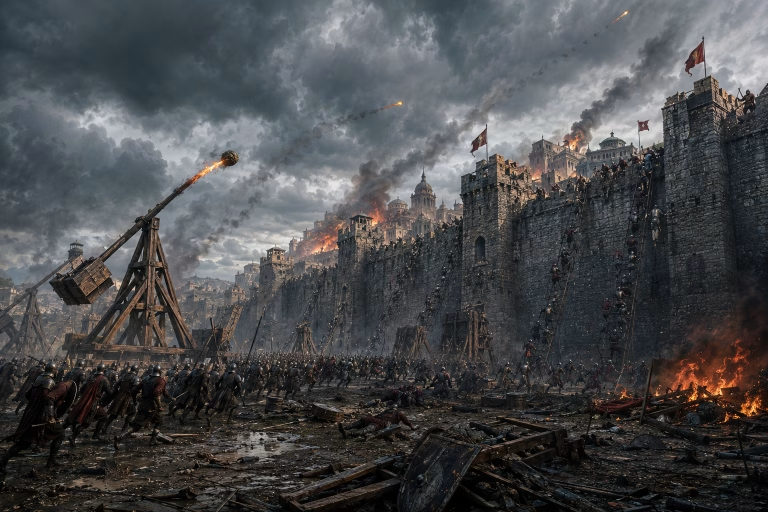
After the devastation of World War I, the world’s leaders created a bold new idea: a global organization to prevent war forever. It failed spectacularly, and within two decades, an even more devastating conflict engulfed the globe. Did the League of Nations doom peace? This question haunts historians and political scientists even in 2026, as we continue to grapple with international cooperation and conflict prevention.
The League of Nations represented humanity’s first serious attempt at creating a global peacekeeping organization. Born from the ashes of “the war to end all wars,” it promised to replace the brutal balance-of-power politics that had led to unprecedented carnage. Yet by 1939, the world was once again at war—this time with consequences even more catastrophic than before.
The central question remains: Did the League of Nations doom peace by failing to prevent aggression, or was it simply too weak to stop the forces that were already set in motion? The answer reveals uncomfortable truths about international cooperation, the nature of power, and the price of good intentions without enforcement mechanisms.
Key Takeaways
• The League lacked enforcement power — With no standing army and reliance on voluntary cooperation, it couldn’t stop determined aggressors
• Major powers were absent or weak — The U.S. never joined, while other key nations left or ignored League decisions when convenient
• Early failures emboldened aggressors — Japan’s invasion of Manchuria and Italy’s conquest of Ethiopia showed the League was toothless
• Structural flaws doomed success — Slow decision-making, unanimous voting requirements, and dependence on member goodwill made effective action nearly impossible
• The League didn’t cause WWII but failed to prevent it — Its weakness created a power vacuum that aggressive nations exploited
What Was the League of Nations?
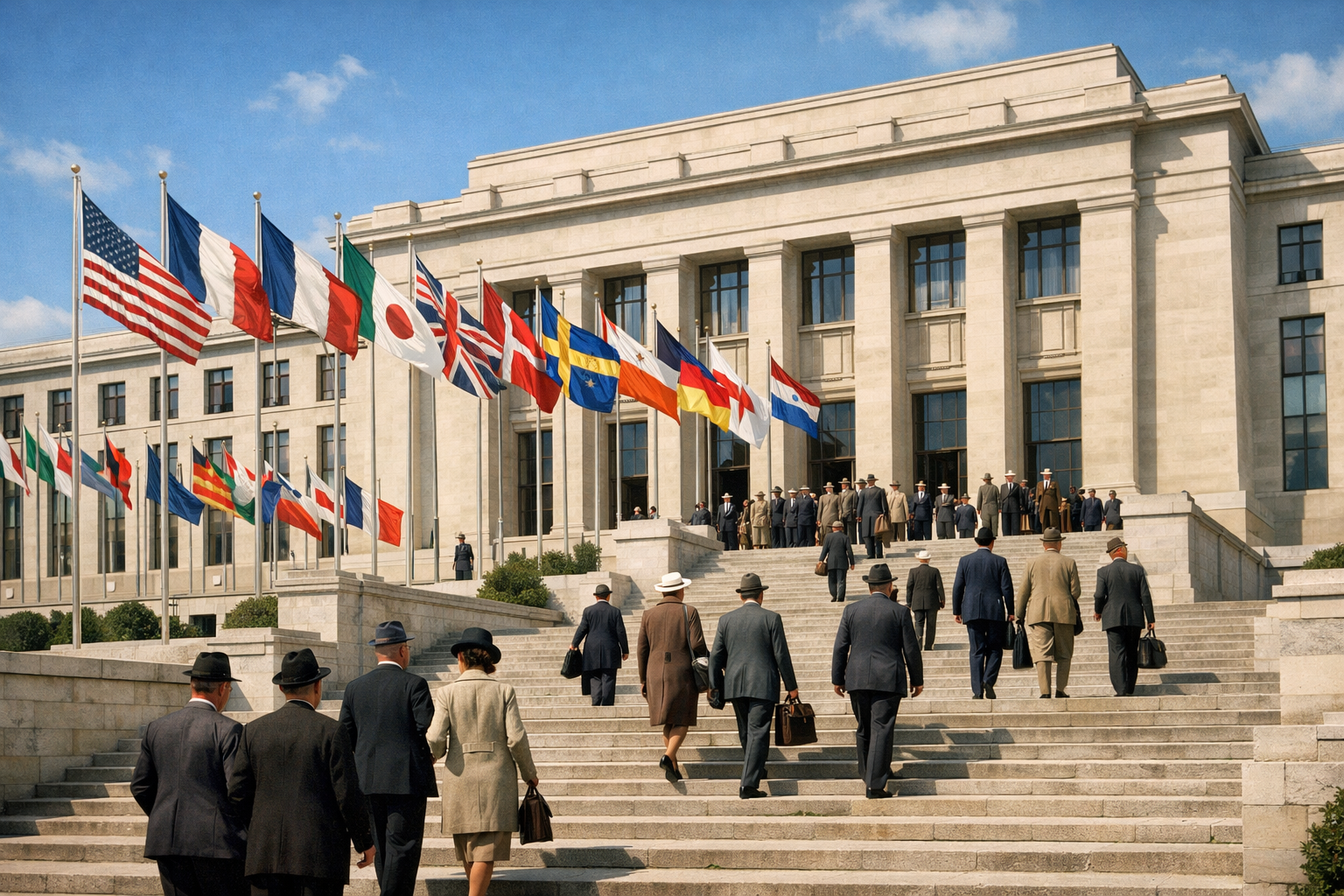
The League of Nations emerged from the Paris Peace Conference in 1919 as an ambitious experiment in international governance. Created to answer whether the League of Nations would doom peace or preserve it, this organization represented a radical departure from traditional diplomacy.
Purpose and Vision
The League’s primary mission centered on three core objectives:
• Prevent future wars through collective security arrangements
• Promote diplomatic solutions to international disputes
• Encourage cooperation on global issues like trade, health, and humanitarian concerns
The organization’s founding document, the Covenant of the League of Nations, established a framework where member nations would work together to maintain peace. If one member faced aggression, all others would come to its aid through economic sanctions or, if necessary, military action.
Key Features and Structure
The League operated through several main bodies:
The Assembly 🏛️
- Included all member nations
- Met annually in Geneva
- Required unanimous decisions on important matters
The Council ⚖️
- Permanent members: Britain, France, Italy, Japan
- Temporary members elected by the Assembly
- Responsible for maintaining peace and security
The Secretariat 📋
- Administrative body led by the Secretary-General
- Coordinated League activities and communications
Specialized Agencies 🌍
- International Labour Organization
- Permanent Court of International Justice
- Various humanitarian and technical committees
The League’s most significant weakness became apparent immediately: it possessed no standing army and relied entirely on member nations to enforce its decisions. This fundamental flaw would prove critical in determining whether the League of Nations would doom peace through its inability to back up diplomatic pressure with force.
Economic sanctions served as the primary enforcement tool, but these required widespread cooperation to be effective. When major powers chose to ignore or circumvent sanctions, the League’s authority crumbled.
Why the League Was Created
The Aftermath of Unprecedented Destruction
World War I shattered the old international order with unprecedented brutality. The conflict claimed over 16 million lives, destroyed empires, and left Europe in ruins. Traditional balance-of-power diplomacy had clearly failed, creating a desperate need for new approaches to international relations.
The war’s devastation created a unique moment in history when leaders genuinely believed they could answer whether the League of Nations would doom peace by creating something entirely different. The scale of destruction made the cost of another such conflict unthinkable.
Key statistics that drove the push for change:
- 8.5 million military deaths across all combatant nations
- Economic losses estimated at $208 billion (1919 dollars)
- Four major empires collapsed: German, Austro-Hungarian, Russian, and Ottoman
- Millions of refugees displaced across Europe
Idealism and the Vision of Lasting Peace
President Woodrow Wilson emerged as the League’s primary champion, driven by his “Fourteen Points” vision for post-war peace. Wilson believed that democratic principles and open diplomacy could replace the secret alliances and imperial competition that had led to war.
The idealistic vision included:
Open Diplomacy 📢
- No more secret treaties or hidden alliances
- Public negotiations and transparent agreements
- Democratic oversight of foreign policy
Self-Determination 🗳️
- National groups should govern themselves
- End of imperial domination over unwilling subjects
- Democratic legitimacy for new nations
Collective Security 🤝
- All nations unite against aggressors
- Shared responsibility for maintaining peace
- Economic and military cooperation against threats
This idealism, while admirable, would soon face the harsh realities of international politics. The question of whether the League of Nations would doom peace began to emerge as early optimism met practical challenges.
Wilson’s vision resonated with war-weary populations across Europe and America. The impact of wars on US history shows how deeply WWI affected American thinking about international engagement, even as the U.S. ultimately rejected League membership.
The Argument: Yes, the League Helped Doom Peace
1. Fatal Lack of Enforcement Power
The League’s most critical flaw lay in its complete dependence on voluntary cooperation. Unlike modern international organizations with peacekeeping forces, the League possessed no military capabilities of its own.
The Enforcement Gap ⚔️
When aggressive nations violated international law, the League could only:
- Issue diplomatic protests
- Impose economic sanctions (if members agreed)
- Recommend military action (which members could ignore)
This weakness became apparent immediately. Japan’s withdrawal from the League after criticism of its Manchurian invasion demonstrated that powerful nations could simply walk away when faced with unwelcome decisions.
👉 Result: Aggressive nations quickly learned they faced limited consequences for violating international law.
2. Absence of Major Powers Undermined Credibility
The League’s effectiveness suffered devastating blows from the absence or weakness of key global powers.
The United States Never Joined 🇺🇸
Despite Wilson’s leadership in creating the League, the U.S. Senate rejected membership. This absence removed the world’s emerging economic superpower from collective security arrangements.
Key Nations Left or Ignored the League 🚪
- Germany: Initially excluded, joined in 1926, left in 1933
- Soviet Union: Joined in 1934, expelled in 1939
- Japan: Left in 1933 after Manchurian criticism
- Italy: Effectively ignored League authority after 1935
👉 Result: The League lacked the economic and military power necessary to deter major aggressors.
3. Spectacular Failures to Stop Aggression
Three major crises revealed the League’s impotence and arguably helped doom peace by encouraging further aggression.
Japan in Manchuria (1931) 🏴
- Japan invaded Chinese territory without provocation
- League investigation took over a year
- Japan simply withdrew from the League when criticized
- No effective action taken
Italy in Ethiopia (1935) 🦁
- Mussolini’s forces used poison gas against Ethiopian civilians
- League imposed limited sanctions but excluded oil
- Britain and France secretly negotiated to give Italy most of Ethiopia
- Aggressor achieved its goals despite League opposition
Germany’s Expansion (1936-1939) 🇩🇪
- Hitler remilitarized the Rhineland in violation of treaties
- Germany annexed Austria and Czechoslovakia
- League proved completely irrelevant to stopping Nazi expansion
- Major powers pursued appeasement outside League framework
👉 Result: Each failure demonstrated that the League could not enforce peace when it mattered most.
4. Encouraged Dangerous Appeasement
The League’s weakness inadvertently promoted appeasement policies that emboldened aggressive regimes. When collective security failed, individual nations pursued bilateral negotiations that often rewarded aggression.
The Appeasement Spiral 📉
- League fails to stop aggression
- Victim nations lose faith in collective security
- Major powers negotiate directly with aggressors
- Aggressors receive concessions for ending immediate threats
- Emboldened aggressors plan larger future actions
The connection between WWI and modern peace efforts shows how the League’s failures influenced diplomatic approaches that may have made war more likely.
👉 Result: Rather than deterring aggression, League weakness signaled that expansionist regimes could achieve goals through force.
The Counter-Argument: No, the League Didn’t Doom Peace
1. Structural Limitations Were Built-In from the Start
Critics who ask “Did the League of Nations doom peace?” often overlook that the organization was deliberately designed with limited powers. Member nations, jealous of their sovereignty, never intended to create a world government.
Intentional Constraints 🔒
- Nations retained right to withdraw at any time
- Unanimous voting requirements in the Council
- No automatic military obligations
- Economic sanctions required voluntary compliance
The League reflected the political realities of its time. After centuries of absolute sovereignty, nations weren’t ready to surrender significant power to an international body. Expecting the League to prevent all wars may have been unrealistic from the beginning.
2. Notable Successes in Smaller Conflicts
While the League failed in major crises, it successfully resolved numerous smaller disputes that could have escalated into larger conflicts.
Peaceful Resolutions ✅
- Aaland Islands (1921): Prevented conflict between Finland and Sweden
- Upper Silesia (1921): Resolved Polish-German territorial dispute
- Greek-Bulgarian Border (1925): Stopped military escalation after border incident
- Mosul Dispute (1926): Settled territorial conflict between Turkey and Iraq
Humanitarian Achievements 🏥
- Coordinated refugee assistance after WWI
- Combated international drug trafficking
- Established health cooperation programs
- Promoted labor rights through the ILO
3. The Real Responsibility Lies with Individual Nations
The most compelling argument against blaming the League centers on human choice. Nations and leaders made deliberate decisions to pursue aggression, regardless of international law.
👉 Key Insight: The failure was fundamentally human, not just institutional.
National Decisions That Doomed Peace 🎯
- Hitler’s Germany chose aggressive expansion
- Japan’s military chose to conquer Asian territories
- Italy’s fascists chose to build an African empire
- Britain and France chose appeasement over collective security
Even a stronger League might not have prevented these choices. The underlying causes of WWII—economic depression, nationalist extremism, and imperial ambitions—existed independently of League weakness.
The question “Did the League of Nations doom peace?” may be less important than asking whether any international organization could have prevented the rise of totalitarian regimes determined to use force.
Key Moments That Defined the League’s Failure
The Manchurian Crisis: First Major Test Failed
Japan’s invasion of Manchuria in September 1931 became the League’s first major test—and its first spectacular failure. The crisis revealed fundamental flaws that would plague the organization throughout its existence.
Timeline of Failure 📅
- September 18, 1931: Japan stages false flag incident, invades Manchuria
- October 1931: China appeals to League for help
- December 1931: League establishes Lytton Commission to investigate
- October 1932: Commission reports Japan guilty of aggression
- February 1933: League adopts report condemning Japan
- March 1933: Japan withdraws from League entirely
The crisis took 18 months to resolve diplomatically, during which Japan consolidated control over Chinese territory. This glacial pace demonstrated that League procedures were inadequate for addressing rapid military action.
Ethiopia: The League’s Death Knell
Mussolini’s invasion of Ethiopia in 1935 delivered the fatal blow to League credibility. Unlike the distant Manchurian crisis, this aggression occurred in Africa, where European powers had direct interests.
Why Ethiopia Mattered More 🌍
- Ethiopia was a League member in good standing
- The invasion occurred closer to Europe
- Italy used banned chemical weapons against civilians
- The crisis tested European commitment to collective security
The League’s response proved catastrophically inadequate:
Limited Sanctions 💰
- Oil embargo excluded (would have stopped Italian war machine)
- Britain and France feared pushing Mussolini toward Hitler
- Secret Hoare-Laval Pact offered Italy most of Ethiopia
- Sanctions lifted after Italy completed conquest
👉 Insight: Each League failure weakened global trust in collective security and emboldened other aggressive powers.
Germany’s Rhineland Remilitarization: Point of No Return
Hitler’s decision to remilitarize the Rhineland in March 1936 marked the moment when the League of Nations’ failure to preserve peace became irreversible. This violation of both the Treaty of Versailles and the Locarno Pact occurred while the League was still reeling from the Ethiopian debacle.
Critical Missed Opportunity ⚠️
- German forces were weak and would have retreated if opposed
- France possessed military superiority but chose not to act
- Britain refused to support French intervention
- League became completely irrelevant to the crisis
The Rhineland remilitarization demonstrated that major powers had abandoned collective security in favor of bilateral negotiations and appeasement. From this point forward, aggressive nations understood that force would be met with diplomatic protests, not military resistance.
What the League Got Wrong: Critical Design Flaws
The Unanimity Trap
The League’s requirement for unanimous decisions in the Council created an impossible standard for effective action. Any permanent member could veto responses to aggression, paralyzing the organization when quick action was essential.
How Unanimity Killed Effectiveness 🚫
- Single nation veto power: One dissenting vote stopped all action
- Slow decision-making: Consensus-building took months during crises
- Lowest common denominator: Policies reflected the least committed member’s position
- Aggressor influence: Nations could delay action through procedural objections
This structural flaw meant that the League of Nations was doomed to fail at preserving peace whenever major powers disagreed about responses to aggression.
The Sovereignty Paradox
The League faced an unsolvable contradiction: it needed significant power to maintain peace, but member nations refused to surrender the sovereignty necessary to grant that power.
The Fundamental Contradiction ⚖️
Nations wanted:
- ✅ Protection from aggression
- ✅ International support during crises
- ✅ Peaceful resolution of disputes
- ❌ But refused to accept binding obligations or automatic responses
This paradox ensured that the League would always be too weak to confront determined aggressors. The evolution of how the United States Armed Forces shape global peace efforts shows how effective peacekeeping requires both commitment and capability—elements the League lacked.
Economic Sanctions: A Broken Tool
The League relied heavily on economic sanctions as its primary enforcement mechanism, but these proved ineffective without universal participation and inclusion of critical resources.
Why Sanctions Failed 📊
- Incomplete participation: Non-members could trade freely with sanctioned nations
- Critical exclusions: Oil, steel, and other war materials often exempted
- Economic self-interest: Nations prioritized trade relationships over collective security
- Slow implementation: Sanctions took months to organize and implement
Case Study: Italian Sanctions (1935-1936)
- 52 nations imposed sanctions on Italy
- Oil excluded due to British and French concerns
- Germany and United States (non-members) increased trade with Italy
- Italy completed Ethiopian conquest despite sanctions
- Result: Sanctions discredited, Italy emboldened
What If the League Had Succeeded?
Possible Alternative Timeline
Imagining a successful League of Nations reveals how different the 20th century might have been. If the League had not doomed peace through its failures, several alternative scenarios become possible.
Scenario 1: Early Aggression Stopped 🛑
- Effective response to Japanese invasion of Manchuria
- International force deployed to restore Chinese sovereignty
- Japan faces real consequences, moderates regain control
- Result: No Pacific expansion, different WWII trajectory
Scenario 2: Collective Security Works 🤝
- United States joins and provides economic/military backing
- Oil sanctions stop Italy in Ethiopia within months
- Hitler sees effective international response, delays expansion
- Result: WWII possibly prevented or significantly delayed
Scenario 3: Stronger International Institutions 🏛️
- League success leads to enhanced international cooperation
- Earlier development of international law and enforcement
- Economic cooperation prevents Great Depression severity
- Result: More stable international system throughout 20th century
The Ripple Effects of Success
A successful League might have fundamentally altered how nations approach international relations, creating precedents for effective multilateral action that could have prevented numerous later conflicts.
Long-term Implications 🌊
- Deterrent effect: Aggressors would calculate higher costs for expansion
- Institutional learning: Early successes would have improved League procedures
- Norm development: International law would have gained stronger enforcement
- Economic stability: Coordinated responses to economic crises
However, these scenarios assume that the fundamental forces driving toward conflict—nationalism, economic competition, ideological extremism—could have been managed through better institutions. The broader patterns of social unrest suggest that institutional fixes alone might not have been sufficient.
The Real Answer: A Nuanced Verdict
The League’s Complex Legacy
Did the League of Nations doom peace? The evidence suggests a nuanced answer that avoids simple blame or exoneration. The League neither directly caused World War II nor could have easily prevented it, but its failures created conditions that made war more likely.
What the League Did NOT Do ❌
- Directly cause aggressive expansion by fascist powers
- Create the economic conditions that enabled extremism
- Force democratic nations to choose appeasement policies
- Generate the nationalist and ideological conflicts of the 1930s
What the League DID Do ✅
- Failed to deter aggression when deterrence might have worked
- Weakened collective security norms through repeated failures
- Encouraged bilateral appeasement by proving multilateral action ineffective
- Created false confidence in diplomatic solutions without enforcement backing
The Enforcement Vacuum
The League’s most significant contribution to the conditions that led to WWII was creating an enforcement vacuum in international relations. By promising collective security but failing to deliver it, the League may have made the world more dangerous than if nations had relied on traditional balance-of-power arrangements.
The Dangerous Middle Ground ⚠️
- Traditional alliances abandoned in favor of collective security
- Collective security proved ineffective when tested
- Result: No effective deterrent to aggression existed
This vacuum allowed aggressive powers to calculate that expansion would face only diplomatic protests, not military resistance. The League’s weakness emboldened aggressors who might have been more cautious facing traditional alliance systems.
👉 Final Insight: The League’s greatest failure was not its inability to prevent war, but its creation of false expectations about international cooperation that left the world unprepared for determined aggressors.
Lessons for Modern International Relations
The League’s experience offers crucial insights for contemporary international organizations. The challenges facing democracy globally echo many of the same tensions between national sovereignty and international cooperation that doomed the League.
Key Lessons 📚
- Institutions need enforcement power to be credible deterrents
- Major power participation is essential for effective collective security
- Quick decision-making is crucial during international crises
- Economic tools alone cannot stop determined military aggression
- False promises of protection may be worse than honest acknowledgment of limitations
Conclusion
The question “Did the League of Nations doom peace?” reveals the complexity of international relations and the difficulty of preventing war through institutional design alone. While the League did not directly cause World War II, its spectacular failures created a dangerous vacuum in international security that aggressive powers exploited ruthlessly.
The League represented humanity’s noble aspiration to replace the brutal logic of power politics with cooperative international governance. This vision failed not because it was morally wrong, but because it was institutionally inadequate to the challenges it faced. The League promised collective security but lacked the power to deliver it, creating false expectations that may have made the world more dangerous.
Three critical factors sealed the League’s fate and contributed to the conditions that enabled WWII:
🔹 Structural weakness: No enforcement mechanisms meant aggressors faced minimal consequences
🔹 Major power absence: Without the U.S., Germany, and consistent participation from other powers, the League lacked credibility
🔹 Repeated failures: Each unsuccessful response to aggression emboldened the next aggressive act
The League’s legacy offers both warning and inspiration for modern international cooperation. While institutional design matters enormously, institutions are only as strong as the political will of their members. The United Nations, NATO, and other contemporary organizations learned from the League’s failures by building in enforcement mechanisms and requiring more concrete commitments from member states.
Next Steps for Understanding International Relations:
📖 Study modern parallels: Examine how contemporary international organizations address the enforcement challenges that doomed the League
🔍 Analyze current conflicts: Apply lessons from League failures to understand modern diplomatic and military responses to aggression
🌍 Engage with policy debates: Use historical knowledge to evaluate proposals for international cooperation and conflict prevention
The League of Nations didn’t doom peace through malice or incompetence, but through the tragic gap between noble aspirations and institutional reality. Its failure reminds us that preventing war requires not just good intentions, but the power and will to back those intentions with effective action. In our interconnected world of 2026, this lesson remains as relevant as ever.