
In 1860, the Oxford evolution debate marked a significant moment in the discussion of Charles Darwin’s theories. This event brought together notable figures, including Thomas Huxley, known as “Darwin’s Bulldog,” and Bishop Samuel Wilberforce, who represented the opposition. The debate centered on the validity of evolution by natural selection, shaping the future of scientific inquiry and religious belief.
As supporters of Darwin’s ideas defended the emerging science of evolution, opponents offered critiques rooted in faith and traditional views. The clash between Huxley and Wilberforce became a symbol of the broader conflict between science and religion. This debate not only spotlighted differing worldviews but also laid the groundwork for modern discussions surrounding biology and creationism.
The repercussions of the 1860 debate resonate today, influencing how society perceives evolution and its implications. By examining the arguments presented, readers can gain insight into the historical context and ongoing relevance of the debate. Understanding these dynamics enhances the appreciation for the scientific process and the dialogue between faith and reason.
Historical Context
The historical context of the 1860 Oxford evolution debate is essential for understanding its significance. The scientific atmosphere prior to the debate was marked by rapid advancements in natural history, and organizations such as the British Association for the Advancement of Science played a crucial role in shaping discussions around evolution.
Pre-Debate Scientific Environment
In the years leading up to 1860, the field of natural history experienced significant developments. The publication of Charles Darwin’s On the Origin of Species in 1859 brought forth the theory of evolution by natural selection. This work challenged existing paradigms and generated considerable interest among scientists and the public.
Various geological and biological discoveries contributed to a growing acceptance of evolutionary ideas. Naturalists such as Richard Owen and Thomas Henry Huxley were prominent figures advocating for these advancements. Controversy over species classification and the age of the Earth fueled discussions, heightening tensions and debates within the scientific community.
Furthermore, the influence of ideas from continental Europe, particularly in France and Germany, added to the dynamic environment. These developments set the stage for the Oxford debate, where differing viewpoints on evolution would clash dramatically.
Role of British Association for the Advancement of Science
The British Association for the Advancement of Science played a vital role in promoting scientific inquiry and discourse during this period. Established in 1831, it provided a platform for scientists to share research and discuss groundbreaking ideas.
In 1860, the Association held its annual meeting in Oxford, coinciding with the evolution debate. This gathering attracted prominent scientists and intellectuals, highlighting critical debates of the time. Contributions from influential members, including Thomas Huxley, emphasized the urgency of discussing evolutionary theories.
The Association fostered an environment of inquiry, promoting the advancement of science through presentations and discussions. It created opportunities for proponents and opponents of evolutionary theory to engage, amplifying the significance of the Oxford debate in the broader context of scientific progress.
Key Figures
This debate featured prominent individuals who played significant roles in shaping the discourse surrounding evolution and theology. Notable figures included Thomas Henry Huxley, known as “Darwin’s Bulldog,” and Bishop Samuel Wilberforce, a leading proponent of the Church of England’s perspective on creation.
Profile of Thomas Henry Huxley
Thomas Henry Huxley was a key advocate for Charles Darwin’s theory of evolution. As a renowned biologist and comparative anatomist, Huxley earned the nickname “Darwin’s Bulldog” for his vigorous defense of evolutionary science.
Huxley’s contributions during the 1860 Oxford debate were instrumental. He challenged established views and emphasized evidence from fossils and morphology to support evolution. His reliance on scientific inquiry positioned him as a pivotal figure in the discussion.
Additionally, his exchanges with Wilberforce highlighted contrasting approaches to science and religion. Huxley’s bold and assertive demeanor in debates cemented his reputation as a critical thinker during this transformative period in scientific thought.
Profile of Bishop Samuel Wilberforce
Bishop Samuel Wilberforce served as the Bishop of Oxford and was a prominent opponent of Darwinian evolution. His educational background and involvement in the Church of England made him a significant voice in the debate.
Wilberforce’s arguments relied on theological viewpoints and scripture, focusing on the implications of evolution for religious belief. He aimed to defend the traditional views of creation against what he perceived as a threat from scientific ideas.
His interaction with Huxley during the debate became a central moment, where he famously questioned Huxley’s lineage to illustrate his challenges to evolutionary theory. Wilberforce’s eloquence and charisma helped him maintain influence in religious circles despite the growing acceptance of evolutionary theory.
The Debate Overview
The 1860 Oxford evolution debate was a significant event in the discourse surrounding evolution and its implications for science and religion. Key aspects include the timing, location, and the primary arguments that shaped the discussion.
Date and Venue
The debate took place on 30 June 1860 at the Oxford University Museum of Natural History. It was one of the first public debates addressing Charles Darwin’s theory of evolution as presented in “On the Origin of Species.”
Attendees included prominent figures such as Thomas Huxley, who defended evolutionary theory, and Samuel Wilberforce, an influential critic. The museum, a site known for its natural history collections, provided an appropriate backdrop for discussions that merged scientific inquiry and religious beliefs.
Main Arguments Presented
During the debate, two contrasting viewpoints emerged. Huxley championed Darwin’s theory of evolution by natural selection, emphasizing evidence from fossil records and comparative anatomy.
In contrast, Wilberforce focused on religious interpretations of creation. He argued that the complexity of life could not solely be explained through naturalistic processes. His questioning aimed to challenge the moral and philosophical implications of accepting evolution.
This dichotomy highlighted the broader cultural tensions between science and religion during the period and set the stage for ongoing discussions about the nature of belief and scientific understanding.
Evolution Theory at the Time
During the 1860 Oxford evolution debate, the theory of evolution was gaining traction but still faced considerable skepticism. Natural selection was emerging as a key mechanism for evolutionary change, influencing the scientific discourse of the era.
Concept of Natural Selection
Natural selection, proposed by Charles Darwin, explains how species adapt over time. Organisms with traits better suited for their environment tend to survive and reproduce, passing those traits to the next generation.
Key aspects include:
- Variation: Individuals within a species exhibit variations in traits.
- Survival: Those with advantageous traits have higher survival rates.
- Reproduction: Favorable traits become more common in subsequent generations.
In 1860, many scientists began to accept natural selection as a plausible explanation for biological diversity, though debates around its implications still raged on. Critiques often centered on the lack of empirical evidence and ethical concerns about social Darwinism.
Debate Highlights
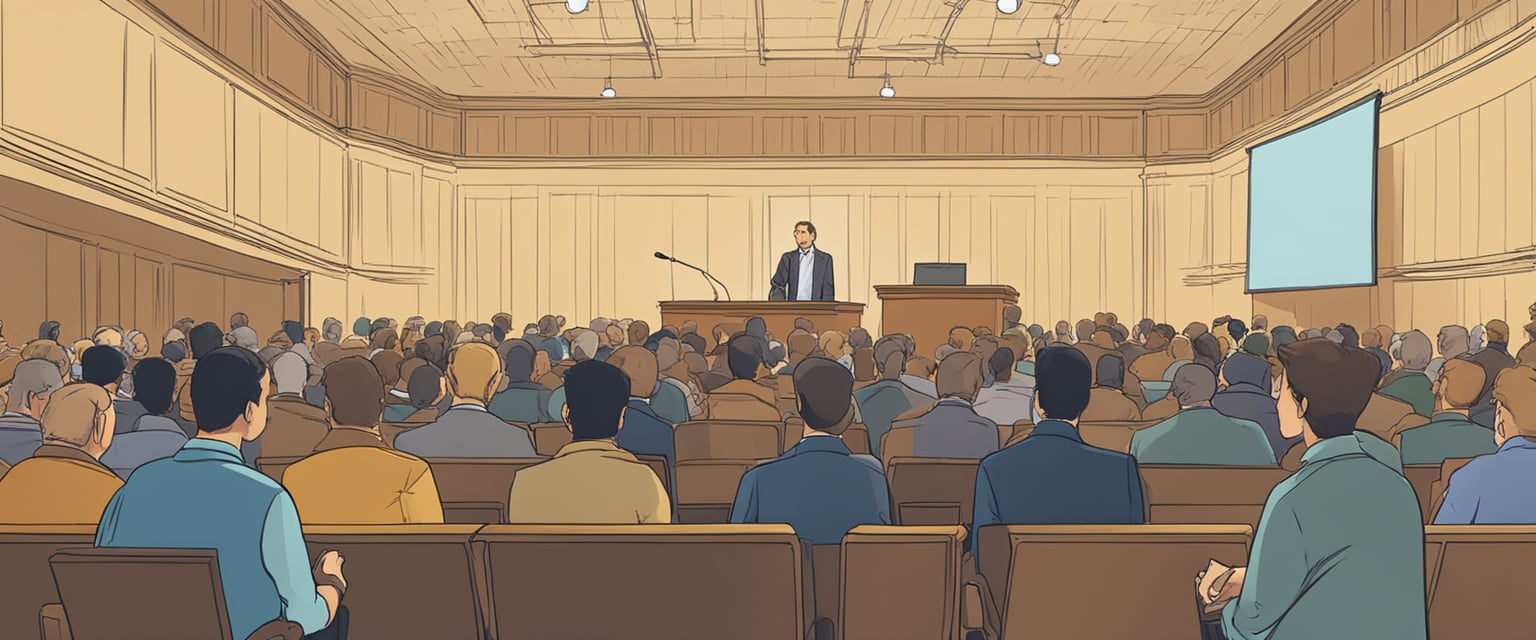
The 1860 Oxford evolution debate showcased significant confrontations between proponents and opponents of Darwin’s theories. Participants engaged in critical exchanges that highlighted the tension between science and religious doctrine. Public reaction to the debate reflected broader societal attitudes toward evolution.
Critical Exchanges
One of the most significant moments involved Thomas Huxley and Samuel Wilberforce. Huxley, known as “Darwin’s Bulldog,” defended Darwin’s theory of evolution vigorously. In contrast, Wilberforce, the Bishop of Oxford, questioned Huxley’s lineage, implying a connection to apes.
Both speakers employed sharp rhetoric. Huxley argued that scientific evidence must prevail over theological claims. This exchange crystallized the conflict between scientific inquiry and established religious beliefs.
Huxley’s confident responses gained attention and respect, while Wilberforce’s tactics were seen as defensive. This confrontation marked a pivotal moment in the acceptance of evolutionary theory in academic circles.
Public Reception
The debate drew significant public interest, illustrating the growing fascination with evolutionary ideas. Many attendees were motivated by curiosity about scientific advancements.
Newspapers reported extensively on the event. The coverage influenced public perception, with some leaning toward Huxley’s rational arguments. Others supported Wilberforce’s traditional views, reflecting a divided stance.
The discussion sparked further debates across various platforms, indicating a shift in attitudes. This debate became a touchstone, setting the stage for future discussions on evolution and religion in academia and society.
Scientific Implications
The 1860 Oxford evolution debate significantly influenced the scientific community and impacted the validation of evolutionary theory. Key discussions centered on natural selection and challenged existing viewpoints.
Impact on Scientific Community
The 1860 debate attracted prominent figures such as Thomas Huxley and Samuel Wilberforce, highlighting a crucial clash between science and religious beliefs. Huxley’s defense of Darwinian theory emphasized empirical evidence over theological explanations.
This event shifted the scientific discourse in Britain. The debate prompted scientists to reconsider their positions on evolution, fostering a more rigorous examination of natural selection. It catalyzed the establishment of evolution as a legitimate scientific field, encouraging further research and collaboration among biologists.
Evolution Theory Validation
The arguments presented during the debate supported the assertion that natural selection is a key mechanism for evolution. Huxley articulated that species adapt over time due to selective pressures from their environment.
This understanding aided in validating evolutionary theory; it was no longer solely a philosophical concept. Evidence gathered from various fields—including paleontology and genetics—began to consolidate the framework of evolutionary biology, leading to broader acceptance.
In addition, it paved the way for future studies that would further confirm the principles of evolution, solidifying their foundations within the scientific community.
Public and Societal Impact
The 1860 Oxford evolution debate significantly influenced public perception and various societal institutions. Responses to emerging scientific ideas affected not only the academic community but also religious organizations and the broader public.
Shifting Public Opinion
As the debate unfolded, public opinion began to shift. Attention focused on the conflict between traditional religious beliefs and the evolving scientific understanding of human origins. Many individuals, especially those in academia and progressive circles, started to embrace evolutionary theory.
This transition was not uniformly accepted. A segment of the population, particularly among conservative religious groups, resisted these ideas. The debate illustrated a growing divide in perspectives on science and faith. Discussions in newspapers and public forums further fueled interest, reflecting society’s grappling with complex issues of belief and knowledge.
Church’s Response and Changes
The Church of England faced increasing pressure to address the implications of evolution. Many church leaders recognized the need for reconciliation between faith and scientific advances. Some advocated that evolution could coexist with religious belief, leading to a nuanced understanding of scripture.
In reaction to the debate, several religious institutions reconsidered their teachings. Some churches began to incorporate scientific findings into their doctrines. This accommodation aimed to retain relevance among an increasingly educated populace, allowing for a broader interpretation of sacred texts. The church’s response marked a significant moment in the dialogue between science and religion, as it grappled with changes that were reshaping societal values.
Subsequent Academic Discussions
The debates that followed the 1860 Oxford evolution discussion have continued to shape academic discourse surrounding natural selection and its implications. Key figures such as Thomas Huxley and Joseph Dalton Hooker played crucial roles in these dialogues, influencing perspectives on evolution within scientific communities.
The Continuing Debate
The 1860 debate ignited ongoing discussions about natural selection’s validity. Huxley, a prominent supporter, emphasized empirical evidence for evolution. He argued that the mechanism of natural selection offered a coherent explanation for biodiversity.
In contrast, opponents raised concerns about the perceived randomness of natural selection. They posited that this concept lacked sufficient clarity regarding how species adapt. Hooker contributed to these discussions by highlighting the importance of botanical evidence, supporting Huxley’s claims with observations from plant species.
As these debates evolved, they underscored the divide between varying scientific philosophies. Ultimately, the discussions paved the way for future research, influencing how evolution was taught and understood in academic circles.
Commemoration and Legacy
The 1860 Oxford evolution debate left a significant mark on both scientific discourse and public understanding of evolution. Its impact is commemorated through various memorials and recognition efforts that celebrate the contributions of key figures involved in the debate.
Memorials and Recognition
Numerous memorials honor the individuals who participated in the debate, particularly Thomas Huxley and Samuel Wilberforce. In 1907, a bust of Huxley was placed at the Oxford University Museum of Natural History, celebrating his role in popularizing Darwinian evolution.
Additionally, the debate is featured in exhibitions and educational programs at the University Museum of Natural History. These initiatives aim to engage visitors with the historical context of the debate and its ongoing relevance in discussions surrounding evolution and science education.
Local institutions often hold lectures and events to commemorate this pivotal moment in scientific history, ensuring that the legacy of the debate continues to shape contemporary understanding of evolutionary biology.
Modern Perspectives
The 1860 Oxford evolution debate continues to resonate in contemporary discussions about evolution and scientific thought. Modern perspectives highlight its influence on how natural selection is viewed within the scientific community.
1860 Debate in Current Science
The 1860 debate brought together prominent figures like Thomas Huxley and Samuel Wilberforce, sparking discussions still relevant in modern biology. Huxley’s defense of Darwin’s theory emphasized empirical evidence, a foundation for current scientific methods.
Today, evolutionary biology incorporates genetic research to reinforce natural selection concepts. The acceptance of evolution as a key mechanism in understanding biodiversity is now widespread.
Current research explores complex interactions within ecosystems, such as gene flow and genetic drift, enhancing understanding of evolution. Educational institutions increasingly emphasize critical thinking about scientific evidence, shaping views on evolution amidst ongoing discussions about its implications for society and religion.



