
History remembers the big wars—but it’s the forgotten ones that quietly shaped the world we live in. While textbooks overflow with details about World War I and World War II, countless other conflicts have fundamentally altered the course of civilizations, redrawn borders, and determined which cultures would survive or perish. These forgotten wars that shaped nations often had consequences far more profound than their modern obscurity suggests.
The battles that echo through eternity aren’t always the ones with the biggest headlines. Sometimes a relatively small conflict in an overlooked corner of the world can trigger a cascade of changes that reshape entire continents. From ancient clashes that preserved the foundations of Western civilization to colonial wars that determined modern national boundaries, these overlooked conflicts deserve recognition for their massive historical impact.
Understanding these forgotten wars that shaped nations reveals how seemingly minor disputes can fundamentally alter the trajectory of human history. Each conflict on this list created ripple effects that continue to influence politics, culture, and national identities in 2026.
Key Takeaways
• Hidden influence: Many forgotten conflicts had greater long-term impact than famous wars we study today
• National formation: These wars directly created, destroyed, or fundamentally altered entire nations and empires
• Cultural preservation: Several conflicts determined which civilizations and belief systems would survive to influence the modern world
• Border determination: Forgotten wars established many of the political boundaries and power structures that persist today
• Cascading effects: Small regional conflicts often triggered much larger historical changes across continents
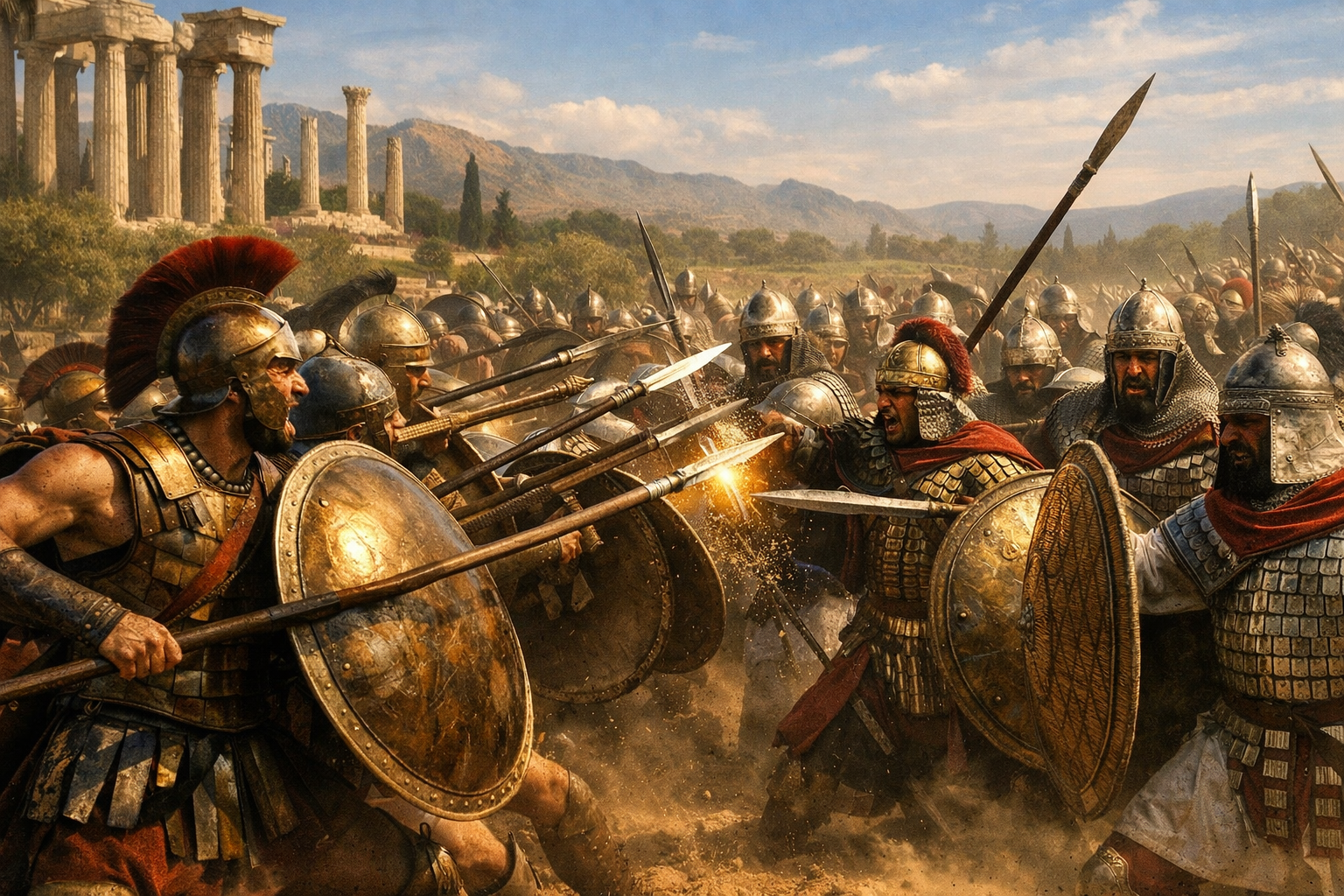
The Greco-Persian Wars (499–449 BC): Preserving Western Civilization
The Greco-Persian Wars represent one of history’s most consequential yet underappreciated conflicts. When the massive Persian Empire under Darius I and later Xerxes attempted to conquer the Greek city-states, few could have predicted that this regional dispute would determine the entire future of Western civilization.
The Spark: Persian expansion into Greek territories in Asia Minor triggered revolts among Greek colonies. Athens supported these rebellions, provoking Persian retaliation against mainland Greece.
Key Turning Point: The Battle of Marathon (490 BC) and the naval victory at Salamis (480 BC) proved that the seemingly unstoppable Persian war machine could be defeated by smaller, more unified Greek forces.
How It Shaped Nations:
- Preserved Greek independence, allowing democracy, philosophy, and scientific thinking to flourish
- Established the concept of European resistance to Asian imperial expansion
- Created the foundation for later Greek cultural achievements under Pericles
- Inspired the idea that free citizens could defeat imperial subjects
Without Greek victory in these wars, there would have been no Golden Age of Athens, no Socrates or Plato, and no philosophical foundations for later Western thought. The ancient Roman ideas that are still being used today might never have developed without Greek intellectual influence.
The Punic Wars (264–146 BC): Rome’s Rise to Dominance
The three Punic Wars between Rome and Carthage fundamentally transformed the Mediterranean world, yet many people today know little beyond Hannibal crossing the Alps with elephants.
The Spark: Competition for control of Sicily brought these two expanding powers into direct conflict for Mediterranean supremacy.
Key Turning Point: The Battle of Zama (202 BC) ended Hannibal’s threat and established Roman dominance over the western Mediterranean.
How It Shaped Nations:
- Eliminated Carthage as a major power, clearing Rome’s path to empire
- Established Roman naval supremacy in the Mediterranean
- Created the template for Roman imperial expansion
- Demonstrated Rome’s resilience in recovering from devastating defeats
The complete destruction of Carthage in 146 BC removed Rome’s only serious rival, enabling the expansion that would create one of history’s largest empires. This conflict directly led to the Roman influence that still shapes legal systems, languages, and governmental structures across Europe and beyond.
The Achaean War (146 BC): Greece Loses Independence
The brief but decisive Achaean War marked the end of Greek independence and the beginning of Roman dominance over the eastern Mediterranean.
The Spark: Greek city-states attempted to resist growing Roman influence, leading to open rebellion against Roman authority.
Key Turning Point: The destruction of Corinth by Roman forces sent a clear message that resistance to Rome was futile.
How It Shaped Nations:
- Ended Greek political independence for nearly 2,000 years
- Integrated Greek culture into the Roman Empire
- Created Greco-Roman civilization that would influence the entire Western world
- Established the pattern of Roman cultural absorption rather than destruction
This forgotten conflict ensured that Greek intellectual achievements would be preserved and transmitted through Roman channels, ultimately reaching the modern world through Roman rather than independent Greek sources.
The Gothic War (535–554): Italy’s Devastation
The Gothic War between the Byzantine Empire and the Ostrogoths devastated Italy and fundamentally altered its future development.
The Spark: Byzantine Emperor Justinian’s attempt to reconquer the Western Roman Empire brought him into conflict with the Gothic kingdoms that had replaced Roman rule.
Key Turning Point: The siege of Rome and the gradual Byzantine reconquest of Italian cities marked the end of Gothic rule but left Italy economically devastated.
How It Shaped Nations:
- Devastated Italian agriculture and urban centers
- Weakened Italy’s defenses against future invasions
- Created a power vacuum that would plague Italy for centuries
- Established Byzantine control that proved temporary and costly
This war’s destruction made Italy vulnerable to later Lombard invasions and contributed to the political fragmentation that characterized the Italian peninsula for over a millennium. The economic devastation fundamentally altered Italy’s trajectory from Roman prosperity to medieval struggle.
The Khazar-Arab Wars (7th–8th centuries): Stopping Islamic Expansion
The series of conflicts between the Khazar Khaganate and the expanding Arab Caliphate represents one of history’s most important but forgotten defensive wars.
The Spark: The rapid Islamic expansion following Muhammad’s death brought Arab armies into contact with the Turkic Khazar empire north of the Caucasus.
Key Turning Point: Khazar victories in the Caucasus region halted Arab expansion into Eastern Europe and the Russian steppes.
How It Shaped Nations:
- Prevented Islamic conquest of Eastern Europe
- Preserved space for later Slavic and Russian development
- Created a buffer zone between Islamic and Christian civilizations
- Allowed alternative religious and cultural development in the region
Without Khazar resistance, the entire course of European history might have been different. The preservation of non-Islamic Eastern Europe enabled the later rise of Russia and the development of Orthodox Christianity as a major force.
The War of the Sicilian Vespers (1282–1302): Mediterranean Power Shift
The War of the Sicilian Vespers began with a popular uprising against French rule in Sicily but evolved into a major European conflict that reshaped Mediterranean politics.
The Spark: A French soldier’s assault on a Sicilian woman during Easter vespers triggered a massive uprising against French Angevin rule.
Key Turning Point: Aragonese intervention on behalf of the Sicilian rebels transformed a local revolt into an international war.
How It Shaped Nations:
- Ended French dominance in southern Italy
- Established Aragonese power in the western Mediterranean
- Weakened papal political authority in temporal affairs
- Created the foundation for later Spanish imperial expansion
This conflict demonstrated how popular uprisings could trigger major geopolitical changes and established patterns of Spanish influence in Italy that would persist for centuries.
The Byzantine-Ottoman Wars (13th–15th centuries): The Fall of Constantinople
The long series of Byzantine-Ottoman Wars culminated in one of history’s most significant forgotten conflicts—the final conquest of the Byzantine Empire.
The Spark: Ottoman expansion into Byzantine territory created an existential threat to the last remnant of the Roman Empire.
Key Turning Point: The fall of Constantinople in 1453 marked the end of the Byzantine Empire and Ottoman control of the Bosphorus.
How It Shaped Nations:
- Ended the Byzantine Empire after over 1,000 years
- Established Ottoman control over the eastern Mediterranean
- Cut European access to traditional trade routes with Asia
- Triggered the Age of Exploration as Europeans sought new routes to the East
The conquest of Constantinople didn’t just end an empire—it fundamentally altered global trade patterns and motivated the European voyages of discovery that would reshape the entire world. This connection between forgotten wars and global exploration shows how ancient civilizations that disappeared without a trace can still influence modern history.
The Livonian War (1558–1583): Baltic Control
The Livonian War determined which powers would control the crucial Baltic region during the early modern period.
The Spark: The collapse of the Livonian Order created a power vacuum that attracted Russian, Polish, Swedish, and Danish intervention.
Key Turning Point: Russian defeats and the partition of Livonia between Poland-Lithuania and Sweden ended Russian hopes for Baltic access.
How It Shaped Nations:
- Blocked Russian expansion to the Baltic Sea
- Strengthened Polish-Lithuanian dominance in Eastern Europe
- Established Swedish power in the Baltic region
- Delayed Russian emergence as a major European power
This forgotten conflict shaped the balance of power in Northern Europe for the next century and influenced the development of both the Polish-Lithuanian Commonwealth and the Swedish Empire.
The War of the Spanish Succession (1701–1714): European Balance
The War of the Spanish Succession fundamentally reshaped the European balance of power, though it’s often overshadowed by later conflicts.
The Spark: The death of the childless Spanish King Charles II created a succession crisis that threatened to unite French and Spanish power under the Bourbons.
Key Turning Point: The Battle of Blenheim (1704) demonstrated that French military dominance could be challenged by allied forces.
How It Shaped Nations:
- Prevented French hegemony over Europe
- Established the principle of balance of power
- Created modern Belgium as a buffer state
- Strengthened British naval power and colonial empire
This war established diplomatic and military precedents that would influence European politics until World War I. The peace treaties created many of the political structures that governed 18th-century Europe.
The War of Jenkins’ Ear (1739–1748): Imperial Competition
The oddly named War of Jenkins’ Ear between Britain and Spain escalated into a major imperial conflict that shaped colonial development.
The Spark: Spanish coast guard brutality against British smugglers, symbolized by Captain Jenkins’ severed ear, provided a pretext for broader imperial competition.
Key Turning Point: The war merged with the larger War of Austrian Succession, demonstrating how colonial disputes could trigger European conflicts.
How It Shaped Nations:
- Established patterns of British-Spanish colonial rivalry
- Strengthened British naval supremacy in the Caribbean
- Influenced the development of British colonial policy
- Created precedents for later imperial conflicts
This forgotten war demonstrated how seemingly minor colonial incidents could escalate into major international conflicts, establishing patterns that would influence imperial competition for the next century.
The Taiping Rebellion (1850–1864): China’s Devastating Civil War
The Taiping Rebellion was one of history’s deadliest conflicts, yet it remains largely unknown outside of China despite killing an estimated 20-30 million people.
The Spark: Hong Xiuquan’s religious visions and social reforms attracted millions of followers opposed to Qing Dynasty rule.
Key Turning Point: The capture of Nanjing gave the Taiping rebels a major base, but their failure to take Beijing ultimately doomed the rebellion.
How It Shaped Nations:
- Devastated Chinese agriculture and population
- Weakened the Qing Dynasty beyond recovery
- Created opportunities for foreign imperial intervention
- Demonstrated the power of religious and social revolutionary movements
The rebellion’s aftermath left China vulnerable to foreign exploitation and contributed to the political instability that would eventually lead to the fall of the Qing Dynasty and the establishment of the Republic of China. This massive conflict shows how impact of wars on US history today parallels similar effects in other nations.
The War of the Triple Alliance (1864–1870): Paraguay’s Devastation
The War of the Triple Alliance was South America’s most devastating conflict, virtually destroying Paraguay as a functioning nation.
The Spark: Paraguayan President Francisco Solano López’s territorial ambitions brought his country into conflict with Brazil, Argentina, and Uruguay simultaneously.
Key Turning Point: Paraguay’s early military successes gave way to overwhelming allied superiority in numbers and resources.
How It Shaped Nations:
- Killed an estimated 60-90% of Paraguay’s male population
- Devastated Paraguayan economy for generations
- Strengthened Brazilian dominance in South America
- Established patterns of regional power politics
This forgotten war had consequences so severe that Paraguay didn’t fully recover its pre-war population until the 20th century. The conflict demonstrated the devastating potential of modern warfare when applied to smaller nations.
The Anglo-Zulu War (1879): Imperial Limits
The Anglo-Zulu War revealed the limitations of imperial power and influenced the development of African resistance movements.
The Spark: British imperial expansion in southern Africa brought them into conflict with the powerful Zulu Kingdom under King Cetshwayo.
Key Turning Point: The Zulu victory at Isandlwana shocked the British public and demonstrated that indigenous forces could defeat modern European armies.
How It Shaped Nations:
- Demonstrated African military capability against European forces
- Influenced British imperial policy in Africa
- Inspired later resistance movements across the continent
- Contributed to the development of South African racial policies
Though Britain ultimately won the war, the conflict showed that imperial expansion was neither easy nor inevitable, influencing both British policy and African resistance strategies for decades to come.
The Greco-Turkish War (1919–1922): Modern Borders
The Greco-Turkish War following World War I fundamentally reshaped the eastern Mediterranean and established modern Turkey.
The Spark: Greek attempts to claim territory in Asia Minor with Allied support brought them into conflict with Turkish nationalist forces under Mustafa Kemal (Atatürk).
Key Turning Point: Turkish victories at the Battle of Sakarya and the Great Fire of Smyrna ended Greek presence in Asia Minor.
How It Shaped Nations:
- Established modern Turkey’s borders and national identity
- Ended the Greek Megali Idea of recreating the Byzantine Empire
- Created massive population exchanges between Greece and Turkey
- Demonstrated the power of nationalist movements after WWI
This war established the principle of ethnic nationalism that would influence border-drawing and population policies throughout the 20th century. The population exchanges created precedents for later ethnic cleansing and forced migration policies.
The Chaco War (1932–1935): Resource Conflicts
The Chaco War between Bolivia and Paraguay was South America’s largest 20th-century conflict, fought over disputed territory potentially rich in oil.
The Spark: Competing territorial claims in the Gran Chaco region escalated when both countries discovered potential oil reserves in the disputed area.
Key Turning Point: Paraguayan military superiority in the difficult Chaco terrain gradually wore down Bolivian forces despite Bolivia’s larger population and resources.
How It Shaped Nations:
- Cost Bolivia access to potentially valuable resources
- Strengthened Paraguayan national identity after the devastating Triple Alliance War
- Demonstrated the continued importance of territorial disputes in modern warfare
- Influenced military development in both countries
This forgotten war showed how resource competition could still trigger major conflicts in the modern era, establishing patterns that would influence later resource-based conflicts worldwide.
Why These Forgotten Wars That Shaped Nations Remain Obscure
Several factors explain why these crucial conflicts have faded from popular memory while less consequential wars remain famous.
Limited Geographic Scope: Many of these wars affected specific regions rather than global powers, making them less likely to appear in international historical narratives.
Overshadowed by Later Events: Conflicts like the Taiping Rebellion, despite their massive casualties, are overshadowed by the World Wars in popular consciousness.
Complex Political Context: Wars like the Livonian War involved multiple shifting alliances and territorial disputes that don’t translate easily into simple historical narratives.
Cultural Distance: Western educational systems often emphasize European and American conflicts while neglecting equally important wars in other regions.
Lack of Dramatic Narratives: Unlike wars with clear heroes and villains, many forgotten conflicts involved complex political and economic factors that don’t create compelling stories.
The tendency to focus on recent conflicts also means that ancient and medieval wars, no matter how consequential, receive less attention than modern conflicts. This bias toward recent events obscures the long-term historical processes that these forgotten wars that shaped nations represent.
How These Conflicts Transformed the World
Despite their obscurity, these forgotten wars that shaped nations created lasting changes that continue to influence global politics and culture in 2026.
Border Determination: Many modern national boundaries were established by these conflicts. The Greco-Turkish War created the borders between Greece and Turkey that persist today, while the Chaco War determined the final boundaries between Bolivia and Paraguay.
Cultural Preservation: The Greco-Persian Wars preserved Greek civilization, enabling it to influence later Roman and European development. The Khazar-Arab Wars preserved space for Slavic and Orthodox Christian development in Eastern Europe.
Imperial Patterns: Wars like the Anglo-Zulu conflict and the War of Jenkins’ Ear established patterns of imperial expansion and resistance that influenced colonial development worldwide.
National Identity Formation: Conflicts like the War of the Sicilian Vespers and the Chaco War strengthened national identities that continue to influence politics today.
Power Balance Shifts: The War of the Spanish Succession and the Byzantine-Ottoman Wars fundamentally altered regional power balances, creating political structures that influenced later historical development.
Military Innovation: These conflicts often drove military and technological innovation that influenced later warfare. The lessons learned from these forgotten wars influenced the military strategies in US history and beyond.
Understanding these patterns helps explain why seemingly minor conflicts can have major historical consequences. The ripple effects of these wars demonstrate how local events can trigger global changes through complex chains of cause and effect.
Conclusion
The forgotten wars that shaped nations remind us that history’s most important events aren’t always the most famous ones. From the Greco-Persian Wars that preserved the foundations of Western civilization to the Chaco War that established modern South American boundaries, these conflicts created the world we inhabit today.
These wars demonstrate several crucial historical principles: small conflicts can have massive consequences, regional disputes often trigger global changes, and the preservation or destruction of civilizations often depends on forgotten battles fought by unknown soldiers. The Taiping Rebellion’s 20-30 million casualties dwarf many famous wars, while the Anglo-Zulu War’s demonstration of imperial limits influenced resistance movements worldwide.
Take Action: To better understand how these forgotten conflicts continue to influence current events, research the historical background of modern territorial disputes, ethnic conflicts, and regional power struggles. Many contemporary problems have roots in these overlooked wars that fundamentally altered national boundaries, cultural development, and political structures.
The world we know today wasn’t built only by the wars we remember—but by the ones we forgot.



