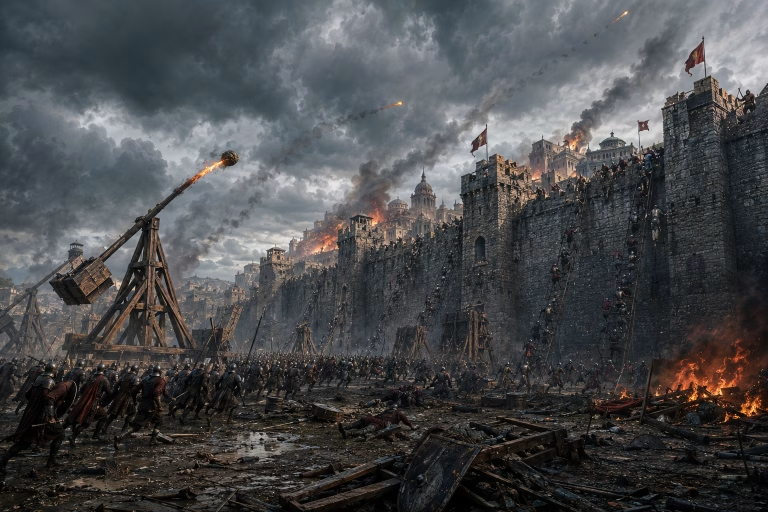
A single telegram in 1917 helped bring America into World War I. One miscalculated invasion in 1812 destroyed the largest army Europe had ever seen. Throughout history, strategic mistakes that lost wars have proven that victory isn’t always determined by the size of armies or the strength of weapons—but by the quality of decisions made in critical moments.
Wars are complex puzzles where one wrong move can unravel years of planning and sacrifice. The difference between triumph and defeat often comes down to strategic choices made by leaders who underestimated their enemies, overestimated their own capabilities, or simply failed to grasp the broader consequences of their actions.
Key Takeaways
• Single strategic errors can determine entire war outcomes, regardless of military strength or resources
• Overconfidence and underestimating opponents represent the most common patterns in military failures
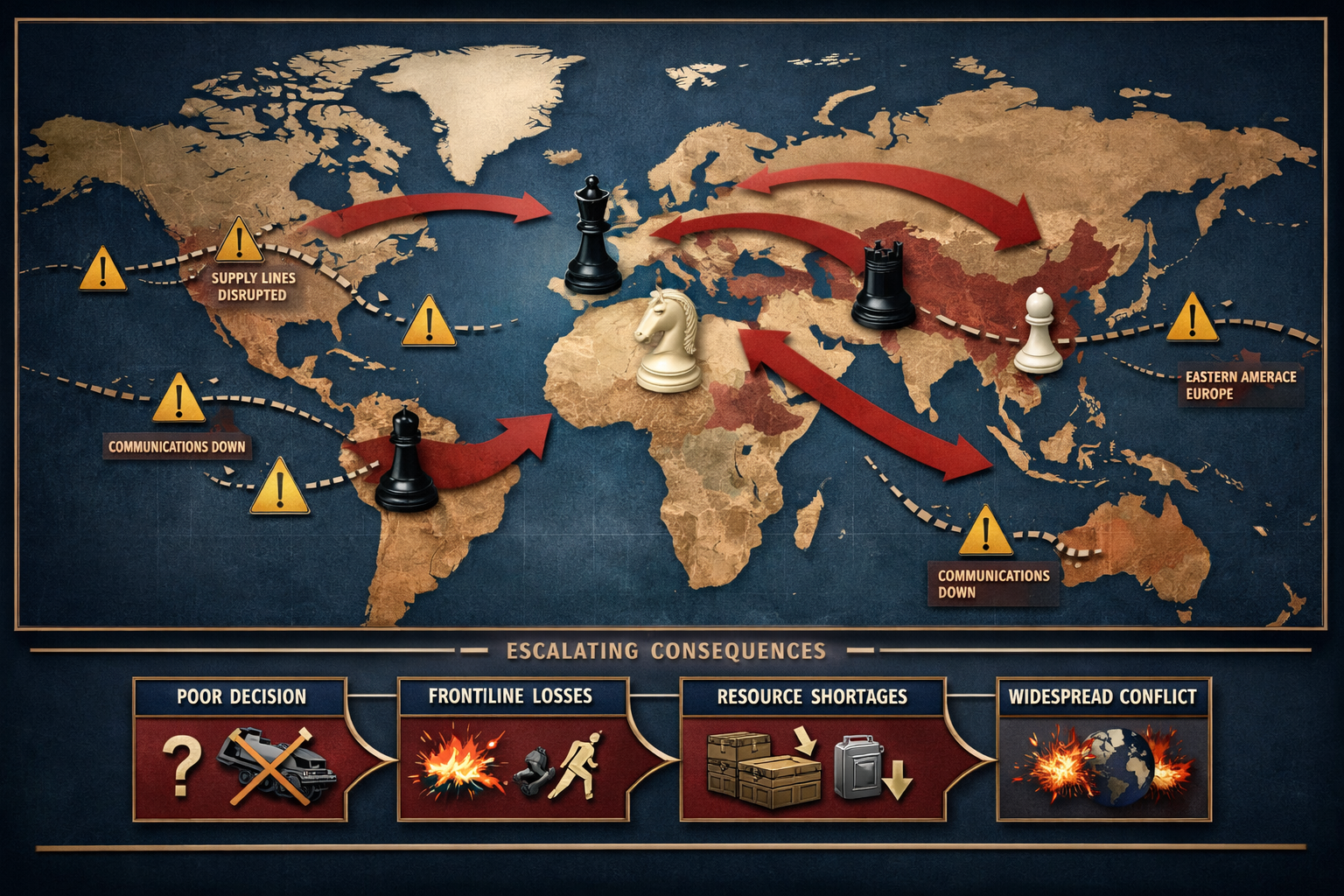
• Poor logistics, intelligence failures, and fighting multiple fronts consistently lead to strategic disasters
• Historical strategic mistakes provide valuable lessons about decision-making under pressure
• Understanding these failures helps identify warning signs in modern conflicts and strategic planning
The Most Devastating Strategic Mistakes That Lost Wars
1. Napoleon’s Russian Invasion (1812): The Winter That Broke an Empire
The Decision Maker: Napoleon Bonaparte, Emperor of France
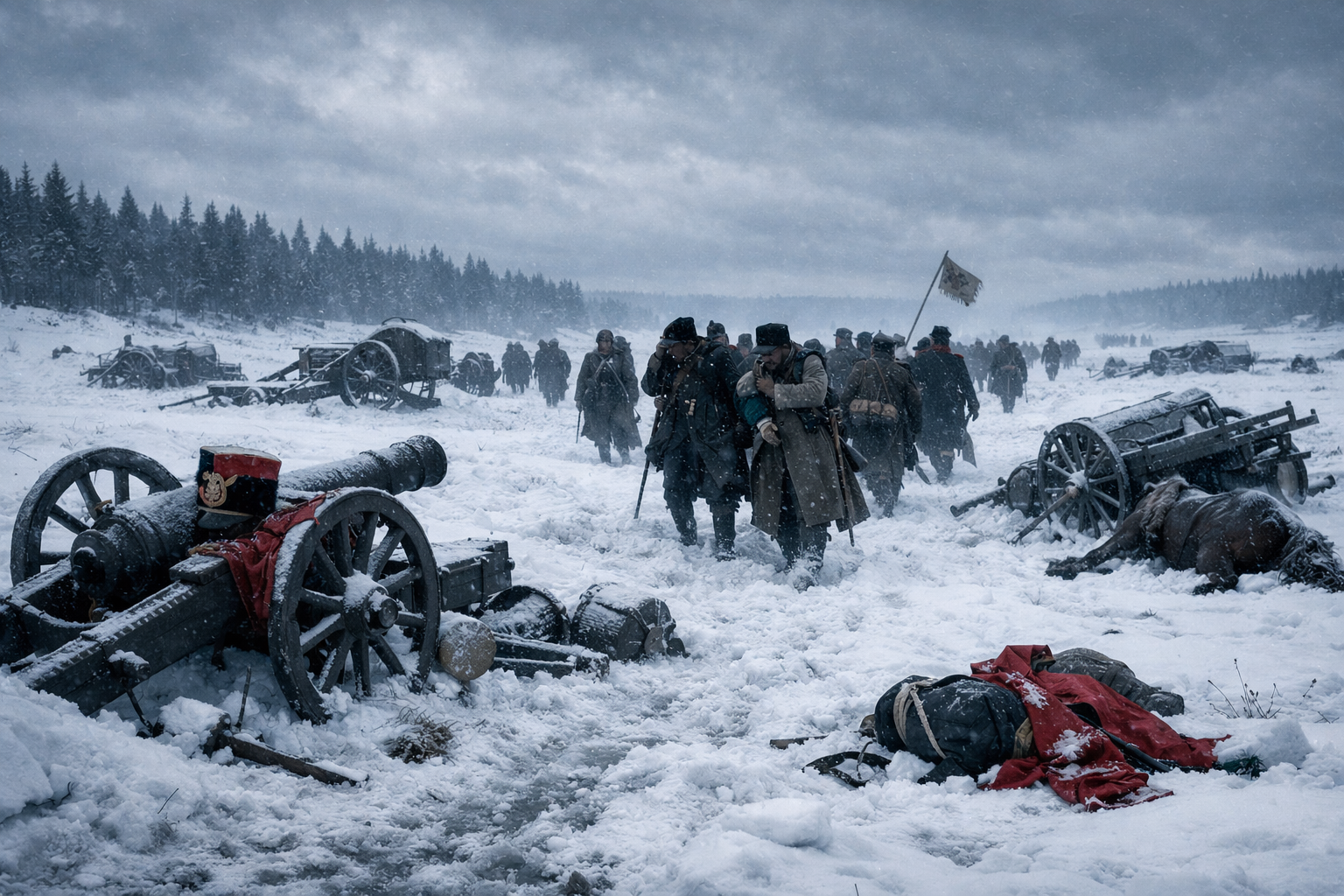
What Happened: Napoleon assembled the largest army in European history—over 600,000 men—to invade Russia in June 1812. He expected a quick campaign that would force Tsar Alexander I to rejoin his Continental System against Britain.
Why It Was a Mistake: Napoleon catastrophically underestimated three critical factors:
- Distance and logistics: Supply lines stretched over 1,000 miles
- Russian strategy: The Russians employed scorched earth tactics, denying the French army food and shelter
- Weather conditions: The early arrival of winter caught the army unprepared
The Grande Armée found itself trapped in Moscow with no Russian surrender forthcoming. When Napoleon finally ordered the retreat in October, winter had already begun. Soldiers froze, starved, and died by the thousands daily.
How It Changed the War: Only about 30,000 combat-effective soldiers returned to France. This disaster emboldened European powers to form the Sixth Coalition against Napoleon, ultimately leading to his exile to Elba in 1814. The myth of Napoleonic invincibility was shattered forever.
2. Hitler’s Operation Barbarossa (1941): Opening Pandora’s Box
The Decision Maker: Adolf Hitler and the German High Command
What Happened: Despite having a non-aggression pact with Stalin, Hitler launched Operation Barbarossa on June 22, 1941—a massive invasion of the Soviet Union involving over 3.8 million Axis troops.
Why It Was a Mistake: This decision violated every principle of strategic warfare:
- Two-front war: Germany was already fighting Britain and would soon face America
- Resource depletion: The Eastern Front consumed enormous manpower and materials
- Underestimating Soviet capacity: Hitler expected the USSR to collapse within weeks
The invasion initially succeeded, capturing millions of Soviet soldiers. However, the Red Army regrouped, and Soviet industrial capacity proved far greater than German intelligence estimated.
How It Changed the War: Operation Barbarossa marked the beginning of Germany’s inevitable defeat. The Eastern Front became a massive drain on German resources, ultimately consuming 80% of German military casualties. This strategic blunder ensured that Germany could never achieve victory in World War II.
3. Pearl Harbor Attack (1941): Awakening the Sleeping Giant
The Decision Maker: Admiral Isoroku Yamamoto and Japanese Naval Command
What Happened: On December 7, 1941, Japan launched a surprise attack on Pearl Harbor, sinking or damaging 18 U.S. warships and killing over 2,400 Americans.
Why It Was a Mistake: While tactically successful, the attack was strategically catastrophic:
- Incomplete destruction: U.S. aircraft carriers were at sea and escaped damage
- Industrial awakening: The attack unified American public opinion for war
- Resource mismatch: Japan’s industrial capacity was roughly 10% of America’s
Yamamoto himself reportedly said, “I fear all we have done is to awaken a sleeping giant and fill him with a terrible resolve.”
How It Changed the War: Pearl Harbor brought the full industrial might of the United States into World War II. American war production would eventually dwarf Japanese capabilities, producing more ships, planes, and weapons than Japan could ever hope to match. The attack guaranteed Japan’s eventual defeat.
4. Germany Declares War on America (1941): The Final Nail
The Decision Maker: Adolf Hitler
What Happened: Four days after Pearl Harbor, Hitler declared war on the United States, despite having no obligation to do so under the Tripartite Pact with Japan.
Why It Was a Mistake: This decision was strategically inexplicable:
- Voluntary expansion: Hitler chose to fight the world’s largest industrial power
- Allied unity: The declaration unified British and American strategic planning
- Resource impossibility: Germany lacked the naval capacity to threaten America directly
Many historians consider this Hitler’s single worst strategic decision, even worse than invading Russia.
How It Changed the War: The declaration allowed Roosevelt to prioritize the European theater while maintaining the “Germany First” strategy. It guaranteed that America’s vast resources would focus on defeating Nazi Germany, making Allied victory inevitable.
5. Pickett’s Charge at Gettysburg (1863): The High Water Mark of the Confederacy
The Decision Maker: General Robert E. Lee
What Happened: On July 3, 1863, Lee ordered approximately 15,000 Confederate soldiers to assault fortified Union positions across open ground at Gettysburg.
Why It Was a Mistake: The attack violated basic military principles:
- Frontal assault: Attacking prepared positions across open terrain
- Artillery failure: Confederate bombardment failed to suppress Union guns
- No reserves: Lee committed his last fresh troops to a desperate gamble
The charge was repulsed with devastating casualties—over 50% of the attacking force was killed, wounded, or captured.
How It Changed the War: Gettysburg marked the beginning of Confederate decline. Lee’s army never recovered its offensive capability, and the South was forced into a defensive strategy that ultimately led to surrender at Appomattox in 1865.
6. France’s Maginot Line Strategy (1940): Fighting the Last War
The Decision Maker: French Military Command and Government
What Happened: France invested heavily in the Maginot Line, a series of fortifications along the German border, believing it would prevent another German invasion.
Why It Was a Mistake: The strategy reflected outdated thinking:
- Static defense: Ignored advances in mobile warfare
- Incomplete coverage: The line didn’t extend along the Belgian border
- Psychological dependence: Created false confidence in defensive capabilities
Germany simply bypassed the fortifications through Belgium and the Ardennes, exactly as they had in World War I.
How It Changed the War: France fell in just six weeks, stunning the world. The rapid collapse eliminated Western Europe’s largest army and gave Germany access to French resources and Atlantic ports. This strategic failure fundamentally altered the balance of World War II.
7. The Charge of the Light Brigade (1854): “Someone Had Blundered”
The Decision Maker: Captain Edward Nolan (who delivered the order) and Lord Lucan
What Happened: During the Battle of Balaclava in the Crimean War, miscommunication led to British light cavalry charging directly into Russian artillery positions.
Why It Was a Mistake: The disaster resulted from multiple failures:
- Poor communication: Vague orders led to misinterpretation
- Inadequate reconnaissance: British commanders didn’t understand the battlefield
- Pride over sense: Officers proceeded despite obvious suicide
Of 670 men who charged, only 195 returned unharmed.
How It Changed the War: While not decisive strategically, the charge became a symbol of military incompetence and helped drive military reforms in Britain. It demonstrated how communication failures could turn brave soldiers into casualties through poor leadership.
8. Britain Underestimates American Resolve (1775-1783): Losing an Empire
The Decision Maker: King George III and British Parliament
What Happened: Britain treated the American Revolution as a local rebellion that could be quickly suppressed with conventional military tactics.
Why It Was a Mistake: British strategy ignored crucial factors:
- Distance and logistics: Operating 3,000 miles from home base
- Local support: Assuming loyalist support that largely didn’t materialize
- Guerrilla warfare: Underestimating unconventional American tactics
- International involvement: Failing to prevent French and Spanish support for Americans
The British expected to crush the rebellion quickly but found themselves fighting a prolonged insurgency.
How It Changed the War: British strategic miscalculations led to the loss of the American colonies and the birth of the United States. The defeat also encouraged other independence movements throughout the British Empire, fundamentally reshaping global politics.
9. The Bay of Pigs Invasion (1961): Intelligence Failure in the Caribbean
The Decision Maker: President John F. Kennedy and CIA leadership
What Happened: The CIA trained Cuban exiles to invade Cuba and overthrow Fidel Castro, expecting the Cuban people to rise up in support.
Why It Was a Mistake: The operation was based on flawed assumptions:
- Poor intelligence: Overestimating anti-Castro sentiment
- Inadequate support: Kennedy withdrew air support at the last minute
- Operational security: Castro knew about the invasion in advance
The invasion force was quickly defeated, with most members killed or captured.
How It Changed the War: The failed invasion pushed Cuba firmly into the Soviet sphere, leading to the Cuban Missile Crisis in 1962. It strengthened Castro’s position and gave the Soviets a strategic foothold just 90 miles from the United States.
10. Soviet Invasion of Afghanistan (1979): The USSR’s Vietnam
The Decision Maker: Leonid Brezhnev and the Soviet Politburo
What Happened: The Soviet Union invaded Afghanistan to support the communist government against Islamic insurgents, expecting a quick victory.
Why It Was a Mistake: The Soviets repeated historical errors:
- Underestimating terrain: Afghanistan’s mountains favored guerrilla warfare
- Cultural ignorance: Misunderstanding Afghan tribal society
- External support: Not anticipating American and Pakistani aid to insurgents
- Resource drain: The war consumed enormous Soviet resources for a decade
The conflict became known as “the Soviet Union’s Vietnam,” lasting from 1979 to 1989.
How It Changed the War: The Afghan War significantly weakened the Soviet Union economically and militarily, contributing to its eventual collapse in 1991. The conflict also gave rise to Islamic extremist groups that would later threaten global security.
Common Patterns in Strategic Mistakes That Lost Wars
Historical analysis reveals recurring themes in military strategic failures:
Overconfidence and Hubris 🎯
- Leaders consistently underestimate enemy capabilities
- Previous victories create dangerous overconfidence
- Strategic planning ignores potential complications
Intelligence Failures 🔍
- Poor understanding of enemy intentions and capabilities
- Inadequate reconnaissance and battlefield awareness
- Wishful thinking replacing objective analysis
Logistics Nightmares 🚛
- Inadequate supply lines and resource planning
- Underestimating distance and terrain challenges
- Failure to secure reliable communication networks
Fighting Multiple Fronts ⚔️
- Spreading forces too thin across multiple theaters
- Creating unnecessary additional enemies
- Failing to prioritize strategic objectives
These patterns appear repeatedly throughout history, from ancient civilizations that disappeared without a trace to modern conflicts. Understanding these mistakes provides valuable insights into military strategies that continue to shape history today.
Why These Strategic Mistakes Matter in 2026
The study of historical military failures offers crucial lessons for modern strategic thinking:
Decision-Making Under Pressure: These examples show how stress and time constraints can lead to catastrophic choices. Modern leaders in business, politics, and military affairs can learn from these historical patterns.
Intelligence and Information: Many of these failures resulted from poor intelligence or misinterpreting available information. In our information age, the quality of decision-making still depends on accurate data and objective analysis.
Technological Change: Several mistakes involved leaders fighting with outdated strategies against new technologies or tactics. This pattern continues as military innovations drive change in modern warfare.
Resource Management: Strategic overreach consistently appears in these failures. Whether in ancient Rome or modern superpowers, empires that fell often did so by expanding beyond their capacity to maintain control.
The impact of wars on US history today demonstrates how these historical strategic mistakes continue to influence contemporary geopolitics and military planning.
Conclusion
The ten strategic mistakes that lost wars examined here share a common thread: they demonstrate how individual decisions can alter the course of history. From Napoleon’s disastrous march to Moscow to the Soviet Union’s costly adventure in Afghanistan, these examples prove that military might alone cannot guarantee victory.
Each mistake offers valuable lessons about the importance of realistic planning, accurate intelligence, and understanding one’s limitations. Whether examining the greatest military forces in world history or studying brilliant military commanders, success consistently depends on sound strategic thinking rather than mere strength.
Key lessons for modern strategists:
- Always maintain realistic assessments of enemy capabilities
- Ensure adequate logistics and communication systems
- Avoid fighting unnecessary additional conflicts
- Learn from historical patterns of strategic failure
- Remember that overconfidence often precedes the greatest disasters
These historical examples remind us that in war, as in life, victory is never guaranteed—but understanding the mistakes of the past can help prevent repeating them in the future. The price of strategic errors in warfare is measured not just in military defeat, but in human lives, national resources, and the trajectory of civilizations themselves.