We all know the stereotype: the wild-eyed genius hunched over bubbling test tubes, laughing maniacally as lightning flashes outside. The “mad scientist” is a popular character in horror movies and comic books. But here’s the twist—some of them were real. Let’s examine 10 of these Real-Life Mad Scientists.
Throughout history, a few scientists became so obsessed with discovery that they ignored ethics, safety, or even common sense. Some performed horrifying experiments. Others mixed science with the supernatural. And a few were so ahead of their time, people thought they were insane.
These aren’t just strange stories—they’re true ones. From brain implants and reanimated corpses to CIA mind control and rocket scientists who summoned demons, the scientists on this list pushed the boundaries of knowledge—and sometimes, humanity.
In this article, we’ll explore 10 real-life mad scientists who blurred the line between brilliance and madness. Some made history. Others caused tragedy. All of them remind us that curiosity, when unchecked, can be both powerful and dangerous.
1. Giovanni Aldini: The Man Who Shocked Corpses for Science

In the early 1800s, a crowd gathered in London to witness something they would never forget. On a wooden table lay the body of a man who had just been executed. But when Giovanni Aldini attached wires to the body and sent electricity through it—the corpse twitched, opened one eye, clenched its fists, and gasped.
People screamed. Some ran. Others fainted. To many, it looked like the dead man had come back to life.
Giovanni Aldini was not just a showman—he was a serious scientist. He was the nephew of Luigi Galvani, the man who discovered that electricity could make frog legs move. Aldini wanted to take that idea even further. He believed that electricity might be able to restart life, cure mental illness, and unlock the secrets of the human body.
He traveled across Europe performing public experiments, using voltaic batteries to send jolts of energy through dead animals and human corpses. His demonstrations were part science, part theater—and always shocking.
Aldini’s work didn’t lead to reanimation, but it inspired generations of scientists and writers. Most famously, it helped spark Mary Shelley’s Frankenstein, the story of a scientist who brings a creature to life with electricity.
While his experiments may seem gruesome today, Aldini helped people understand the connection between electricity and biology. He also showed how powerful and terrifying science could seem to the public—especially when it played with the line between life and death.
Was he brilliant? Yes. Was he mad? Maybe just a little.
2. Jack Parsons: Rocket Fuel and Ritual Magic

Jack Parsons helped launch America into the space age—but he also believed in summoning spirits, performing magic rituals, and contacting goddesses.
Born in California in 1914, Parsons was a brilliant rocket scientist. He co-founded what would later become NASA’s Jet Propulsion Laboratory (JPL), and his work with rocket fuel helped create the engines that would one day send humans into space.
But at night, Parsons was something else entirely.
He followed the teachings of Aleister Crowley, a famous British occultist who believed in a mystical philosophy called Thelema. Parsons performed “sex magic” rituals, hoping to open portals to other dimensions. He believed he could summon a goddess named Babalon, who would help him create a new world ruled by spiritual freedom and creative energy.
Parsons even wrote in his journals that science and magic were two ways of reaching the same truth. While working on rocket experiments in the desert, he would perform rituals under the stars, mixing chemistry with chants and fire with faith.
His wild lifestyle alarmed both his neighbors and the U.S. government. The FBI began watching him. Eventually, he lost his security clearance and was cut off from most of his scientific work.
In 1952, at the age of 37, Jack Parsons died in a mysterious explosion in his home lab. Some say it was an accident. Others whisper that it was something much stranger.
Jack Parsons was a pioneer, a rebel, and maybe even a little mad. But without him, space travel might have taken a lot longer—and it definitely would’ve been a lot less weird.
3. Josef Mengele: The Angel of Death
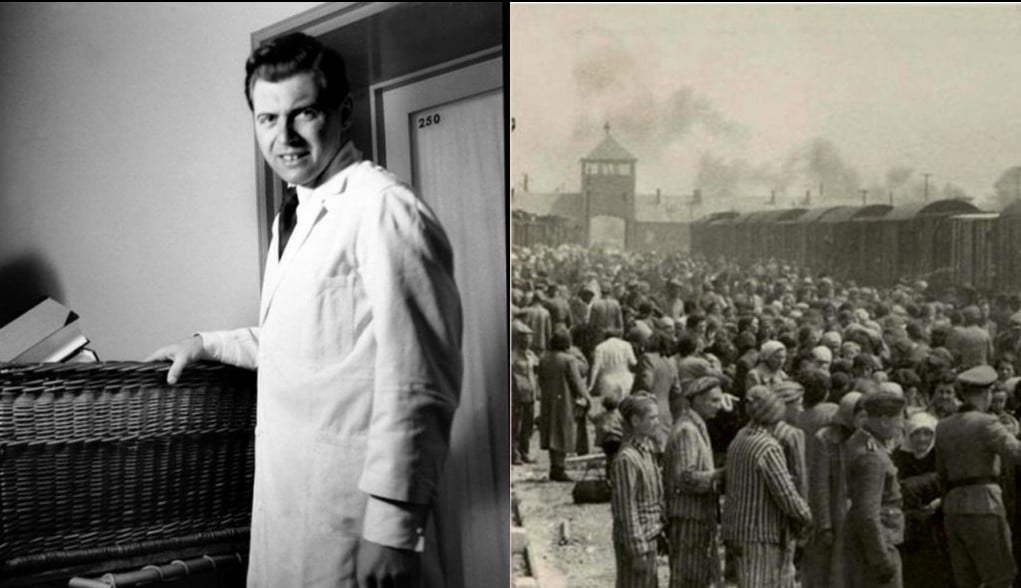
Josef Mengele was a real doctor—but the things he did during World War II were anything but healing. He became one of the most feared and hated men in modern history.
During the Holocaust, Mengele worked as a physician at Auschwitz, the largest Nazi death camp. But instead of helping the sick, he used prisoners—especially twins, children, and pregnant women—in cruel and deadly experiments.
Mengele claimed he was doing research on genetics, but most of his experiments had no real scientific value. He injected people with strange chemicals, performed surgeries without anesthesia, and tried to change people’s eye color using dyes. Many of his victims died in pain, and others were permanently scarred—physically and emotionally.
What made Mengele especially terrifying was his calm attitude. Survivors said he would smile and whistle while choosing people for experiments. That’s how he got the nickname “The Angel of Death.”
After the war, Mengele escaped. He ran from country to country under a fake name and was never caught. He died in Brazil in 1979, having avoided justice for decades.
Mengele is a dark reminder of how science can be twisted by power and hate. His name is still used today as a warning of what happens when someone uses their intelligence without any compassion—or conscience.
4. Robert G. Heath: The Man Who Tried to Electrify Emotion

In the 1950s and 60s, Dr. Robert G. Heath believed he had discovered something incredible—a way to control human emotions with electricity.
Heath was a psychiatrist and neuroscientist at Tulane University in Louisiana. His big idea? That mental illness, addiction, and even sexual orientation could be treated by stimulating specific parts of the brain using tiny implanted electrodes.
He performed experiments on dozens of patients, many of whom were struggling with mental health issues. Some of these patients had electrodes permanently placed in their brains. Heath would then deliver small jolts of electricity and ask them how they felt.
He claimed he could make people feel pleasure, fear, sadness, or calmness—just by flipping a switch.
One of his most controversial experiments involved a man he identified only as “Patient B-19.” Heath believed he could “cure” the man’s homosexuality by electrically stimulating the pleasure centers of his brain—sometimes during visits with a female sex worker. The experiment was highly unethical, even for the time, and it caused major backlash in later years.
Heath’s work raised many disturbing questions:
Should scientists be allowed to control emotions? What counts as “treatment”? And how much power should anyone have over another person’s mind?
Although some of his research helped pave the way for deep brain stimulation used in Parkinson’s and depression treatment today, many people now see Heath as a brilliant man who went too far—trying to rewire the soul through science.
5. John C. Lilly: The LSD-Dolphin Whisperer

John C. Lilly was a respected brain scientist—but he didn’t stop at studying humans. He wanted to communicate with dolphins, connect with aliens, and explore other dimensions—often with the help of LSD.
In the 1950s and 60s, Lilly worked on brain mapping and even invented the sensory deprivation tank—a dark, silent chamber filled with water where people could float and disconnect from the outside world. It was supposed to help people explore their own minds.
But his interests didn’t end there.
Lilly believed dolphins were intelligent and might even be able to speak English. He set up a special research lab where humans and dolphins could live together. In one experiment, a woman researcher lived in a flooded room with a dolphin for weeks, trying to teach it to talk.
Then Lilly took things further—he began giving dolphins LSD to “expand their minds.” He took the drug himself too, believing it helped him connect with the dolphins on a deeper level. He even claimed to contact alien beings from another dimension he called ECCO (Earth Coincidence Control Office).
Eventually, his research funding was cut. Many scientists dismissed him as unstable, and his dolphin experiments were widely criticized for being unscientific—and inhumane.
Still, Lilly left a strange legacy. He was one of the first people to seriously ask: What if we could talk to animals? What if consciousness is bigger than we think?
To some, he was a visionary explorer of the mind. To others, just a man who spent too much time in the tank.
6. Ilya Ivanov: The Soviet Who Tried to Breed a Human-Ape Hybrid

In the 1920s, Soviet scientist Ilya Ivanov had a strange and shocking goal: to create a half-human, half-ape creature.
Ivanov was a respected biologist known for his work in animal breeding. He had already successfully created hybrid animals—like a zebra-donkey mix—and wanted to push the limits even further. Backed by the Soviet government, Ivanov believed he could create a new kind of being that would prove evolution, support Soviet ideology, and maybe even serve as a super-strong worker.
His plan? Inseminate female chimpanzees with human sperm to create a hybrid. He carried out these experiments in French West Africa (now Guinea), but none of the pregnancies worked.
Even more disturbing, he later proposed using human women for the opposite experiment—impregnating them with ape sperm. He even recruited female volunteers. Before he could begin this next step, the project was shut down.
The Soviet government grew suspicious of Ivanov, and he was eventually arrested during Stalin’s purges. He died in exile in 1932.
No human-ape hybrid was ever created—but the fact that real experiments were attempted still shocks people today. Ivanov’s work raises big ethical questions:
Where is the line between science and cruelty? And just because something is possible—should we do it?
To this day, his story sounds like science fiction. But it’s a reminder that real science has sometimes gone to very dark places.
7. Sidney Gottlieb: The CIA’s Mind Control Mastermind

In the middle of the Cold War, the U.S. government had a terrifying question:
What if the enemy figures out how to control minds?
To find out, the CIA started a secret program called MK-Ultra, and Sidney Gottlieb was the man in charge.
Gottlieb was a chemist, but he didn’t work in a regular lab. He ran a dark and disturbing project that used drugs, hypnosis, isolation, and even torture to try and control human behavior. His favorite tool? LSD. He believed it could “break” a person’s mind and make them easier to manipulate or reprogram.
Under his leadership, MK-Ultra tested LSD on prisoners, mental patients, and even regular people—often without their consent. Some didn’t even know they were part of an experiment. Victims experienced terrifying hallucinations, emotional trauma, and long-lasting mental health problems.
In one tragic case, a man named Frank Olson, a CIA employee, was secretly given LSD. Days later, he jumped—or was pushed—out of a hotel window. His family never got the full truth.
Gottlieb also worked on developing poisons, truth serums, and other bizarre tools for spy missions. He was known as “The Black Sorcerer” inside the CIA.
In the 1970s, the MK-Ultra program was exposed, and the public was outraged. Many documents were destroyed before anyone could fully investigate. Gottlieb retired quietly, but the damage was done.
To this day, MK-Ultra remains one of the most disturbing chapters in U.S. history—and Sidney Gottlieb stands as the real-life scientist who made it happen.
8. Sergei Bryukhonenko: The Scientist Who Kept Dog Heads Alive

In 1920s Soviet Russia, a scientist named Sergei Bryukhonenko performed one of the most shocking medical experiments ever recorded. He kept a dog’s severed head alive.
Bryukhonenko wasn’t trying to be cruel—he wanted to develop a machine that could keep organs working outside the body. This invention, called the autojector, was a primitive heart-lung machine that pumped blood and oxygen through the body.
To prove it worked, he connected the machine to a decapitated dog’s head. Shockingly, the head blinked, moved its ears, and even licked its lips. It responded to noise and light, even though it had no body. The demonstration was filmed and shown to Soviet officials as proof of his machine’s power.
Later, he used the autojector to bring a clinically dead dog back to life after draining all its blood and replacing it. It survived and lived for days.
These experiments were horrifying to watch, but they played a role in the future of medicine. Bryukhonenko’s work helped lead to the development of modern heart surgery and life support machines.
Still, the images of his experiments—especially the disembodied, blinking dog head—disturbed people then, and they still do now. It’s a haunting reminder that sometimes medical progress comes at a terrible cost.
Was Sergei Bryukhonenko a genius? Definitely. But the way he reached his goals makes him one of the most unsettling figures in scientific history.
9. Cornelius Drebbel: The Submarine Inventor Who Dabbled in Alchemy

In the early 1600s, Cornelius Drebbel amazed kings and scientists with inventions no one had ever seen before. He was an engineer, chemist, magician, and showman—all rolled into one.
Born in the Netherlands, Drebbel is best known for building the first working submarine. It was made of wood, covered in leather, and powered by oars. In a public demonstration on the Thames River in London, he took a crew underwater for almost three hours. This was 200 years before anyone else attempted such a thing.
But Drebbel didn’t stop there. He also experimented with climate control, using chemicals to cool rooms during hot summers. Some people say he even invented an early version of air conditioning. He created color-changing dyes, strange mechanical clocks, and even devices that made fresh air from saltwater.
Yet Drebbel also had a mystical side. He practiced alchemy, a mix of science and magic that was popular at the time. He claimed he could turn lead into gold and create a “perpetual motion machine”—a device that never stopped running, which defies the laws of physics.
Many people saw him as a wizard, especially because he kept his methods secret. Even though some of his ideas didn’t work, Drebbel pushed the limits of what was possible—and made science feel magical.
He lived in a time when science and superstition were deeply connected, and he walked the line between them with pride. Cornelius Drebbel may have been strange, but he was also a true inventor ahead of his time.
10. Andrew Crosse: The Man Who May Have Created Life by Accident
In the early 1800s, Andrew Crosse was an English scientist who liked to experiment with electricity and minerals. But one of his experiments ended with something no one expected: tiny living creatures.
Crosse was working on a process called electrocrystallization—using electricity to grow crystals from stone. He set up wires, metal rods, and rocks, and passed electricity through them for weeks. Then, something strange happened.
He noticed tiny, bug-like creatures crawling out of the rocks. They had legs, moved around, and seemed alive. But they weren’t part of the crystals—they had appeared on their own.
Crosse was stunned. He didn’t claim to create life, but he couldn’t explain where the creatures had come from. He repeated the experiment, and they came back. When word spread, people accused him of playing God. Newspapers called it “the insect controversy,” and religious leaders attacked him for trying to create life without divine help.
Scientists today believe the insects were probably just mites or bacteria that had gotten into his experiment by accident. But in Crosse’s time, his discovery shook people’s beliefs about life, creation, and science.
Whether it was a mistake or something more, Andrew Crosse’s experiment reminds us that curiosity can lead to both wonder and fear. His work inspired writers, including Mary Shelley, and left people wondering: Can life appear out of nowhere?
He didn’t mean to start a scientific scandal—but Crosse’s strange experiment earned him a place in the history of real-life mad science.
Conclusion: Where Brilliance Meets Danger
The scientists in this article weren’t just curious—they were obsessed. Some made discoveries that changed the world. Others left behind fear, controversy, or tragedy.
What they all had in common was a willingness to push boundaries—sometimes too far.
They asked questions no one else dared to ask. Could we reanimate the dead? Talk to dolphins? Control the human mind? Create new life? In chasing those answers, they broke rules, shocked society, and challenged what we thought was possible.
Some were ahead of their time. Others were dangerous. A few were both.
These “mad scientists” teach us an important lesson: Science is powerful, but it’s not just about what we can do—it’s about what we should do. Curiosity is a gift, but without ethics, empathy, and wisdom, it can quickly become something dark.
So the next time you hear a story about a strange experiment or a genius who seems a little too bold, ask yourself:
Are they changing the world… or losing touch with it?