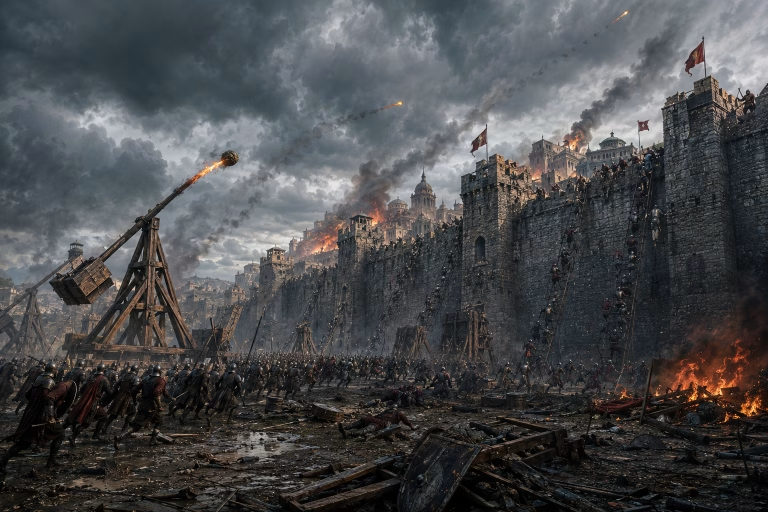
When everything was lost—armies destroyed, cities fallen, hope fading—some leaders made a choice that defied all logic and military doctrine. These Leaders Who Refused to Surrender didn’t just fight against enemy forces; they battled against impossibility itself. Their unwavering determination in the face of overwhelming odds shaped the course of human history and created legends that inspire us even in 2026.
Throughout military history, surrender has often been the rational choice. When outnumbered ten to one, when supply lines are cut, when defeat seems certain—most commanders choose to preserve what remains of their forces and live to fight another day. But the leaders featured in this article made a different calculation entirely. They chose defiance over pragmatism, sacrifice over survival, and in doing so, they changed the world.
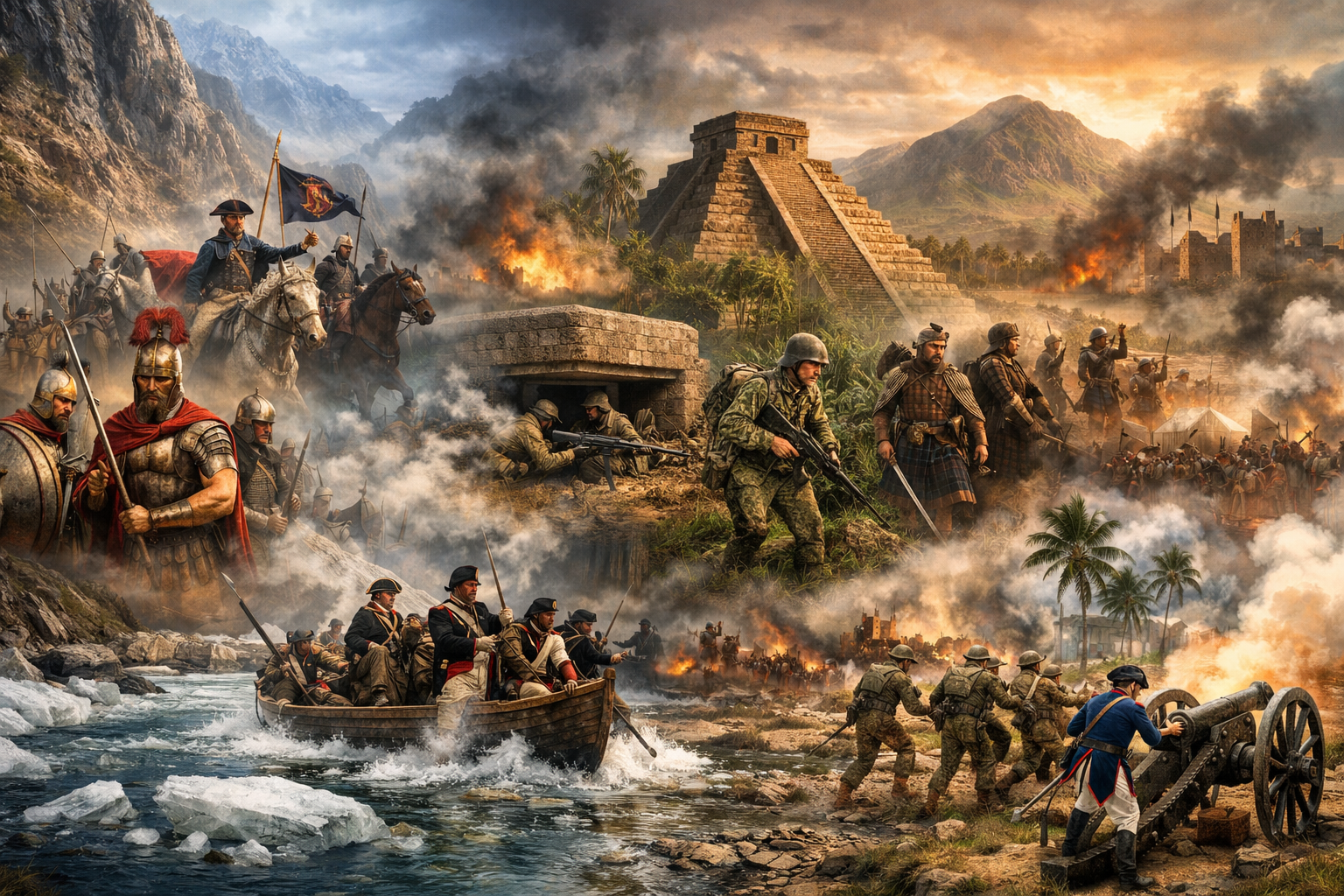
Key Takeaways
• Mental resilience often proved more decisive than military strength in determining historical outcomes
• Leaders Who Refused to Surrender frequently inspired their followers to achieve impossible victories through sheer determination
• Strategic defiance could transform certain defeat into legendary victory, influencing generations of future leaders
• The cost of refusing surrender included massive casualties but often preserved national identity and independence
• Historical impact of these decisions extended far beyond individual battles, shaping entire civilizations and cultures
The Spartan King Who Chose Death Over Dishonor
Leonidas I (480 BC) – The Last Stand at Thermopylae
The Situation: When the massive Persian army under Xerxes invaded Greece, King Leonidas I of Sparta faced an impossible choice. Intelligence reports suggested the Persian force numbered in the hundreds of thousands, while Leonidas commanded just 300 Spartan warriors plus a few thousand Greek allies. The narrow pass at Thermopylae offered tactical advantages, but everyone knew it was a delaying action at best.
What Made Surrender Likely: The Persian messenger had already delivered Xerxes’ terms—submit to Persian rule and live. The overwhelming numerical disadvantage made military victory virtually impossible. Even Leonidas knew that holding the pass indefinitely was fantasy.
His Decision to Resist: When told that Persian arrows would blot out the sun, Leonidas reportedly replied, “Then we will fight in the shade.” He chose to make his stand, knowing it meant certain death. This wasn’t just military strategy—it was a calculated sacrifice designed to inspire all of Greece.
Outcome and Legacy: Leonidas and his 300 Spartans died to the last man, but their sacrifice galvanized Greek resistance. The delay at Thermopylae allowed Athens to prepare its navy, leading to decisive Greek victories at Salamis and Plataea. The Persian invasion ultimately failed, preserving Greek civilization and democracy.
The story of Leonidas demonstrates how the best generals in history understood that sometimes the greatest victory comes through noble defeat.
The Carthaginian Mastermind Who Terrorized Rome
Hannibal Barca (218-202 BC) – The Elephant in the Room
The Situation: After his legendary crossing of the Alps with elephants, Hannibal found himself deep in Roman territory with no reliable supply lines and no hope of reinforcement from Carthage. Roman strategy focused on avoiding pitched battles while gradually wearing down his forces through attrition.
What Made Surrender Likely: Hannibal’s army was isolated, outnumbered, and slowly starving. His brother Hasdrubal’s attempt to bring reinforcements ended in disaster. Any reasonable commander would have negotiated terms or attempted a strategic withdrawal to Africa.
His Decision to Resist: Instead of retreating, Hannibal continued his campaign for over 15 years, winning battle after battle through superior tactics and sheer determination. He refused multiple Roman offers to negotiate, believing that total victory was still possible.
Outcome and Legacy: Though ultimately defeated at Zama, Hannibal’s refusal to surrender created one of history’s greatest military legends. His tactical innovations influenced warfare for centuries, and his name became synonymous with military genius and unwavering determination.
The Scottish Guardian Who Defied an Empire
William Wallace (1297-1305) – Freedom’s Fierce Defender
The Situation: After Edward I of England’s brutal conquest of Scotland, the country lay under foreign occupation. The Scottish nobility had largely submitted to English rule, and organized resistance seemed hopeless against the might of the English military machine.
What Made Surrender Likely: England possessed superior numbers, better equipment, and professional soldiers. Most Scottish nobles had already sworn fealty to Edward I. Wallace himself was just a minor noble with no formal military training facing the most powerful army in Europe.
His Decision to Resist: Wallace chose to lead a popular uprising, rallying common Scots to fight for independence. Even after suffering defeats and seeing many allies abandon the cause, he refused English offers of pardon and continued guerrilla warfare.
Outcome and Legacy: Though captured and executed, Wallace’s defiance inspired the Scottish Wars of Independence. His example motivated Robert the Bruce and others to continue the fight, eventually securing Scottish independence. Wallace became an eternal symbol of resistance against oppression.
This connects to the broader story of how most powerful Native American chiefs and leaders also faced similar choices when confronting overwhelming imperial forces.
The Peasant Girl Who Saved France
Joan of Arc (1429-1431) – Divine Mission Against All Odds
The Situation: During the darkest period of the Hundred Years’ War, France was on the verge of complete collapse. The English controlled most of northern France, the Dauphin remained uncrowned, and French morale had reached rock bottom. A teenage peasant girl claimed divine visions commanding her to save France.
What Made Surrender Likely: Joan had no military training, noble birth, or political connections. The French court was skeptical, the military situation appeared hopeless, and the English seemed unstoppable. Even after initial successes, capture by Burgundian allies made her situation desperate.
Her Decision to Resist: Joan convinced the Dauphin to give her military command and continued fighting even when captured. During her trial, she refused to recant her claims or submit to English authority, choosing death over compromise.
Outcome and Legacy: Joan’s victories at Orléans and other battles turned the tide of the war. Her martyrdom further inspired French resistance, ultimately leading to English expulsion from France. She became a symbol of national identity and unwavering faith.
The Conquistador Who Burned His Ships
Hernán Cortés (1519-1521) – No Retreat, No Surrender
The Situation: Leading just 600 Spanish conquistadors into the heart of the Aztec Empire, Cortés faced millions of potential enemies in unfamiliar territory. His small force was vastly outnumbered, thousands of miles from reinforcement, and surrounded by hostile populations.
What Made Surrender Likely: The Aztec Empire was one of the most powerful civilizations in the Americas, with sophisticated military organization and overwhelming numerical superiority. Cortés had no realistic hope of conquest with such a tiny force.
His Decision to Resist: Cortés made the ultimate commitment to victory by burning his ships, eliminating any possibility of retreat. This forced his men to choose between conquest or death—there was no middle ground.
Outcome and Legacy: Through a combination of superior technology, strategic alliances with Aztec enemies, and sheer audacity, Cortés conquered the entire Aztec Empire. His refusal to consider retreat became a legendary example of total commitment to an impossible goal.
The Revolutionary General Who Crossed the Delaware
George Washington (1775-1783) – Persistence Through Winter’s Fury
The Situation: Leading the Continental Army against the British Empire, Washington faced the world’s most powerful military with poorly equipped, often unpaid volunteers. After a series of defeats, his army was reduced to a few thousand men facing a professional force backed by unlimited resources.
What Made Surrender Likely: The British offered amnesty to rebels who surrendered. Washington’s army was starving, freezing, and deserting in large numbers. The colonial cause seemed hopeless, especially during the brutal winter at Valley Forge.
His Decision to Resist: Washington refused British overtures and continued fighting through the darkest periods of the war. His surprise attack across the Delaware River on Christmas 1776 demonstrated his commitment to victory regardless of circumstances.
Outcome and Legacy: Washington’s persistence ultimately secured American independence with crucial French assistance. His refusal to surrender created the United States and established him as one of history’s greatest military leaders. The principles he fought for influenced democratic movements worldwide.
The strategic thinking that made Washington successful reflects broader patterns in military strategies in US history that shape today.
The Emperor Who Redefined Warfare
Napoleon Bonaparte (1815) – Defiance at Waterloo
The Situation: Facing a coalition of European powers determined to end his rule permanently, Napoleon returned from exile to find France exhausted by decades of warfare. The combined armies arrayed against him outnumbered his forces significantly, and his political position was precarious.
What Made Surrender Likely: European monarchs had made clear that there would be no negotiated settlement with Napoleon personally. His previous abdication and exile to Elba showed that surrender was possible, and many advisors urged him to abdicate again to save France from further devastation.
His Decision to Resist: Napoleon chose to fight one final campaign, believing that a decisive victory could still change everything. Even at Waterloo, facing certain defeat, he continued aggressive tactics rather than attempting to preserve his remaining forces.
Outcome and Legacy: Though defeated and permanently exiled, Napoleon’s final campaign demonstrated the military genius that had conquered most of Europe. His refusal to surrender gracefully became part of the Napoleonic legend and influenced military thinking for generations.
Understanding how Napoleon Bonaparte came to power helps explain why he found surrender so difficult to accept.
The British Bulldog Who Stood Alone
Winston Churchill (1940) – Britain’s Finest Hour
The Situation: After the fall of France, Britain stood alone against Nazi Germany. The British Expeditionary Force had barely escaped at Dunkirk, leaving behind most of its equipment. German invasion seemed imminent, and many in the government favored negotiating peace terms with Hitler.
What Made Surrender Likely: Germany controlled most of Europe and had demonstrated overwhelming military superiority. Britain’s military position was desperate, with limited resources to resist invasion. Several government ministers advocated exploring peace negotiations through Italian intermediaries.
His Decision to Resist: Churchill rejected all suggestions of negotiation, declaring that Britain would fight on regardless of consequences. His famous speeches rallied the nation to continue resistance even when victory seemed impossible.
Outcome and Legacy: Churchill’s refusal to consider surrender kept Britain in the war until the Soviet Union and United States entered the conflict. His leadership during Britain’s darkest hour became legendary, and his speeches continue to inspire leaders facing impossible odds.
Churchill’s wartime leadership exemplifies how political leaders’ knowledge can affect a nation’s economy and survival during crisis periods.
The American General Who Promised to Return
Douglas MacArthur (1942) – “I Shall Return”
The Situation: Forced to evacuate the Philippines as Japanese forces overran American and Filipino defenders, MacArthur faced one of the most humiliating defeats in American military history. The Bataan Death March and fall of Corregidor seemed to end American presence in the western Pacific.
What Made Surrender Likely: Japanese forces controlled the entire western Pacific, and American military resources were desperately needed elsewhere. Many strategists argued that the Philippines should be written off as unrecoverable for the duration of the war.
His Decision to Resist: Rather than accepting the loss of the Philippines, MacArthur made his famous promise: “I shall return.” He spent the next two years planning and advocating for a campaign to retake the islands, refusing to accept their permanent loss.
Outcome and Legacy: MacArthur fulfilled his promise, returning to the Philippines in 1944 and accepting Japanese surrender aboard the USS Missouri in 1945. His refusal to accept defeat became one of the most famous military promises in history.
The Pacific campaign that followed connects to broader patterns explored in who won the Battle of Leyte Gulf, a crucial engagement in MacArthur’s return.
The Vietnamese General Who Outlasted Empires
Vo Nguyen Giap (1940s-1970s) – The Master of Protracted War
The Situation: Facing first Japanese occupation, then French colonial forces, and finally American military intervention, Giap commanded Vietnamese forces that were consistently outgunned and outnumbered by technologically superior enemies with massive resource advantages.
What Made Surrender Likely: Each of Giap’s opponents possessed overwhelming firepower superiority, air dominance, and seemingly unlimited resources. The French had professional colonial armies, while the Americans deployed over 500,000 troops with advanced technology.
His Decision to Resist: Giap developed a strategy of protracted warfare, accepting that victory might take decades rather than years. He refused to be drawn into conventional battles where his enemies held advantages, instead focusing on long-term political and military objectives.
Outcome and Legacy: Through patience and strategic brilliance, Giap outlasted three major powers and secured Vietnamese independence. His theories of revolutionary warfare influenced liberation movements worldwide and demonstrated how determination could overcome technological superiority.
Giap’s tactics built upon lessons learned in how Vietnam shaped modern guerrilla warfare tactics that continue influencing military thinking today.
What Makes Leaders Who Refused to Surrender Different?
Mental Resilience Beyond Normal Limits 🧠
The Leaders Who Refused to Surrender shared extraordinary psychological toughness that enabled them to function effectively under extreme pressure. This wasn’t simple stubbornness—it was a calculated mental framework that viewed impossible odds as challenges to overcome rather than reasons to quit.
Key Mental Traits:
- Compartmentalization: Ability to focus on immediate tactical decisions while maintaining long-term strategic vision
- Reframing: Viewing defeats as temporary setbacks rather than permanent failures
- Risk tolerance: Accepting potential total loss in pursuit of ultimate victory
- Emotional regulation: Maintaining decision-making capability under extreme stress
Ideological Conviction as Fuel ⚡
Each of these leaders possessed beliefs that transcended personal survival. Whether fighting for national independence, religious conviction, or political ideals, their causes provided motivation that sustained them through periods when rational calculation suggested surrender.
Inspirational Leadership Under Fire 🔥
Leaders Who Refused to Surrender demonstrated remarkable ability to maintain follower loyalty even when leading them toward probable death. This required extraordinary charisma combined with genuine personal courage—followers had to believe their leader shared their risks.
Leadership Techniques:
- Personal example: Leading from the front and sharing dangers
- Clear communication: Articulating why the cause justified extreme sacrifice
- Symbolic actions: Dramatic gestures that demonstrated total commitment
- Emotional connection: Understanding and channeling follower motivations
The Terrible Cost of Never Surrendering
Human Casualties and Suffering ⚰️
The decision to fight to the bitter end inevitably resulted in massive casualties that might have been avoided through negotiated surrender. Leonidas’s 300 Spartans, Joan of Arc’s martyrdom, and the millions who died in prolonged conflicts all represent the human cost of refusing to yield.
Casualty Categories:
- Military losses: Soldiers who died in hopeless battles
- Civilian suffering: Populations caught in extended conflicts
- Economic destruction: Resources consumed in prolonged warfare
- Social disruption: Families and communities torn apart
The Leadership Burden 💔
Leaders Who Refused to Surrender carried enormous psychological weight, knowing their decisions condemned followers to death or suffering. This burden often consumed them personally, even when their choices ultimately proved historically justified.
Balancing Heroism and Responsibility ⚖️
Modern military ethics emphasize minimizing casualties and preserving force effectiveness. The romantic view of leaders who never surrender must be balanced against their responsibility for the lives under their command.
Ethical Considerations:
- When does heroic resistance become reckless endangerment?
- How do leaders balance immediate casualties against long-term objectives?
- What obligations do commanders have to preserve their forces?
- When is surrender the more courageous choice?
How Refusing Surrender Shaped World History
Creating National Mythologies 🏛️
The stories of Leaders Who Refused to Surrender became foundational myths for entire civilizations. Leonidas and the 300 Spartans embody Greek ideals of honor and sacrifice. Joan of Arc represents French national identity. Washington symbolizes American independence and determination.
These legends continue influencing national consciousness centuries later, providing examples of how individual determination can change history’s course.
Military Doctrine Evolution 📚
Each leader’s tactics and strategies influenced military thinking for generations. Hannibal’s innovations, Napoleon’s campaigns, and Giap’s guerrilla warfare theories continue being studied in military academies worldwide.
Doctrinal Contributions:
- Tactical innovation: New approaches to seemingly impossible situations
- Strategic thinking: Long-term planning under extreme pressure
- Leadership methods: Maintaining morale in desperate circumstances
- Psychological warfare: Using determination as a weapon against enemy morale
Political and Social Impact 🌍
The refusal to surrender often preserved cultures, political systems, and ways of life that might otherwise have been lost. Greek democracy, American republicanism, and various national independence movements all benefited from leaders who chose resistance over submission.
This connects to broader questions about how powerful societies failed when they had leaders with low morals, showing how leadership character affects civilizational outcomes.
Conclusion: The Eternal Choice Between Surrender and Sacrifice
The ten Leaders Who Refused to Surrender profiled in this article faced the ultimate test of human determination: choosing between rational self-preservation and potentially futile resistance. Their decisions reveal profound truths about leadership, courage, and the forces that shape historical outcomes.
These leaders didn’t just fight against enemy armies—they battled against the very concept of impossibility itself. Their refusal to accept defeat, even when facing overwhelming odds, demonstrates how individual will can sometimes overcome material disadvantages and change the course of human events.
Key Lessons for Modern Leaders:
• Mental resilience often proves more decisive than material resources in determining outcomes
• Ideological conviction can provide motivation that sustains effort through seemingly hopeless periods
• Inspirational leadership requires sharing risks and demonstrating personal commitment to the cause
• Strategic patience sometimes achieves what immediate force cannot accomplish
• Historical impact often depends more on the example set than the immediate tactical outcome
The legacy of these Leaders Who Refused to Surrender continues inspiring people facing their own impossible odds in 2026. Whether confronting business challenges, personal crises, or social injustices, their examples remind us that surrender is always a choice—and sometimes refusing to make that choice changes everything.
Your Next Steps: Study the specific leadership techniques used by these historical figures. Identify which of their mental frameworks and decision-making processes might apply to challenges in your own life or organization. Consider how their examples of persistence and strategic thinking could inform your approach to seemingly impossible goals.
History remembers victory and defeat alike—but it never forgets those who refused to give up when everything seemed lost.