Every 30 seconds, a construction-related accident occurs somewhere in the world, but the most devastating disasters happen when buildings themselves become death traps due to shoddy workmanship, corrupt practices, and regulatory failures. These horrific tragedies caused by poor construction have claimed thousands of lives and forever changed how we think about building safety, structural integrity, and the deadly consequences of cutting corners in the construction industry.
Construction disasters don’t just happen—they’re the inevitable result of a perfect storm involving substandard materials, inadequate oversight, design flaws, and sometimes outright corruption. When buildings fail, the human cost is immeasurable, but these tragedies also serve as stark reminders of why construction quality can never be compromised.
From garment factories in Bangladesh to luxury condominiums in Miami, horrific tragedies caused by poor construction have occurred across every continent and economic level. These disasters share common threads: ignored warning signs, regulatory failures, and the prioritization of profit over human safety.
Key Takeaways
• Poor construction practices have killed thousands: Major building collapses in the past 50 years have claimed over 3,000 lives globally
• Common causes include substandard materials, design flaws, and inadequate maintenance: Most disasters result from multiple failures rather than single points of weakness
• Regulatory oversight and corruption play critical roles: Many tragedies occur in regions with weak building codes or poor enforcement
• Environmental factors amplify construction defects: Weather, soil conditions, and natural disasters often expose underlying structural problems
• Prevention requires comprehensive safety culture: Effective disaster prevention demands strict regulations, regular inspections, and accountability at every level
1. Rana Plaza Collapse (2013, Bangladesh) 🏭

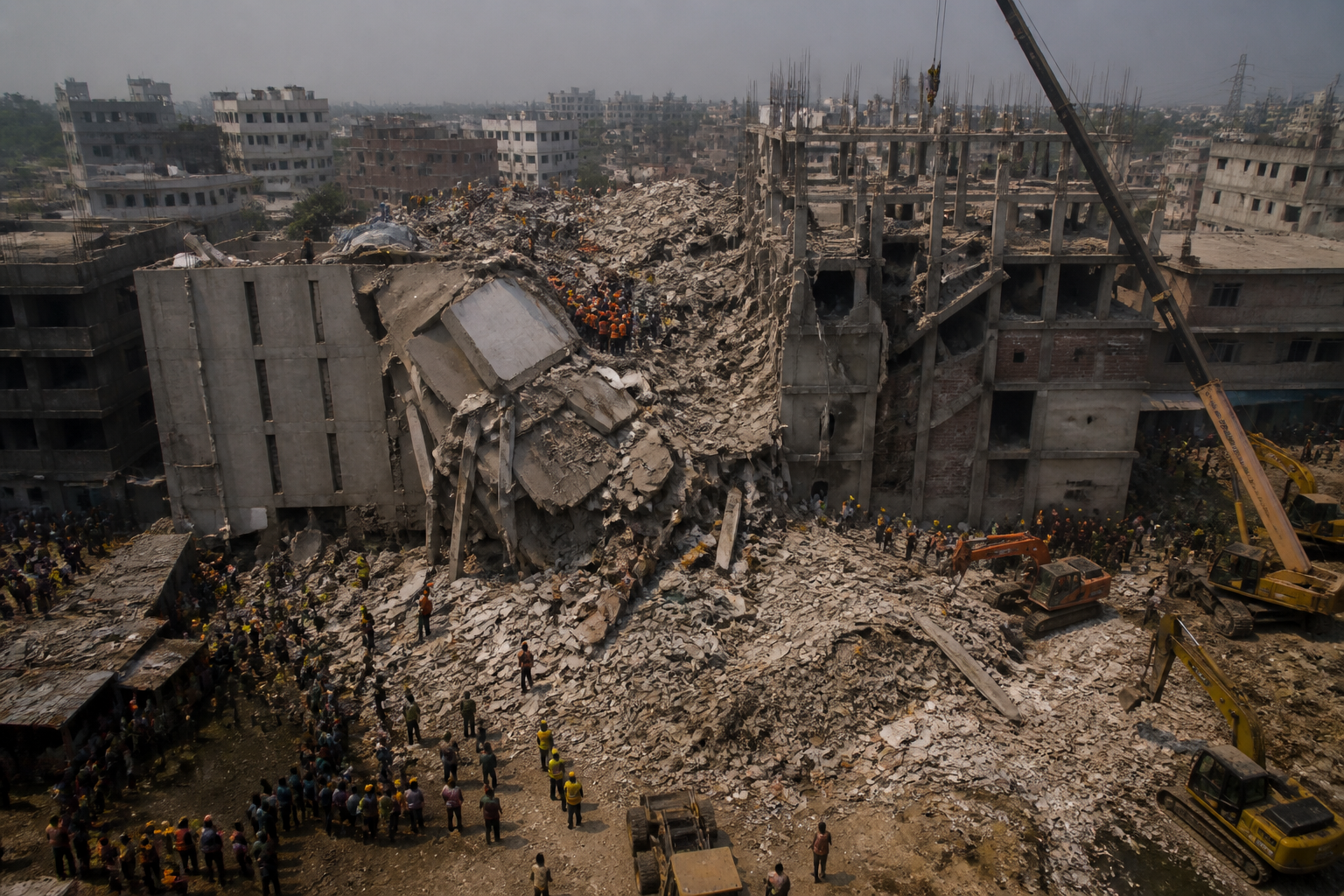
The Rana Plaza collapse stands as one of the deadliest industrial disasters in modern history and represents one of the most horrific tragedies caused by poor construction practices. On April 24, 2013, this eight-story commercial building in Savar, Bangladesh, pancaked to the ground, killing 1,134 people and injuring over 2,500 others.
The Perfect Storm of Construction Failures
The Rana Plaza disaster wasn’t caused by a single failure but rather a cascade of construction negligence:
- Unauthorized floors: The building was originally designed for shops and offices but had three additional floors added illegally to house garment factories
- Substandard materials: Investigations revealed the use of inferior concrete and steel that couldn’t support the building’s actual load
- Excessive vibration: Heavy industrial sewing machines created constant vibration that weakened the already compromised structure
- Ignored warnings: Cracks appeared in the building the day before the collapse, but workers were ordered to return despite visible danger signs
The Human Cost
The victims were primarily young women working in five garment factories that supplied major international brands. Many were trapped for days under concrete slabs, leading to dramatic rescue operations broadcast worldwide. The disaster exposed the dark side of fast fashion and the deadly consequences when construction safety is sacrificed for profit margins.
Lessons Learned
This tragedy sparked global reforms in building safety regulations and supply chain accountability. It demonstrated how political violence and corruption can create conditions where safety regulations are ignored, leading to preventable disasters.
2. Hyatt Regency Walkway Collapse (1981, USA) 🏨

The Hyatt Regency walkway collapse in Kansas City remains one of America’s worst structural engineering disasters and exemplifies how seemingly minor design changes can create horrific tragedies caused by poor construction decisions.
A Night of Celebration Turns Deadly
On July 17, 1981, approximately 1,600 people gathered in the hotel’s atrium for a tea dance. Two suspended walkways—on the second and fourth floors—suddenly collapsed onto the crowded lobby below, killing 114 people and injuring 216 others.
The Fatal Design Flaw
The disaster resulted from a critical engineering change:
- Original design: Both walkways were to be suspended from the ceiling by continuous steel rods
- Modified design: The contractor changed to a two-rod system where the fourth-floor walkway hung from the ceiling, and the second-floor walkway hung from the fourth floor
- Doubled load: This modification doubled the load on the fourth-floor walkway connections
- Inadequate connections: The box beam connections couldn’t handle the increased stress and failed catastrophically
Engineering Ethics Revolution
This disaster fundamentally changed engineering education and professional responsibility. It highlighted how construction modifications, even when approved, require the same rigorous analysis as original designs. The tragedy led to stricter professional liability standards and emphasized the life-or-death importance of structural integrity calculations.
3. Sampoong Department Store Collapse (1995, South Korea) 🏢

The Sampoong Department Store collapse in Seoul represents one of the most preventable disasters in construction history, demonstrating how corruption and willful negligence create conditions for horrific tragedies caused by poor construction.
A Disaster Foretold
On June 29, 1995, the five-story Sampoong Department Store collapsed in just 20 seconds, killing 502 people and injuring 937 others. Unlike sudden disasters, this collapse was preceded by clear warning signs that were systematically ignored.
Systematic Construction Failures
The building’s problems began during construction and worsened over time:
- Foundation shortcuts: Builders used substandard concrete and reduced the number of support columns to save money
- Unauthorized modifications: The building was changed from apartments to a department store without proper structural analysis
- Overloading: A restaurant was added to the roof along with heavy air conditioning units that exceeded design limits
- Ignored warnings: Cracks appeared weeks before the collapse, and the fifth floor was visibly sagging
The Warning Signs
In the days before the collapse:
- Ceiling tiles fell in the fifth-floor restaurant
- Cracks widened visibly in support columns
- The building swayed noticeably
- Employees reported strange noises and vibrations
Despite these obvious danger signs, the store remained open. Only the restaurant on the top floor was temporarily closed, and even then, workers were sent to move heavy equipment rather than evacuate the building.
Criminal Negligence
The store’s chairman and executives were later convicted of criminal negligence. The disaster highlighted how corruption and poor oversight can create deadly conditions where profit is prioritized over human safety.
4. Ronan Point Apartment Explosion (1968, UK) 🏠

The Ronan Point collapse changed building regulations across the world and demonstrated how a single design flaw can create conditions for horrific tragedies caused by poor construction methods, particularly in high-rise residential buildings.
A Gas Leak Becomes a Catastrophe
On May 16, 1968, a gas explosion in a fourth-floor apartment of the Ronan Point tower block in London caused a progressive collapse that brought down an entire corner of the 22-story building. Four people died immediately, and 17 others were injured.
The Domino Effect
What made this disaster particularly shocking was how a relatively minor gas explosion caused such extensive damage:
- Weak panel connections: The building used a precast concrete panel system with inadequate connections between floor slabs and walls
- Progressive collapse: When the explosion blew out one wall panel, the floors above lost support and collapsed sequentially
- Design vulnerability: The building had no redundancy—the failure of one element caused the failure of many others
Revolutionary Building Changes
The Ronan Point disaster led to fundamental changes in building codes:
- Structural redundancy requirements: Buildings must now survive the loss of any single structural element
- Gas safety regulations: Stricter rules for gas installations in high-rise buildings
- Connection standards: Much stronger requirements for connections between precast elements
This tragedy demonstrated that modern construction methods, while efficient, can create new types of vulnerabilities that require careful engineering analysis and robust safety systems.
5. Morandi Bridge Collapse (2018, Italy) 🌉

The Morandi Bridge collapse in Genoa shocked the world and highlighted how aging infrastructure can become the source of horrific tragedies caused by poor construction maintenance and design limitations.
A Vital Link Becomes a Death Trap
On August 14, 2018, a 200-meter section of the Morandi Bridge collapsed during a severe thunderstorm, sending vehicles plummeting 45 meters to the ground below. 43 people died, and hundreds of residents were evacuated from nearby buildings.
The Slow Death of Infrastructure
The Morandi Bridge, opened in 1967, was an engineering marvel of its time, but several factors contributed to its eventual failure:
- Innovative but flawed design: The bridge used prestressed concrete cables in a corrosive marine environment
- Maintenance challenges: The cable-stayed design made inspection and maintenance extremely difficult
- Corrosion acceleration: Salt air from the nearby Mediterranean Sea accelerated the deterioration of steel cables
- Warning signs ignored: Engineers had identified structural problems years before the collapse
The Maintenance Crisis
Investigations revealed that proper maintenance of the bridge would have cost millions of euros annually. The tragedy highlighted a global problem: aging infrastructure built during post-war construction booms now requires massive investment to remain safe.
Lessons for Modern Infrastructure
The Morandi Bridge collapse demonstrates that even well-engineered structures can become dangerous without proper maintenance. It sparked discussions worldwide about infrastructure investment and the hidden costs of deferred maintenance. Like the ancient Roman engineering principles that emphasized durability, modern infrastructure requires long-term thinking about maintenance and lifecycle costs.
6. Highland Towers Collapse (1993, Malaysia) 🏗️

The Highland Towers collapse in Selangor, Malaysia, demonstrated how environmental factors can combine with construction deficiencies to create horrific tragedies caused by poor construction planning and inadequate site analysis.
When Nature Exposes Construction Flaws
On December 11, 1993, Block 1 of the Highland Towers condominium complex collapsed after days of heavy rainfall, killing 48 people. The 12-story building toppled sideways like a falling tree, crushing cars and trapping residents inside.
The Perfect Storm of Failures
The Highland Towers disaster resulted from multiple interconnected failures:
- Slope instability: The building was constructed on a steep hillside without adequate slope stabilization
- Poor drainage: Inadequate drainage systems allowed water to saturate the soil during heavy rains
- Nearby construction: Excavation for a new development above the towers destabilized the slope further
- Foundation inadequacy: The building’s foundation wasn’t designed for the unstable soil conditions
Environmental Risk Assessment
The tragedy highlighted critical gaps in construction planning:
- Geological surveys: Inadequate analysis of soil composition and stability
- Drainage design: Insufficient consideration of monsoon rainfall patterns
- Cumulative impacts: Failure to assess how nearby construction would affect existing buildings
- Early warning systems: No monitoring of slope movement or foundation settlement
Regulatory Changes
Following the disaster, Malaysia implemented stricter requirements for:
- Slope stability analysis for hillside construction
- Environmental impact assessments for new developments
- Building inspections and structural monitoring systems
- Emergency evacuation procedures for high-risk buildings
The Highland Towers collapse serves as a reminder that construction safety extends beyond the building itself to include careful analysis of environmental conditions and long-term site stability.
7. Savar Building Collapse (2005, Bangladesh) 🏭

The Savar building collapse of 2005 preceded the more famous Rana Plaza disaster by eight years but shared many of the same root causes, representing another example of horrific tragedies caused by poor construction practices in Bangladesh’s rapidly growing industrial sector.
History Repeating Itself
On April 11, 2005, a nine-story factory building in Savar collapsed, killing over 70 people and injuring hundreds more. The building housed several garment factories and a bank, and its collapse followed a pattern of construction negligence that would tragically repeat at Rana Plaza.
Familiar Failures
The Savar collapse shared troubling similarities with later disasters:
- Weak foundation: The building was constructed on marshy land prone to flooding without adequate foundation reinforcement
- Unauthorized construction: Additional floors were added beyond the original design specifications
- Substandard materials: Investigations revealed the use of inferior concrete and insufficient steel reinforcement
- Regulatory failure: Building permits were issued despite obvious safety violations
The Flood Factor
Unlike other construction disasters, the Savar collapse was significantly influenced by seasonal flooding:
- Soil saturation: Heavy rains weakened the already inadequate foundation
- Water damage: Flooding had previously damaged lower floors, compromising structural elements
- Drainage problems: Poor site drainage created persistent water accumulation around the foundation
Missed Opportunities
The 2005 Savar collapse should have served as a wake-up call for Bangladesh’s construction industry. Instead, the lessons learned were largely ignored, setting the stage for the much deadlier Rana Plaza disaster eight years later. This pattern demonstrates how systemic problems in governance and oversight can perpetuate dangerous conditions.
8. Katowice Trade Hall Roof Collapse (2006, Poland) ❄️

The Katowice Trade Hall roof collapse demonstrated how environmental loads and design inadequacies can combine to create horrific tragedies caused by poor construction, particularly in regions with severe winter weather.
A Deadly Snow Load
On January 28, 2006, the roof of the Katowice International Fair collapsed during a pigeon racing exhibition, killing 65 people and injuring over 170 others. The disaster occurred when heavy snow accumulation exceeded the roof’s design capacity.
Engineering vs. Nature
The collapse highlighted critical flaws in both design and maintenance:
- Inadequate snow load calculations: The roof wasn’t designed for the extreme snow loads possible in the region
- Maintenance negligence: Snow removal from the large, flat roof was inadequate despite heavy accumulation
- Design vulnerabilities: The roof structure lacked redundancy—when one section failed, it triggered progressive collapse
- Warning signs ignored: The roof had shown signs of stress, including visible sagging, before the collapse
Environmental Design Factors
The disaster emphasized the importance of designing for local environmental conditions:
- Snow load standards: Building codes must reflect actual climate conditions, not just minimum standards
- Maintenance accessibility: Roof designs must allow for practical snow removal and maintenance
- Progressive collapse prevention: Structures should be designed to prevent cascading failures
- Regular inspection: Buildings in harsh climates require more frequent structural assessments
Lessons for Cold Climates
The Katowice collapse led to revised building codes across Eastern Europe and highlighted the need for:
- Conservative snow load calculations based on historical maximums, not averages
- Mandatory snow removal protocols for large flat roofs
- Structural monitoring systems during extreme weather events
- Emergency evacuation procedures when buildings show signs of stress
This tragedy serves as a reminder that buildings must be designed not just for normal conditions but for the most extreme environmental loads they might reasonably encounter.
9. Lianyak Construction Disaster (2017, Kenya) 🌧️

The Lianyak building collapse in Nairobi exemplified how rapid urbanization and weak regulatory enforcement create conditions for horrific tragedies caused by poor construction, particularly in developing nations experiencing construction booms.
Tragedy During the Rainy Season
On April 29, 2017, a six-story residential building in Nairobi’s Huruma neighborhood collapsed during heavy rains, killing 49 people and leaving hundreds homeless. The disaster occurred during Kenya’s rainy season, when saturated soil and increased structural loads often expose construction deficiencies.
A Pattern of Negligence
The Lianyak collapse revealed systematic problems in Nairobi’s construction industry:
- Substandard materials: Investigations found the use of poor-quality concrete and insufficient steel reinforcement
- Illegal construction: The building was constructed without proper permits and didn’t meet building code requirements
- Ignored warnings: Engineers had previously condemned the building as unsafe, but residents continued to occupy it
- Regulatory failure: Despite multiple violations, authorities failed to enforce evacuation orders
The Affordable Housing Crisis
The tragedy highlighted broader issues in Kenya’s housing sector:
- Rapid urbanization: Nairobi’s population growth has outpaced infrastructure development
- Affordable housing shortage: Desperate demand for low-cost housing creates markets for substandard construction
- Weak enforcement: Corruption and inadequate resources hamper building code enforcement
- Vulnerable populations: The poorest residents often live in the most dangerous buildings
Systemic Solutions Needed
The Lianyak disaster demonstrated that preventing construction tragedies requires comprehensive reforms:
- Stronger regulatory enforcement with real penalties for violations
- Professional licensing for contractors and engineers
- Public awareness campaigns about construction safety
- Investment in affordable, safe housing alternatives
This collapse, like many others in rapidly growing cities, shows how social and economic pressures can create conditions where safety is sacrificed for expediency and profit.
10. Champlain Towers South Collapse (2021, USA) 🏖️

The Champlain Towers South collapse in Surfside, Florida, shocked the world as a luxury condominium building in one of America’s wealthiest areas became the site of one of the most recent horrific tragedies caused by poor construction maintenance and long-term structural deterioration.
A Midnight Catastrophe
On June 24, 2021, at 1:22 AM, the 12-story Champlain Towers South condominium partially collapsed, killing 98 people and destroying 55 residential units. The building, completed in 1981, had been home to families for decades before it became a death trap.
The Slow-Motion Disaster
Unlike sudden collapses, Champlain Towers South failed due to decades of accumulated damage:
- Water infiltration: Chronic water leaks had corroded steel reinforcement throughout the building
- Salt exposure: The oceanfront location exposed the structure to corrosive salt air and water
- Deferred maintenance: A 2018 engineering report identified $9.1 million in needed repairs that were delayed due to cost concerns
- Foundation problems: The building was sinking and tilting due to foundation settlement
Warning Signs Ignored
Multiple red flags preceded the collapse:
- Pool deck deterioration: Visible concrete spalling and water damage in the pool area
- Structural cracks: Growing cracks in support columns and walls
- Engineering reports: Professional assessments identifying critical structural problems
- Resident complaints: Years of complaints about water intrusion and building movement
The 40-Year Recertification
Florida law requires buildings over 40 years old to undergo structural recertification, and Champlain Towers South was in the middle of this process when it collapsed. The tragedy highlighted gaps in this system:
- Inspection timing: The recertification process may come too late for buildings with serious problems
- Enforcement mechanisms: Limited authority to force immediate repairs when dangers are identified
- Resident resistance: Condo associations may delay expensive repairs due to cost concerns
- Professional liability: Questions about the adequacy of structural assessments
A Wake-Up Call for Aging Buildings
The Surfside collapse has prompted nationwide reviews of aging building infrastructure and highlighted the hidden dangers of deferred maintenance. Like the infrastructure challenges facing modern societies, this disaster demonstrates that even wealthy communities are vulnerable when structural integrity is compromised over time.
Common Themes in Construction Disasters 🔍
Recurring Causes of Catastrophic Failures
Analysis of these horrific tragedies caused by poor construction reveals disturbing patterns that transcend geography, economics, and building types:
Material and Design Failures:
- Substandard materials: Nearly every disaster involved inferior concrete, steel, or other critical components
- Design modifications: Unauthorized changes to approved plans consistently created dangerous conditions
- Load miscalculations: Buildings repeatedly failed when subjected to loads they weren’t designed to handle
- Progressive collapse vulnerability: Many structures lacked redundancy to prevent cascading failures
Human and Systemic Factors:
- Regulatory capture: Weak enforcement of building codes due to corruption or inadequate resources
- Economic pressure: Cost-cutting measures that compromised safety systems
- Warning sign denial: Systematic ignoring of visible structural problems and engineering assessments
- Professional negligence: Failures in engineering oversight and construction quality control
The Role of Corruption and Weak Governance
Many of the worst construction disasters occur in environments where:
- Building permits can be obtained without meeting safety requirements
- Inspection systems are inadequate or compromised by corruption
- Professional licensing is weak or poorly enforced
- Legal accountability for construction failures is limited
This pattern demonstrates how political and institutional failures create conditions where construction safety is compromised, ultimately leading to preventable tragedies.
Environmental and Maintenance Considerations
Construction disasters frequently involve:
- Climate factors: Failure to design for local environmental conditions like snow loads, seismic activity, or flooding
- Aging infrastructure: Inadequate maintenance of older buildings and infrastructure
- Site conditions: Poor analysis of soil, drainage, and geological factors
- Long-term deterioration: Failure to account for material degradation over time
Conclusion 🏗️
The horrific tragedies caused by poor construction examined in this analysis represent more than just engineering failures—they reflect systemic breakdowns in the institutions, regulations, and professional standards designed to protect public safety. From the Rana Plaza collapse in Bangladesh to the Champlain Towers disaster in Florida, these catastrophes share common threads of negligence, corruption, and the deadly consequences of prioritizing profit over human life.
The Human Cost of Construction Failures
These ten disasters alone claimed over 2,000 lives and injured thousands more, but their impact extends far beyond the immediate casualties. Families were destroyed, communities were traumatized, and public confidence in building safety was shattered. Each tragedy represents not just a failure of concrete and steel, but a failure of the systems meant to ensure that buildings protect rather than endanger their occupants.
Lessons That Must Not Be Forgotten
The patterns revealed by these disasters provide a roadmap for prevention:
Immediate Actions Needed:
- Strengthen building code enforcement with real penalties for violations
- Implement mandatory professional licensing for all construction professionals
- Establish independent inspection systems free from corruption and conflicts of interest
- Create public databases of building safety violations and structural assessments
Long-term Systemic Changes:
- Invest in infrastructure maintenance before problems become catastrophic
- Develop early warning systems for structural deterioration
- Educate the public about construction safety and warning signs
- Hold decision-makers accountable through criminal liability for safety violations
A Call to Action
As we advance into 2026, the construction industry faces new challenges from climate change, urbanization, and aging infrastructure. The lessons from these horrific tragedies caused by poor construction must guide our approach to building safety. Every stakeholder—from engineers and contractors to regulators and residents—has a role to play in preventing future disasters.
The memory of those lost in these preventable tragedies demands that we do better. Building safety is not negotiable, and the cost of prevention will always be less than the price of disaster. By learning from these failures and implementing comprehensive reforms, we can honor the victims and protect future generations from similar catastrophes.
Take action today: Research your local building codes, support infrastructure investment, and never ignore warning signs of structural problems. The next life saved could be your own.