
A single decision to end a life can alter the course of nations, topple governments, and reshape entire civilizations. Throughout history, some of the most pivotal moments have occurred not on battlefields or in boardrooms, but on scaffolds, in prison chambers, and before firing squads. These executions that shaped history continue to generate fierce debate decades or even centuries later, forcing us to confront uncomfortable questions about justice, power, and the price of political change.
When examining these watershed moments, one truth becomes clear: the line between justice and vengeance is often razor-thin. What appears righteous to one generation may seem barbaric to the next. These cases reveal how fear, politics, and public emotion can transform legal proceedings into something far more complex—and controversial—than simple justice.
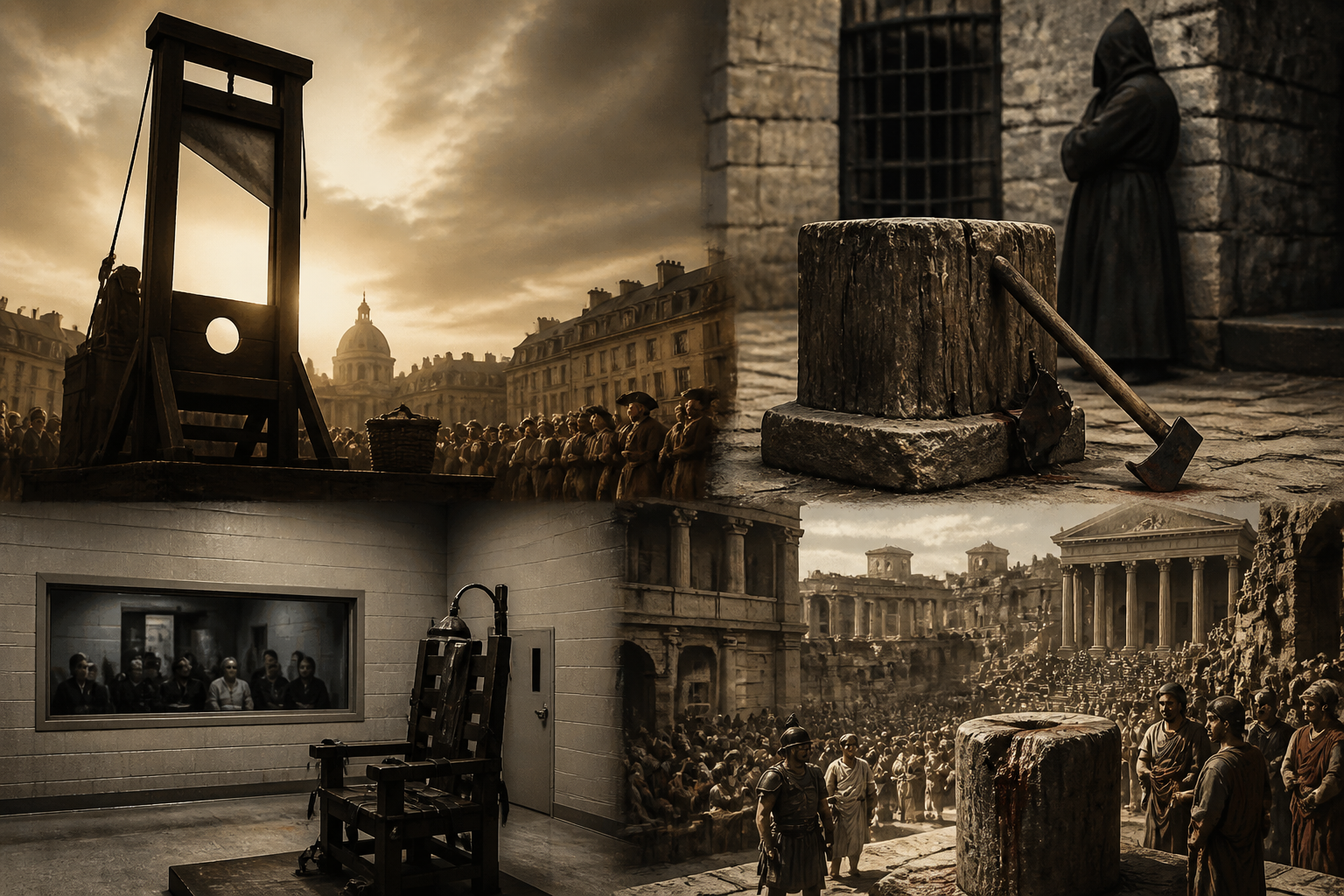
Key Takeaways
• Political instability drives controversial executions – Most history-shaping executions occurred during revolutions, wars, or regime changes when normal legal processes broke down
• Public opinion heavily influences perceived justice – Executions widely supported at the time often become morally questionable in hindsight as social values evolve
• Speed versus fairness creates lasting controversy – Rushed trials and executions, even of guilty parties, raise questions about due process that persist for generations
• Historical context matters immensely – Understanding the fear, anger, and political pressures of each era is crucial to evaluating these controversial decisions
• Justice evolves but debates endure – Even centuries later, historians and ethicists continue arguing about whether these executions were justified or necessary
What Makes an Execution “Justified”?
Before examining specific cases, it’s essential to understand the complex factors that determine whether an execution is viewed as legitimate justice or something more sinister. Legal justice focuses on proper procedures, evidence, and fair trials. Moral justice considers whether the punishment fits the crime and serves a greater good.
However, political motivations often overshadow both legal and moral considerations. During times of upheaval, executions may serve to eliminate threats, send messages to opponents, or satisfy public demands for retribution. The influence of public opinion cannot be understated—popular support can legitimize even questionable executions, while public opposition can cast doubt on seemingly justified ones.
Most importantly, historical context shapes our understanding. Different eras operate under different legal standards, moral frameworks, and political pressures. What seemed necessary for survival in one century may appear barbaric through a modern lens.
Understanding these dynamics helps explain why the following cases remain so contentious. Each execution occurred within a specific historical moment, driven by unique circumstances that continue to fuel debate among scholars, legal experts, and the public.
The 10 Executions That Changed Everything
1. King vs Revolution: The Execution of Louis XVI (1793)
The beheading of King Louis XVI marked a seismic shift in European politics and the concept of divine monarchy. During the height of the French Revolution, revolutionaries put their own king on trial for treason against the nation—a concept that would have been unthinkable just years earlier.
The Case: Louis XVI faced charges of conspiring with foreign enemies and oppressing the French people. The evidence included his attempted flight from France and secret correspondence with Austria. The National Convention voted narrowly for execution—361 for death, 360 against.
Why It Matters: This execution shattered the notion that monarchs ruled by divine right and were above earthly law. It sent shockwaves across Europe, leading to wars as other monarchies feared similar uprisings. The act transformed revolution from political reform into something far more radical.
The Ongoing Debate: Supporters argue Louis XVI’s execution was necessary to prevent counter-revolution and establish equality before the law. Critics contend it unleashed the Reign of Terror and unnecessary bloodshed. Modern historians note that 7 ancient Roman ideas that are still being used today included concepts of republican government that influenced these revolutionary ideals.
2. The Fall of Adolf Eichmann (1962)
Adolf Eichmann’s capture and execution represented a unique form of delayed justice that raised complex questions about international law, kidnapping, and the pursuit of Nazi war criminals decades after World War II ended.
The Case: Israeli agents captured Eichmann in Argentina in 1960, bringing him to Jerusalem for trial. As the architect of Holocaust logistics, he organized the transportation of millions of Jews to death camps. The trial was broadcast globally, providing unprecedented documentation of Nazi crimes.
Why It Matters: Eichmann’s execution established precedents for pursuing war criminals across borders and decades. It demonstrated that certain crimes transcend national boundaries and statutes of limitations. The trial also introduced the world to Hannah Arendt’s concept of the “banality of evil.”
The Ongoing Debate: While few question Eichmann’s guilt, legal scholars debate Israel’s right to kidnap him from Argentina and try him for crimes committed before Israel existed. Some argue the execution served justice; others contend life imprisonment would have been more appropriate for gathering intelligence about other Nazi criminals.
3. The Execution of Saddam Hussein (2006)
Saddam Hussein’s execution following the U.S.-led invasion of Iraq exemplified the complexities of victor’s justice and international intervention in sovereign nations.
The Case: Hussein faced trial by an Iraqi tribunal for crimes against humanity, specifically the 1982 Dujail massacre where 148 Shiite Muslims were killed. The trial occurred under U.S. occupation, with significant American involvement in establishing the legal framework.
Why It Matters: This execution occurred during an active insurgency, making it both a legal proceeding and a political act. It highlighted tensions between international law, domestic sovereignty, and the consequences of regime change.
The Ongoing Debate: Supporters argue Hussein’s execution delivered justice for decades of oppression and mass murder. Critics point to the trial’s irregularities, the timing during sectarian violence, and questions about whether international intervention justified such extreme measures. The case parallels other controversial interventions explored in discussions of military strategies in US history that shape today.
4. The Case of Nicolae Ceaușescu (1989)
The rapid trial and execution of Romanian dictator Nicolae Ceaușescu and his wife Elena during the 1989 revolution demonstrated how quickly revolutionary justice can turn deadly.
The Case: After being overthrown during popular uprisings, the Ceaușescus faced a military tribunal on charges including genocide and economic sabotage. The entire process—from capture to execution—took just three days, with the trial lasting only one hour.
Why It Matters: This execution marked the violent end of communist rule in Romania and served as a stark warning to other Eastern European dictators during the fall of communism. The speed reflected both revolutionary fervor and fear of counter-revolution.
The Ongoing Debate: Defenders argue swift action prevented civil war and further bloodshed. Critics contend the rushed proceedings violated basic legal principles and denied the Romanian people a proper accounting of Ceaușescu’s crimes through a thorough trial.
5. The Execution of Julius and Ethel Rosenberg (1953)
The Rosenberg case became one of America’s most controversial executions, highlighting how Cold War fears could influence the justice system and public opinion.
The Case: The Rosenbergs were convicted of passing atomic secrets to the Soviet Union, based largely on testimony from Ethel’s brother, David Greenglass. They maintained their innocence throughout the trial and appeals process, becoming symbols of either justice or persecution depending on one’s perspective.
Why It Matters: Their execution occurred during peak Cold War tensions, reflecting American fears about communist infiltration and nuclear proliferation. The case influenced decades of debate about government overreach, anti-communist hysteria, and the death penalty.
The Ongoing Debate: Declassified documents suggest Julius was likely guilty of espionage, but Ethel’s involvement remains questionable. Many argue the death penalty was excessive, especially for Ethel, who left behind two young children. The case exemplifies how fear can distort justice, similar to other periods when alarming facts about church history show institutional power overriding individual rights.
6. The Trial of Charles I of England (1649)
King Charles I’s execution marked the first time in European history that a monarch was tried and executed by his own subjects, establishing precedents that would echo through centuries.
The Case: Charles I faced charges of treason for waging war against Parliament and the English people. He refused to recognize the court’s authority, arguing that no earthly power could judge a king. Parliament proceeded anyway, voting for his death by a narrow margin.
Why It Matters: This execution temporarily abolished the monarchy, established the Commonwealth under Oliver Cromwell, and proved that even kings could be held accountable for their actions. It influenced later revolutions, including the American and French revolutions.
The Ongoing Debate: Parliamentarians viewed it as necessary to establish constitutional government and prevent future tyranny. Royalists considered it regicide and an attack on legitimate authority. Modern historians debate whether the execution advanced democratic principles or simply replaced one form of authoritarianism with another.
7. The Execution of Benito Mussolini (1945)
Mussolini’s capture and execution by Italian partisans represented a form of popular justice that bypassed formal legal proceedings entirely.
The Case: Italian communist partisans captured Mussolini and his mistress while they attempted to flee to Switzerland. After a brief “trial,” they executed both and displayed their bodies publicly in Milan, where crowds gathered to abuse the corpses.
Why It Matters: This execution symbolized the Italian people’s rejection of fascism and their desire for immediate justice after years of oppression and war. The public display served as a powerful message about the consequences of dictatorship.
The Ongoing Debate: Supporters argue Mussolini deserved death for his crimes and that formal trials were impossible during wartime chaos. Critics contend that mob justice, however satisfying, undermines the rule of law and sets dangerous precedents for political violence.
8. The Case of Timothy McVeigh (2001)
McVeigh’s execution for the Oklahoma City bombing raised questions about whether capital punishment provides closure for victims’ families and serves as an effective deterrent to terrorism.
The Case: McVeigh killed 168 people, including 19 children, in the 1995 bombing of the Alfred P. Murrah Federal Building. His trial was moved to Denver due to publicity, and he was executed by lethal injection in 2001, becoming the first federal prisoner executed since 1963.
Why It Matters: This case occurred during rising domestic terrorism concerns and influenced how America approaches homegrown extremism. McVeigh’s execution was widely televised and supported by most Americans, reflecting strong public support for capital punishment in cases of mass murder.
The Ongoing Debate: Victims’ families were divided—some found closure in the execution, others preferred life imprisonment to avoid making McVeigh a martyr. The case raises ongoing questions about whether executions deter terrorism or simply create symbols for extremist movements.
9. The Execution of Joan of Arc (1431)
Perhaps no execution in history has been more thoroughly reversed by subsequent judgments than that of Joan of Arc, whose martyrdom transformed her from heretic to saint.
The Case: English authorities and French collaborators tried Joan for heresy, witchcraft, and dressing as a man. At age 19, she was burned at the stake in Rouen after leading French forces against English occupation during the Hundred Years’ War.
Why It Matters: Joan’s execution backfired spectacularly, making her a martyr who inspired continued French resistance. The Catholic Church later declared her innocent and eventually canonized her as a saint. Her story became a powerful symbol of nationalism and religious faith.
The Ongoing Debate: While few modern observers defend her execution, historians debate whether her judges genuinely believed in her guilt or acted purely from political motives. The case demonstrates how executions can create more powerful symbols in death than their subjects ever were in life, similar to how the most powerful revolutions in history often created lasting change through martyrdom.
10. The Death of Maximilien Robespierre (1794)
Robespierre’s execution marked the end of the Reign of Terror and demonstrated how revolutionary movements often consume their own leaders.
The Case: Known as “The Incorruptible,” Robespierre led the Committee of Public Safety during the French Revolution’s most violent phase. As public opinion turned against the Terror’s excesses, his former allies orchestrated his arrest and execution, ending the period that had claimed over 16,000 lives.
Why It Matters: Robespierre’s death showed that revolutionary justice could turn on anyone, regardless of their previous revolutionary credentials. It marked France’s turn away from radical revolution toward more moderate governance.
The Ongoing Debate: Some view Robespierre as a necessary revolutionary who saved France from counter-revolution and foreign invasion. Others see him as a bloodthirsty dictator whose death ended a reign of terror. The case illustrates how the worst people in history often emerge during periods of social upheaval and political chaos.
Patterns Across These Executions That Shaped History
Several common threads run through these controversial cases, revealing how political, social, and psychological factors influence what societies consider “justified” executions.
Political Instability as a Catalyst: Nearly every case occurred during periods of revolution, war, or regime change. When normal legal institutions collapse or face challenges, executions become tools for establishing new power structures or eliminating threats to existing ones.
The Role of Public Emotion: Popular anger, fear, and desire for retribution heavily influenced these decisions. Even when legal procedures were followed, public pressure often determined outcomes more than evidence or legal precedent.
Speed Versus Fairness: Many cases involved rushed proceedings justified by emergency conditions. While supporters argued that speed prevented further violence or instability, critics noted that haste often compromised justice and due process.
Evolving Standards of Justice: What seemed necessary or justified at the time often appears questionable to later generations. Changing moral standards, new historical evidence, and different political contexts continuously reshape how these executions are evaluated.
Why These Cases Still Matter in 2026
These historical executions remain relevant because they illuminate fundamental questions about justice, power, and human nature that persist today. They demonstrate how fear and political pressure can distort legal systems, how public opinion influences judicial decisions, and how the pursuit of justice can sometimes undermine the very principles it claims to uphold.
Modern societies still grapple with similar dilemmas: How should nations respond to terrorism? When is regime change justified? Can international tribunals legitimately prosecute war criminals? How do we balance security concerns with individual rights? The historical cases examined here provide valuable lessons for addressing these contemporary challenges.
Furthermore, these executions reveal the dangers of unchecked power and the importance of robust legal institutions. They show how quickly civilized societies can descend into violence when normal constraints break down, and how difficult it becomes to distinguish justice from vengeance during times of crisis.
Understanding these patterns helps modern societies recognize warning signs and develop better safeguards against the abuse of judicial power. The ongoing debates surrounding these historical cases also demonstrate the importance of maintaining open dialogue about justice, even when—or especially when—popular opinion strongly favors particular outcomes.
Conclusion
The executions that shaped history examined here reveal a troubling truth: ending a life rarely ends the questions it raises. From Louis XVI’s beheading to Timothy McVeigh’s lethal injection, each case continues to generate debate precisely because the line between justice and vengeance remains so difficult to define.
These controversial executions teach us that context matters enormously in evaluating justice. The fear, anger, and political pressures of each historical moment shaped decisions that continue to reverberate through time. What appeared necessary for survival or justice to one generation often seems excessive or misguided to the next.
Perhaps most importantly, these cases demonstrate that true justice requires more than legal procedures—it demands wisdom, restraint, and a commitment to principles that transcend immediate political pressures. The most controversial executions in history often occurred when societies abandoned these principles in favor of expedience, revenge, or political advantage.
As we face our own contemporary challenges involving justice, security, and political upheaval, these historical lessons become more relevant than ever. The question isn’t whether we would make the same decisions today—it’s whether we’ve learned enough from these controversial cases to make better ones.
Take Action: Study these cases not just as historical curiosities, but as warnings about how quickly justice can become injustice when fear and politics override careful deliberation. The next time society faces pressure for swift retribution, remember these examples and ask: Will this decision serve justice, or will it simply create another case for future generations to debate?



