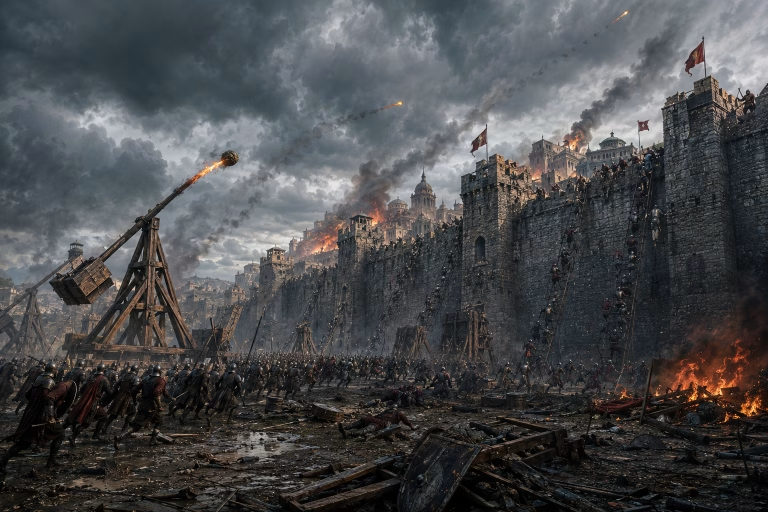
Some of the world’s greatest civilizations didn’t fade—they vanished, leaving behind ruins, questions, and endless mystery. These weren’t primitive societies that simply evolved into something else. They were advanced, sophisticated cultures with complex social systems, remarkable architecture, and innovations that still puzzle archaeologists today.
The most haunting aspect of these ancient civilizations that disappeared isn’t just their absence—it’s how quickly and completely they vanished. Cities that housed millions became ghost towns. Trade networks spanning continents collapsed overnight. Knowledge accumulated over centuries was lost forever.
Understanding why these civilizations disappeared offers crucial insights into the fragility of human societies and the forces that can bring even the mightiest empires to their knees.
Key Takeaways
• Environmental factors like drought, climate change, and natural disasters played major roles in the collapse of most disappeared civilizations
• Resource depletion and unsustainable practices often preceded the fall of advanced societies
• Political instability and warfare frequently accelerated the decline of already weakened civilizations
• Trade route disruptions could devastate economies dependent on long-distance commerce
• Many civilizations left behind architectural marvels that continue to mystify researchers and reveal their advanced capabilities
The Maya Civilization (2000 BCE – 1500 CE)
Location: Central America (Mexico, Guatemala, Belize, Honduras)
The Maya created one of the most sophisticated civilizations in the Americas. Their achievements included:
- Advanced writing system with over 800 hieroglyphs
- Precise astronomical calculations that predicted eclipses centuries in advance
- Complex calendar system more accurate than the one used in Europe at the time
- Monumental architecture including pyramids that rival those in Egypt
The Great Maya Collapse
The Maya didn’t disappear entirely, but their classical period ended abruptly around 900 CE. Major cities were abandoned within decades. The collapse likely resulted from:
- Severe drought lasting over a century
- Warfare between competing city-states
- Agricultural failure due to soil depletion
- Political fragmentation and loss of central authority
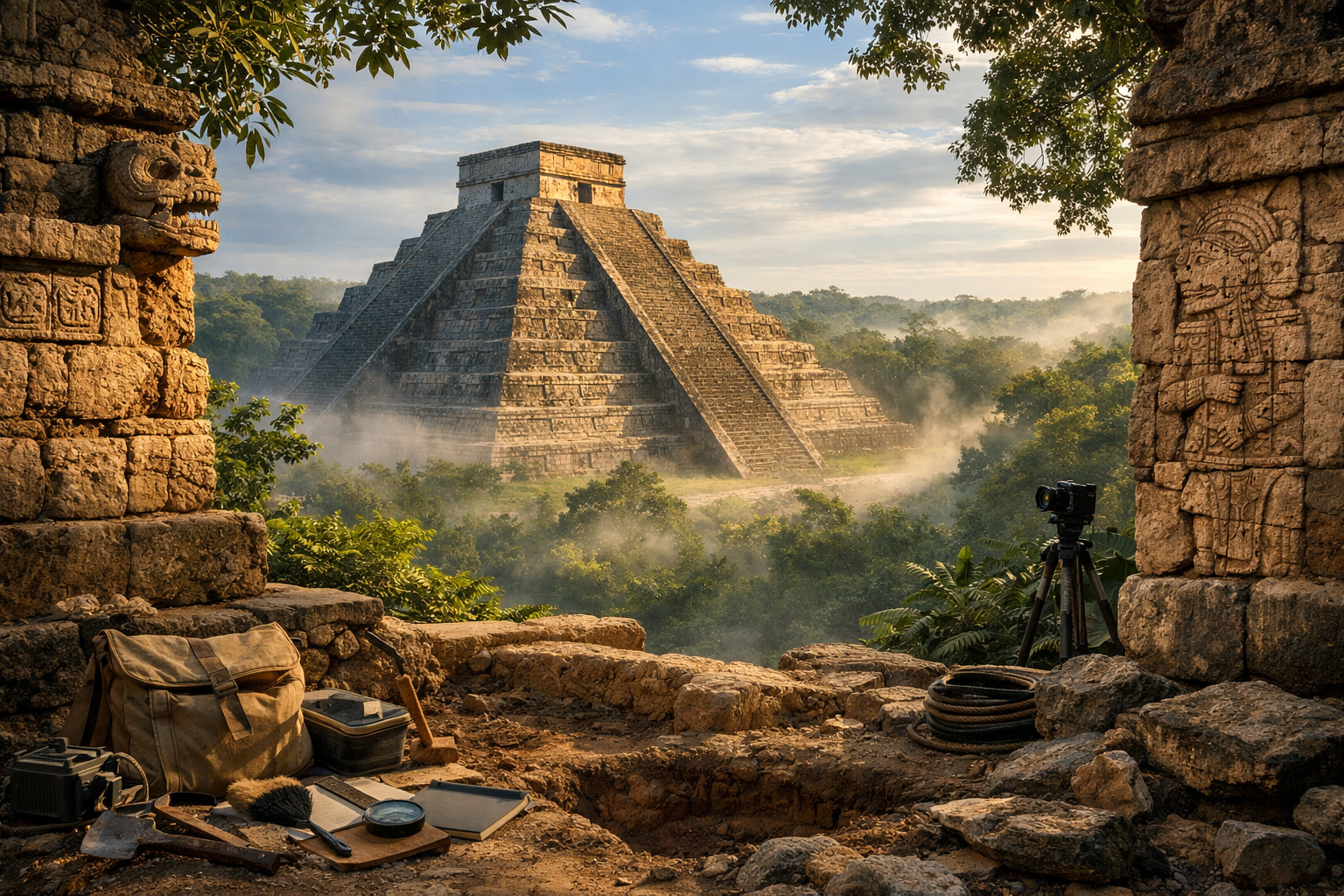
What remains: Spectacular ruins at Chichen Itza, Tikal, and Palenque. Millions of Maya descendants still live in Central America, preserving elements of their ancestral culture.
The Indus Valley Civilization (3300-1300 BCE)
Location: Modern-day Pakistan and northwest India
The Indus Valley Civilization was remarkably advanced for its time, featuring:
- Planned cities with grid-pattern streets
- Sophisticated drainage systems and public baths
- Standardized weights and measures across vast distances
- Peaceful society with little evidence of warfare or social hierarchy
A Mysterious End
Unlike many civilizations, the Indus Valley people left no deciphered written records, making their disappearance particularly mysterious. Contributing factors included:
- Climate change that dried up rivers
- Shift in monsoon patterns affecting agriculture
- Possible invasion by Indo-Aryan peoples
- Gradual migration to more fertile regions
What remains: Well-preserved cities at Harappa and Mohenjo-daro reveal advanced urban planning. The study of ancient civilizations continues to uncover new insights about this enigmatic culture.
The Ancestral Puebloans (100-1300 CE)
Location: American Southwest (Colorado, Utah, Arizona, New Mexico)
Also known as the Anasazi, these people created:
- Spectacular cliff dwellings built into canyon walls
- Complex irrigation systems for desert agriculture
- Extensive trade networks reaching Mexico and California
- Advanced pottery and basketry techniques
The Great Abandonment
Around 1300 CE, the Ancestral Puebloans abandoned their elaborate settlements. Reasons included:
- Severe drought from 1275-1300 CE
- Resource depletion from overpopulation
- Increased warfare and social tensions
- Migration to areas with better water sources
What remains: Mesa Verde National Park preserves stunning cliff dwellings. Modern Pueblo peoples trace their ancestry to these ancient civilizations that disappeared from the Southwest.
The Minoan Civilization (2700-1100 BCE)
Location: Crete and other Greek islands
The Minoans were Europe’s first advanced civilization, known for:
- Elaborate palaces at Knossos and other sites
- Extensive maritime trade throughout the Mediterranean
- Advanced art and frescoes depicting dolphins, bulls, and religious ceremonies
- Peaceful society with apparent gender equality
Volcanic Catastrophe
The Minoan civilization suffered multiple blows:
- Massive volcanic eruption on nearby Thera (Santorini) around 1600 BCE
- Tsunamis and ash fall devastating coastal settlements
- Mycenaean invasion from mainland Greece
- Economic disruption of trade networks
What remains: The palace at Knossos has been partially reconstructed. Minoan art and pottery influence can be seen throughout later Greek culture.
Cahokia (1050-1350 CE)
Location: Illinois, near present-day St. Louis
Cahokia was the largest city in North America before Columbus, featuring:
- Population of 15,000-20,000 at its peak
- Massive earthen mounds including the 100-foot-tall Monks Mound
- Sophisticated urban planning with plazas and residential districts
- Extensive trade networks reaching from the Great Lakes to the Gulf of Mexico
Urban Collapse
Cahokia’s decline was swift and complete:
- Environmental degradation from deforestation and overpopulation
- Climate change affecting agricultural productivity
- Political instability and social unrest
- Population dispersal to smaller settlements
What remains: Cahokia Mounds State Historic Site preserves 80 earthen mounds. The site demonstrates that complex urban societies existed in North America long before European contact.
The Nabataeans (4th century BCE – 106 CE)
Location: Jordan, southern Israel, northwest Saudi Arabia
The Nabataeans controlled crucial trade routes and created:
- Petra, the stunning “rose city” carved into rock
- Advanced water management systems in the desert
- Sophisticated trade networks connecting Arabia, India, and Rome
- Unique architectural style blending various cultural influences
Roman Annexation and Decline
The Nabataean kingdom gradually lost its independence:
- Shift in trade routes reduced their economic power
- Roman annexation in 106 CE ended their political autonomy
- Cultural assimilation into the broader Roman world
- Earthquake damage to major cities
What remains: Petra is now a UNESCO World Heritage Site and one of the New Seven Wonders of the World. The 7 breath taking structures that most people don’t know about include several Nabataean monuments.
Easter Island Civilization (1200-1680 CE)
Location: Rapa Nui (Easter Island), Pacific Ocean
The Rapa Nui people created one of the world’s most isolated civilizations:
- Nearly 1,000 moai statues scattered across the island
- Complex society with distinct clans and territories
- Advanced stone-working techniques without metal tools
- Sophisticated understanding of astronomy and navigation
Ecological Collapse
Easter Island became a cautionary tale of environmental destruction:
- Deforestation eliminated all native trees
- Soil erosion reduced agricultural productivity
- Overpopulation exceeded the island’s carrying capacity
- Social collapse led to warfare and cannibalism
- European diseases decimated the remaining population
What remains: The moai statues continue to fascinate visitors and researchers. The island’s story offers important lessons about sustainability and resource management.
The Olmec Civilization (1400-400 BCE)
Location: Gulf Coast of Mexico
The Olmecs were Mesoamerica’s “mother culture,” creating:
- Colossal stone heads weighing up to 50 tons
- Complex religious system featuring jaguar deities
- Early writing system and calendar
- Sophisticated art in jade, basalt, and other materials
Mysterious Disappearance
The Olmec decline remains one of archaeology’s great mysteries:
- Environmental changes may have affected agriculture
- Internal conflicts possibly destabilized society
- Cultural transformation rather than complete disappearance
- Influence on later civilizations including the Maya and Aztec
What remains: Olmec artifacts are found in museums worldwide. Their cultural influence shaped all subsequent Mesoamerican civilizations. Understanding how climate change probably led to the unexplained collapse of 3 ancient settlements helps explain similar patterns.
Göbekli Tepe Civilization (9500-8000 BCE)
Location: Southeastern Turkey
Göbekli Tepe represents one of humanity’s earliest complex societies:
- Massive stone pillars arranged in circles
- Sophisticated carvings of animals and abstract symbols
- Pre-agricultural society that built monumental architecture
- Religious or ceremonial center attracting people from wide areas
Intentional Burial
Unlike other disappeared civilizations, Göbekli Tepe may have been deliberately abandoned:
- Intentional burial under tons of soil around 8000 BCE
- Shift to agricultural lifestyle reducing need for ceremonial centers
- Climate changes at the end of the Ice Age
- Cultural transformation as societies became more settled
What remains: Ongoing excavations continue to reveal new structures. The site has revolutionized understanding of early human civilization and social organization.
The Khmer Empire (802-1431 CE)
Location: Cambodia, parts of Thailand, Laos, and Vietnam
The Khmer Empire created Southeast Asia’s most powerful medieval state:
- Angkor Wat, the world’s largest religious complex
- Sophisticated hydraulic system managing water across vast areas
- Population of over 1 million in the Angkor region
- Extensive trade networks throughout Southeast Asia
Environmental and Political Collapse
Multiple factors contributed to the empire’s decline:
- Climate change disrupting monsoon patterns
- Hydraulic system failure due to neglect and silting
- Thai invasions from the west
- Capital relocation to Phnom Penh
- Administrative breakdown and loss of central control
What remains: Angkor Wat and dozens of other temples attract millions of visitors. The site demonstrates both the achievements and vulnerabilities of complex hydraulic civilizations.
Why Ancient Civilizations That Disappeared: Common Patterns
Environmental Factors 🌍
Most disappeared civilizations faced severe environmental challenges:
- Climate change disrupting agricultural systems
- Drought lasting multiple decades
- Natural disasters like volcanic eruptions or earthquakes
- Resource depletion from overexploitation
Social and Political Instability ⚔️
Internal problems often accelerated decline:
- Warfare between competing groups
- Political fragmentation weakening central authority
- Social inequality creating internal tensions
- Loss of legitimacy by ruling elites
Economic Disruption 💰
Economic factors played crucial roles:
- Trade route shifts reducing income
- Currency debasement or economic inflation
- Technological obsolescence making societies less competitive
- Overextension beyond sustainable limits
What These Lost Civilizations Left Behind
Architectural Marvels 🏛️
The 7 mysterious ancient structures that time forgot represent just a fraction of the monuments left by disappeared civilizations. These structures reveal:
- Advanced engineering capabilities
- Sophisticated understanding of mathematics and astronomy
- Complex social organization required for large projects
- Artistic achievements that continue to inspire
Cultural Influence 📚
Many disappeared civilizations influenced later societies:
- Religious concepts adopted by successor cultures
- Artistic styles that persisted for centuries
- Technological innovations passed down through generations
- Urban planning concepts still used today
Archaeological Mysteries 🔍
These civilizations left behind puzzles that researchers continue to investigate:
- Undeciphered writing systems like the Indus Valley script
- Unexplained construction techniques for massive monuments
- Missing historical records about daily life and governance
- Sudden abandonment of major cities and settlements
The study of ancient history artifacts continues to reveal new information about these lost worlds.
Lessons for Modern Civilization
Environmental Sustainability 🌱
The fate of these ancient civilizations that disappeared offers crucial warnings:
- Resource management must consider long-term sustainability
- Climate adaptation requires flexible social institutions
- Environmental monitoring can provide early warning signs
- Diversified economies are more resilient to environmental shocks
Political Resilience 🏛️
Modern societies can learn from past political failures:
- Inclusive governance reduces internal tensions
- Institutional flexibility helps adapt to changing conditions
- Investment in infrastructure maintains societal foundations
- Education and cultural preservation strengthen social cohesion
Technological Adaptation 💡
Some civilizations may have possessed ancient civilizations may have had lost technology insights that could inform modern approaches:
- Appropriate technology suited to local conditions
- Knowledge preservation systems that survive disruptions
- Innovation networks that spread beneficial discoveries
- Sustainable practices that maintain long-term viability
Were They Really “Gone”? The Persistence of Culture
Cultural Continuity 🔄
Many “disappeared” civilizations didn’t vanish completely:
- Maya descendants maintain traditional practices in Central America
- Pueblo peoples trace ancestry to Ancestral Puebloans
- Cultural elements from the Olmec appear in later Mesoamerican societies
- Architectural techniques from various civilizations influenced later builders
Transformation vs. Disappearance 🔄
Some civilizations transformed rather than disappeared:
- Gradual change over generations
- Adaptation to new environmental conditions
- Cultural mixing with neighboring societies
- Evolution of social and political systems
The rise and fall of ancient civilizations often involves complex processes of transformation rather than simple disappearance.
Conclusion
The stories of these 10 ancient civilizations that disappeared reveal both human achievement and vulnerability. From the Maya’s astronomical precision to the Nabataeans’ desert cities, these societies created remarkable innovations and left behind architectural wonders that still inspire awe.
Yet their disappearances also serve as sobering reminders. Environmental challenges, resource depletion, political instability, and social tensions can bring down even the most advanced civilizations. The speed with which some of these societies collapsed—sometimes within a few decades—demonstrates how quickly complex systems can unravel.
For modern civilization, these historical lessons are more relevant than ever. Climate change, resource scarcity, political polarization, and technological disruption pose challenges similar to those faced by ancient societies. Understanding how past civilizations succeeded and failed can inform our responses to contemporary challenges.
Take action today:
- Learn more about archaeological preservation efforts in your area
- Support research into ancient civilizations and their lessons for modern society
- Consider how environmental and social sustainability applies to your own community
- Explore museums and archaeological sites to connect with our shared human heritage
The ruins of the past don’t just tell us what was—they warn us what could be.